Gary Saretzky Photo Books
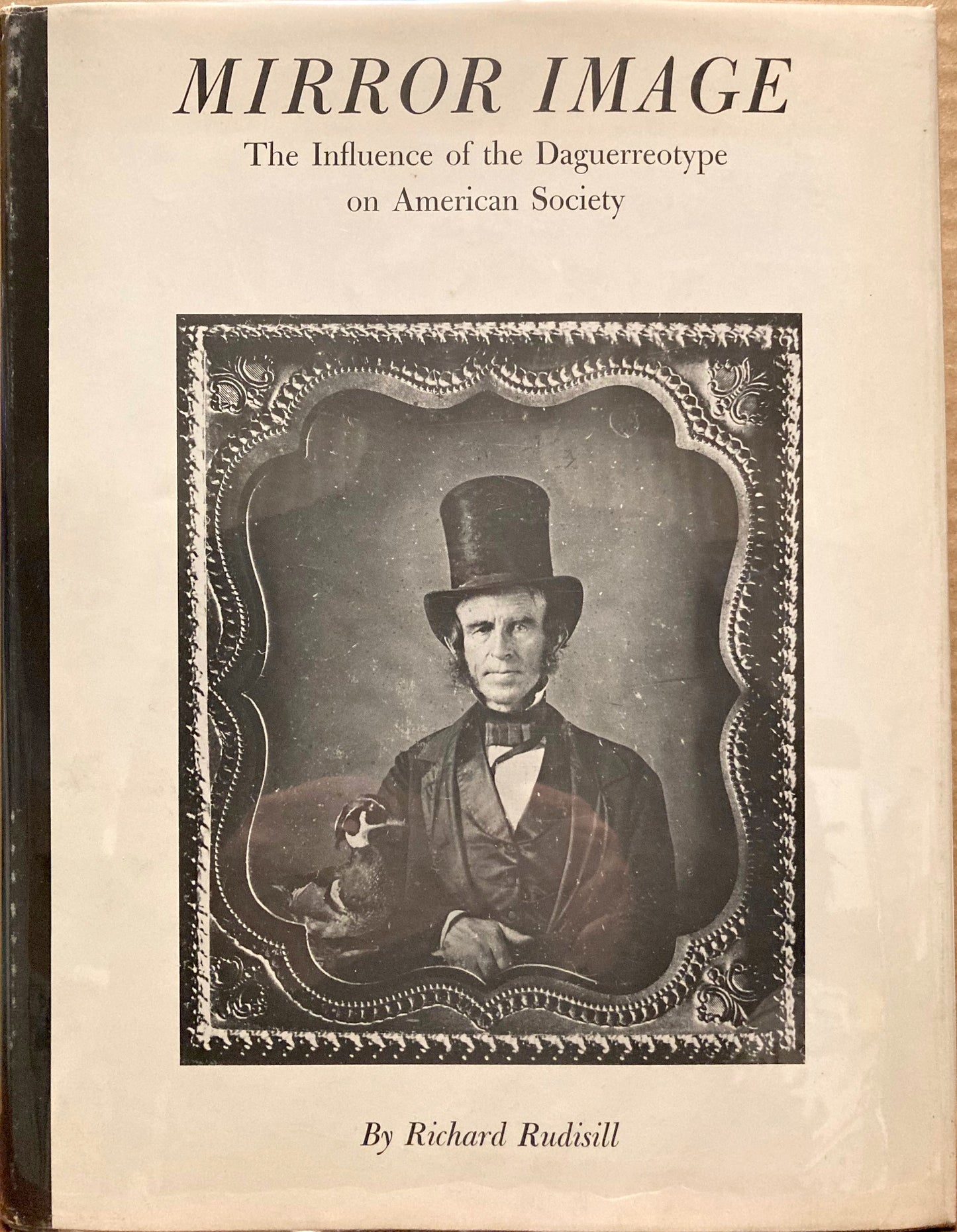
Daguerreotypes. Mirror Image: The Influence of the Daguerreotype on American Society by Richard Rudisill.
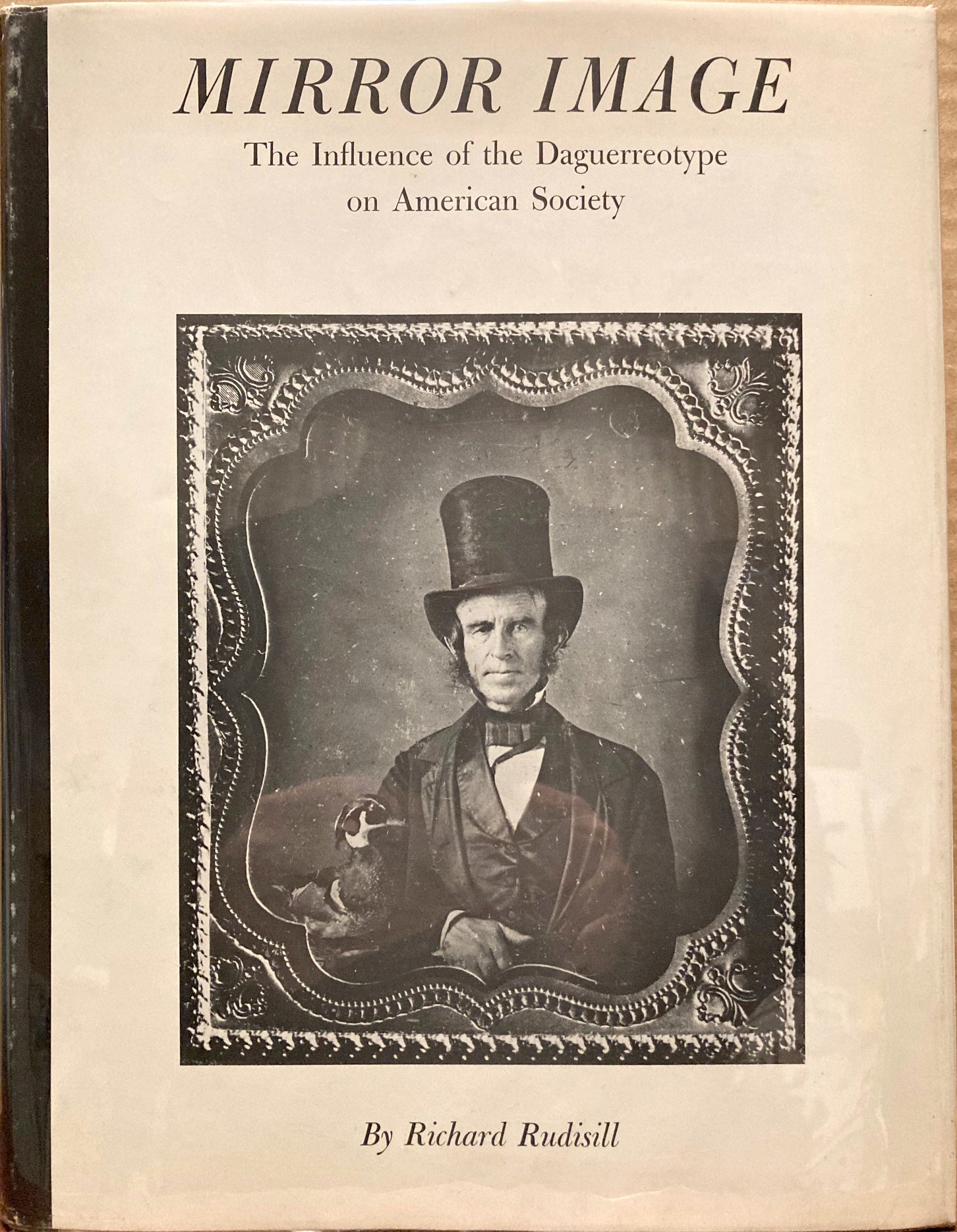
Daguerreotypes. Mirror Image: The Influence of the Daguerreotype on American Society by Richard Rudisill.
受取状況を読み込めませんでした
Albuquerque: University of New Mexico Press, 1971. 1st edition, hardcover, near fine (only flaw is last page has corner cut off) with near fine, price clipped polyester protected dust jacket. 342 pages, 202 illustrations. About as nice a copy as one could find for this scarce and wonderful book; this copy was formerly in the collection of David Hunter McAlpin, although his name is not on it. Thoroughly researched, filled with fascinating detail and insights, never superseded. Includes 16-page annotated bibliography. An essential reference for any one interested in daguerreotypes, history of photography, mid-19th century American history, etc. Summary:
Mirror Image: The Influence of the Daguerreotype on American Society by photohistorian Richard Rudisill (University of New Mexico Press, 1971) is a groundbreaking cultural history examining how the daguerreotype shaped early American identity, social values, and visual consciousness between 1839 and 1860.
Key Summary & Findings
-
Cultural and National Integration: Rudisill argues that the arrival of the daguerreotype coincided with a crucial period of American expansion and social transformation. The medium served as a unifying cultural force, helping a young, rapidly growing nation define its collective character, values, and democratic ideals.
-
The "Mirror" Metaphor: Beyond its literal silver-plated mirror surface, the daguerreotype functioned as a cultural mirror. Americans viewed the highly detailed images as flawless reflections of truth, nature, and moral character, trusting them as objective records of identity and reality.
-
Democratization of Portraiture: The book details how the commercial surge of affordable daguerreotype galleries democratized portraiture. No longer reserved for the wealthy elite through painted portraits, self-representation became accessible to the expanding middle class, working people, and everyday families.
-
Spiritual and Psychological Value: Daguerreotypes held profound emotional and spiritual importance in 19th-century life. They served as tools for personal introspection, symbols of family cohesion, mementos of loved ones traveling West, and sacred keepsakes in mourning practices (such as post-mortem portraiture).
-
Impact on American Vision: Rudisill shows how the widespread popularity of daguerreotypes trained Americans to view the world with a heightened sense of visual realism, laying the foundational attitudes toward truth, documentation, and media that would define modern American photographic culture.