Gary Saretzky Photo Books
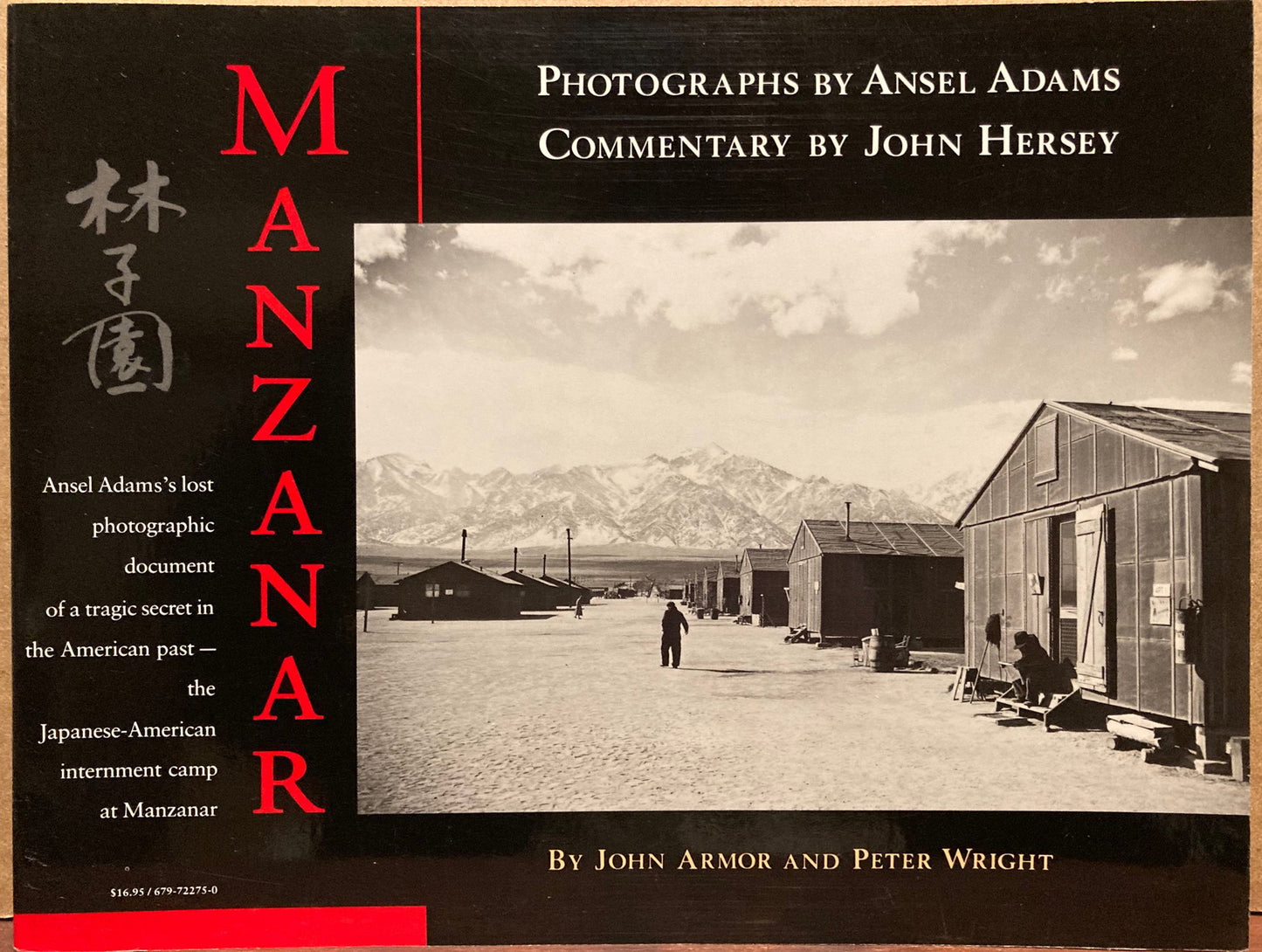
Adams, Ansel. Manzanar. Photographs by Ansel Adams.
Adams, Ansel. Manzanar. Photographs by Ansel Adams.
受取状況を読み込めませんでした
Vintage, 1988, 1989. Commentary by John Hersey. Text by John Armor and Peter Wright. [Photographs of the Japanese American relocation camp near Death Valley in 1944.] Wraps, near fine with slight bump on one rear corner, 1st Vintage printing, 1989, number line goes to 1. Summary:
Published in 1989 by Vintage Books, Manzanar is a powerful retrospective of Ansel Adams’ 1943–1944 documentation of the Manzanar War Relocation Center in California. It serves as a modern reprint and expansion of his controversial 1944 book Born Free and Equal, which was his attempt to use photography as a tool for social justice during World War II.
Historical Context: A Departure from the Wilderness
Adams, known primarily for his pristine landscapes, was deeply moved by the unconstitutional internment of Japanese Americans. He visited the camp at the invitation of its director, Ralph Merritt, to document the resilience of the incarcerees.
-
The "Straight" Documentation: Adams applied his rigorous technical standards to a human subject, moving away from "Grand Design" nature photography to focus on the human spirit under duress.
-
The 1989 Edition: This Vintage edition includes more photographs than the original wartime publication and features an introductory essay by John Hersey (author of Hiroshima), providing the historical and moral weight that Adams’ original era had often ignored or suppressed.
Key Themes and Visual Style
-
The Dignity of Labor: Adams focused heavily on the self-sufficiency of the camp. He photographed the internees working in the fields, the hospital, and the schools, aiming to prove their "Americanness" and industriousness to a prejudiced public.
-
Portraiture: The book features striking, sharp-focus portraits. Unlike the candid, gritty style of Dorothea Lange (who also photographed Manzanar), Adams used a formal, respectful approach, often allowing his subjects to pose with dignity.
-
The Landscape as Witness: Even in this documentary work, the landscape is a character. Adams famously photographed the camp against the backdrop of the Sierra Nevada mountains (specifically Mt. Williamson), creating a poignant contrast between the majestic freedom of the mountains and the barbed wire of the camp.
Significance and Controversy
-
Public Reaction: When the original work was published in 1944, it was met with hostility; many copies were reportedly burned because it dared to humanize a "perceived enemy."
-
The "Adams vs. Lange" Debate: Historians often compare this book to Dorothea Lange’s Manzanar work. While Lange focused on the injustice and the bleakness of the camp, Adams focused on the psychological endurance and the "loyalty" of the residents.
-
Legacy: The 1989 edition solidified the book’s status as a vital civil rights document. It remains a complex part of Adams’ legacy—an instance where he stepped out of the wilderness to engage with a dark chapter of American history through the lens of his unwavering humanism.
"The purpose of my work was to show how these people, suffering under a great injustice... had overcome the sense of defeat and despair." — Ansel Adams
Ansel Adams (1902–1984) was a monumental American photographer, visionary environmentalist, and technical pioneer best known for his breathtaking black-and-white landscapes of the American West. Born in San Francisco, California, Adams initially trained to be a pianist before discovering his lifelong passion for photography during a 1916 trip to Yosemite National Park. In 1932, he co-founded Group f/64 alongside Edward Weston and Imogen Cunningham, advocating for sharp focus, precise tone, and unmanipulated "straight" photography over the prevailing pictorialist style. Renowned for co-creating the Zone System—a scientific method for determining optimal exposure and development to achieve precise tonal range—Adams produced iconic masterpieces such as Moonrise, Hernandez, New Mexico and Monolith, the Face of Half Dome. Beyond his artistic and technical achievements, he was a lifelong advocate for wilderness preservation, serving on the board of the Sierra Club and using his evocative imagery to champion the creation and expansion of national parks across North America.