Gary Saretzky Photo Books
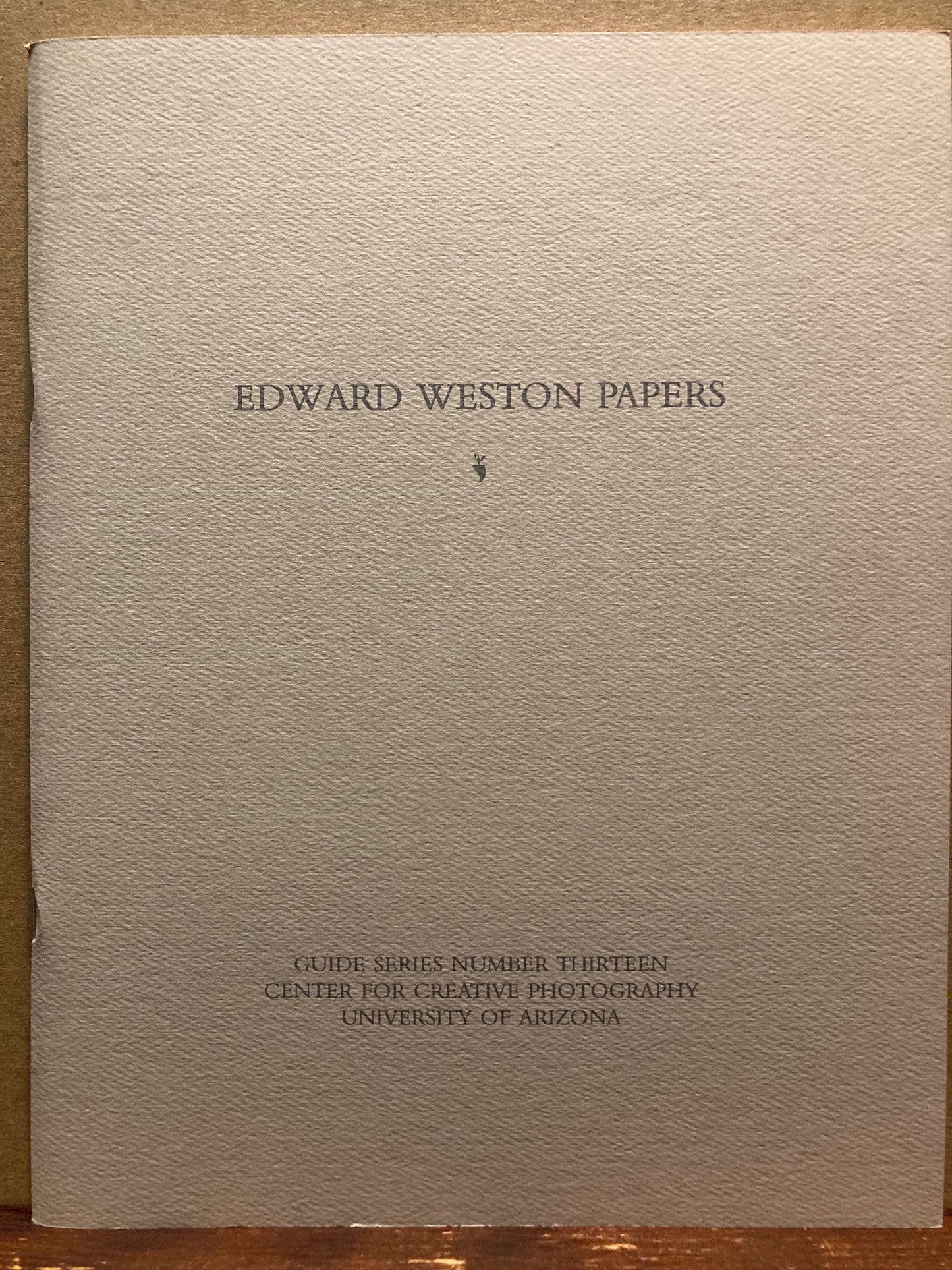
Weston, Edward. Edward Weston Papers.
Weston, Edward. Edward Weston Papers.
受取状況を読み込めませんでした
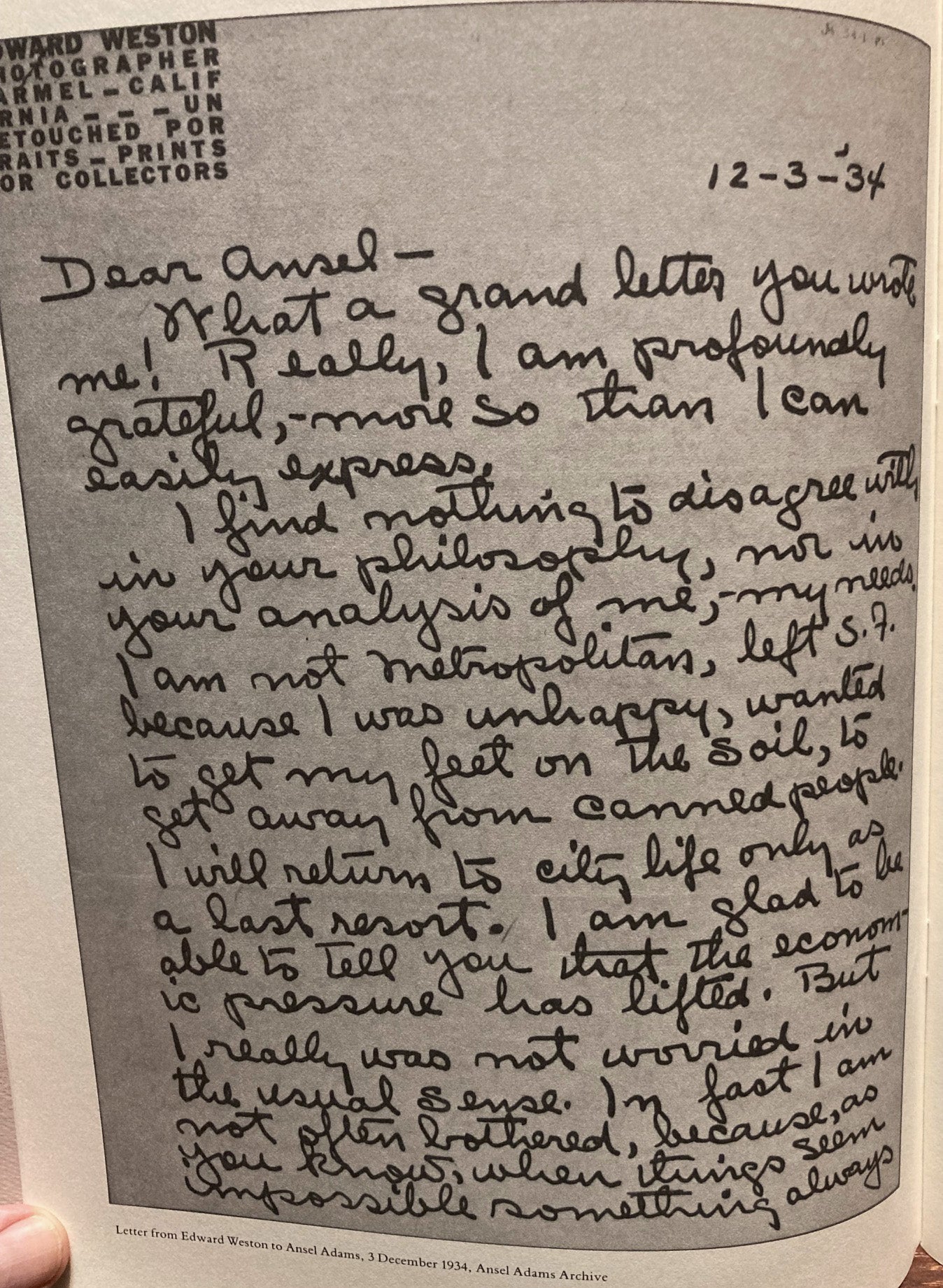
Guide Series Number 13. Center for Creative Photography, 1986. Compiled by Amy Stark. Detailed guide to the archives of Edward Weston, including lists of correspondents and photographs, with reproduction of hand-written letter to Ansel Adams and an Edward Weston chronology. Wraps, 52 pages, fine, without typical fading to the light sensitive gray covers.
Edward Weston (1886–1958) was a titan of 20th-century American photography whose preeminent mastery of sharp focus, rich detail, and essential form defined modernist straight photography. Born in Highland Park, Illinois, Weston began his career in California making pictorialist, soft-focus portraits before experiencing a profound artistic shift in the early 1920s following a transformative trip to Mexico with muse Tina Modotti. Rejecting manipulation in favor of pure camera vision, he co-founded Group f/64 in 1932 alongside Ansel Adams and Imogen Cunningham, advocating for maximum depth of field, unretouched contact prints, and absolute clarity. Working with a large-format view camera, Weston transformed everyday subjects—sculptural vegetables like his famous Pepper No. 30, dramatic sand dunes at Oceano, sensual nudes, and weathered landscapes—into iconic, sensual meditations on organic form. In 1937, he became the first photographer to be awarded a Guggenheim Fellowship, securing an enduring legacy as one of the most influential figures in modern fine-art photography.
Edward Weston Papers, published in 1986 as Guide Series Number 13 by the Center for Creative Photography (CCP), is the specialized companion to the earlier Guide Series Number 3. While the previous guide provided a broad overview of both images and text, Number 13 focuses exclusively and exhaustively on the written and documentary record of Weston’s life.
The Scope of the "Papers"
This guide serves as the definitive finding aid for the primary source documents that underpin almost all modern Weston scholarship. It categorizes thousands of items that reveal the man behind the camera.
-
Correspondence: This is the heart of the guide. It indexes a vast network of letters to and from family, lovers, and peers. Key correspondents include Tina Modotti, Mabel Dodge Luhan, and Ansel Adams, providing a raw look at his personal relationships and professional alliances.
-
The Daybooks Manuscripts: The guide details the original handwritten and typed versions of his journals. This is crucial for scholars, as it allows them to see the unedited thoughts that were sometimes omitted or sanitized in the published versions of the Daybooks.
-
Business and Legal Documents: A less "romantic" but vital section that includes bank statements, camera equipment receipts, and exhibition contracts. These documents dispel the myth of the "unworldly artist" by showing Weston’s meticulous (and often precarious) management of his finances.
-
Ephemera and Memorabilia: This includes address books, negative logs, and even clippings that Weston saved, offering clues into his daily habits and the cultural influences that shaped his worldview.
Research Utility
-
Cross-Referencing: The guide is designed to allow researchers to correlate specific letters or journal entries with the dates of his most famous photographic exposures.
-
The "Modotti" Connection: This volume is particularly significant for its cataloging of the Modotti-Weston correspondence, which is essential for understanding his formative years in Mexico.
-
Organizational Hierarchy: It breaks the archive down into "Series" (e.g., Series I: Correspondence, Series II: Personal Papers), providing box and folder numbers for physical retrieval at the CCP.
Significance
If Guide Series Number 3 was about the work, Guide Series Number 13 is about the mind. It is the essential "map" for any biographer or art historian seeking to understand the intellectual, emotional, and economic realities of Edward Weston’s career. It remains the most granular index of the thoughts and words of the 20th century’s most influential photographer.