Gary Saretzky Photo Books
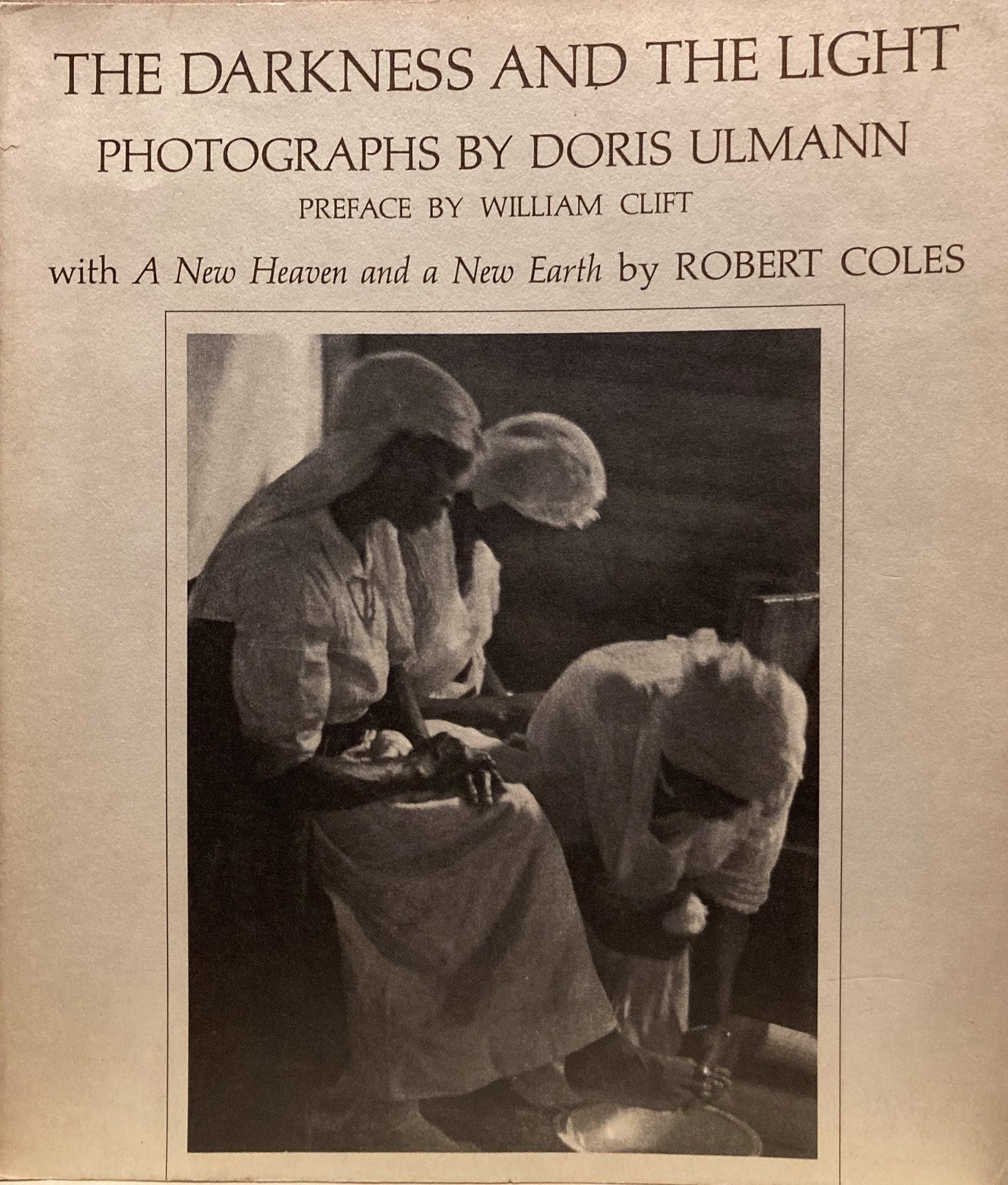
Ulmann, Doris. The Darkness and the Light: Photographs by Doris Ulmann.
Ulmann, Doris. The Darkness and the Light: Photographs by Doris Ulmann.
受取状況を読み込めませんでした
Aperture, 1974. Preface by William Clift with "A New Heaven and a New Earth" by Robert Coles. Photographs of African Americans in Appalachia and the Gullah people in South Carolina. [Doris Ulmann (1882–1934), who lived in New York City, is best known for her portraits sampled in this book. Some of these appeared in Roll, Jordon, Roll (1933), with text by Julia Peterkin.] Wraps, 111 pages, 1st printing; stamped “hurt” inside front cover and red mark at top of text block but otherwise very good with moderate signs of use. Summary:
The Darkness and the Light: Photographs by Doris Ulmann (1974), published posthumously by Aperture, Inc., is a landmark 112-page monograph that preserves and celebrates the visual legacy of one of America's greatest early 20th-century ethnographic portraitists.
Featuring a preface by photographer William Clift and a comprehensive 31-page essay titled "A New Heaven and a New Earth" by renowned child psychiatrist and sociologist Robert Coles, the book curates a powerful selection of images taken by Ulmann between 1925 and 1934 across the rural American South.
1. The Curatorial Premise: A Shared Humanity
The book's title captures the literal and metaphorical interplay of Ulmann's work. It reflects the stark tonal contrasts of her darkroom printing, the complex realities of life in the rural South, and her unique ability to find an inner, dignified "light" within subjects enduring intense socioeconomic hardship.
Rather than treating her sitters as objects of poverty or pity, the book emphasizes Ulmann's profound respect for the independent spirit and cultural heritage of her subjects.
2. Visual Focus and Geographic Scope
The high-fidelity black-and-white plates in the book are primarily sourced from the high-quality gravure reproductions of Ulmann’s earlier collaborations (such as the limited edition of Julia Peterkin's 1933 book Roll, Jordan, Roll), distilling her life's work into two geographic and cultural focus areas:
-
The Gullah People of the Sea Islands: Ulmann traveled to the coastal low-country plantations of South Carolina and Georgia to document the Gullah community—descendants of enslaved West Africans who preserved a deeply unique creole language, spiritual life, and agrarian culture. The photographs capture baptisms, community elders, and laborers facing the camera with immense poise.
-
The People of Appalachia: Accompanied by folk musician John Jacob Niles, Ulmann traveled deep into mountain communities across Kentucky, Tennessee, and North Carolina. The book highlights her portraits of the descendants of Scotch-Irish immigrants, focusing intensely on vanishing folkways, regional craftsmen, weavers, and musicians.
3. The Aesthetic: Where Pictorialism Meets Documentary
The Darkness and the Light highlights Ulmann's distinct artistic transition:
-
Trained at the prestigious Clarence H. White School of Modern Photography, Ulmann used a heavy, large-format view camera and a soft-focus lens.
-
The monograph illustrates how she blended the romantic, atmospheric, and painterly qualities of Pictorialismwith the raw, honest, and unposed integrity of Social Documentary photography. The result is a portfolio of character studies defined by compositional simplicity, soft edges, and rich tonal warmth.
4. Robert Coles’ Sociological Text
Sociologist Robert Coles' extensive text anchor provides an essential verbal companion to Ulmann's visual lyricism. Interweaving his own recorded interviews with contemporary residents of these same rural regions, Coles explores the psychological resilience, deep religious faith, and worldview of the rural working class, validating the profound cultural authenticity that Ulmann captured decades earlier.
Significance
The Darkness and the Light remains highly prized by art historians and collectors as the definitive retrospective of Doris Ulmann's career. By beautifully pairing her late-career negatives with modern sociological analysis, the Aperture monograph successfully rescued Ulmann from obscurity, positioning her alongside giants like Walker Evans and Dorothea Lange as a foundational architect of the American photographic consciousness.
