Gary Saretzky Photo Books
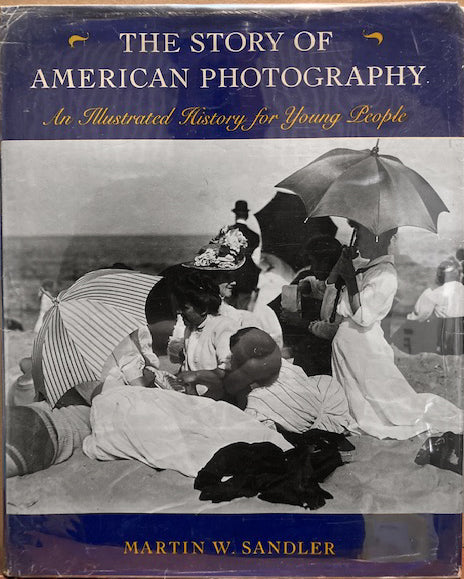
History of Photography. The Story of American Photography; An Illustrated History for Young People. by Martin W. Sandler.
History of Photography. The Story of American Photography; An Illustrated History for Young People. by Martin W. Sandler.
受取状況を読み込めませんでした
Little, Brown, 1978. 1st edition, 318 pages. [More than 200 photographs, including many not previously published. Includes the major figures, such as Daguerre, Mathew Brady, Jacob Riis, Timothy O'Sullivan, Walker Evans, Alfred Stieglitz, as well as others such as James Van Der Zee, Chansonetta Emmons, and Arthur Tress. Not a children's book.] Ex-library with usual markings, wear to extremities on both cloth and dust jacket. Summary:
The Story of American Photography: An Illustrated History for Young People is an engaging, educational survey of American photographic history written by author and historian Martin W. Sandler, published in 1979 by Little, Brown and Company.
Designed specifically for younger audiences, the book utilizes a clear narrative paired with over 200 historical photographs to illustrate how the medium grew from a crude 19th-century scientific novelty into a powerful social tool and a universally recognized fine art form.
Key Overview and Objectives
-
Democratizing Art History: Sandler’s primary objective is to make the complex history of photography accessible and exciting for a younger generation. He frames the camera not just as a mechanical device, but as an active eyewitness to the birth and transformation of modern America.
-
A Dual History: The book functions simultaneously as a history of photographic technology and a visual chronicle of the United States, showing how the growth of the nation and the evolution of the medium were deeply intertwined.
Core Themes and Historical Milestones
-
From Daguerreotype to Eastman: The narrative begins with the introduction of the daguerreotype in the 1830s and traces the rapid technological advancements of the 19th century. Sandler highlights George Eastman’s introduction of the Kodak camera, explaining how it revolutionized the medium by turning everyday citizens into casual snapshot photographers.
-
The Camera as a Historical Witness: A significant portion of the book focuses on photojournalism and documentary photography. Sandler features Mathew Brady’s haunting documentation of the Civil War, Jacob Riis and Lewis Hine’s exposure of urban poverty and child labor, and the Farm Security Administration (FSA) photographers who captured the hardships of the Great Depression.
-
Photography as Fine Art: The book introduces young readers to the aesthetic evolution of the medium. It explores how pioneers like Alfred Stieglitz, Edward Steichen, and Ansel Adams fought to have photography recognized alongside painting and sculpture by manipulating light, shadow, and composition.
Significance
The Story of American Photography remains a highly regarded foundational text in visual literacy for young readers. By combining compelling storytelling with iconic historical imagery, Sandler successfully teaches his audience how to "read" photographs as historical documents, fostering a deeper appreciation for both American history and the power of the visual image.
