Gary Saretzky Photo Books
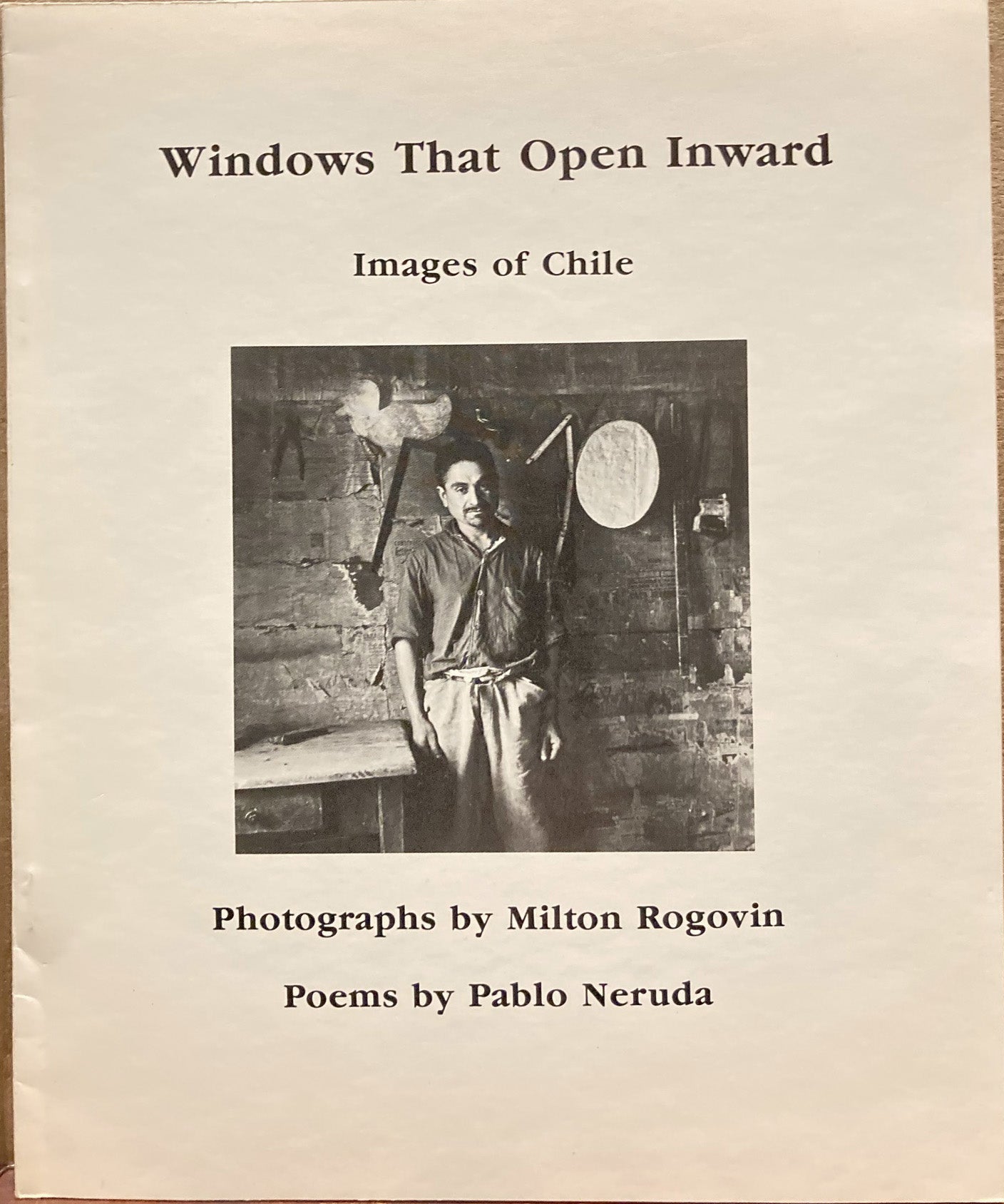
Rogovin, Milton. Windows That Open Inward: Images of Chile by Milton Rogovin and Pablo Neruda.
Rogovin, Milton. Windows That Open Inward: Images of Chile by Milton Rogovin and Pablo Neruda.
受取状況を読み込めませんでした
White Pine Press, 1998. 1st edition. Wraps, 68 pages, fine with custom made polyester jacket. Photographs by Rogovin with poems by Pablo Neruda translated into English, for the most part on facing pages. Summary:
Windows That Open Inward: Images of Chile is a profound collaborative photobook that synthesizes the social documentary photography of Milton Rogovin with the poetry of Nobel Laureate Pablo Neruda. Published by White Pine Press, the volume serves as a lyrical, deeply empathetic portrait of the people and landscapes of rural Chile.
Origin and Creative Collaboration
The project stems from Rogovin's travel to Chile in the late 1960s, a trip facilitated by Neruda himself. Impressed by Rogovin’s commitment to documenting the dignity of the working class, Neruda invited him to photograph the impoverished communities, farmers, and laborers of the remote southern regions, particularly around Isla Negra and the Temuco province. Rogovin’s unvarnished black-and-white portraits were subsequently paired with a curated selection of Neruda's poems, creating a dialogue between visual and literary art.
Core Visual Narrative and Themes
The book avoids political rhetoric or standard travelogue imagery, choosing instead to focus on the quiet resilience of everyday life:
-
The People of the Land: Rogovin’s portraits feature Mapuche Indians, rural peasants, woodcutters, and market vendors. His subjects face the camera directly with profound solemnity and pride, framed within their modest homes or natural working environments.
-
Domestic and Natural Textures: The imagery heavily emphasizes the raw physical textures of the Chilean landscape—weathered wooden doorways, dirt paths, hand-woven textiles, and the rugged, rain-swept atmosphere of the southern coast.
-
The Metaphor of the Window: Reflecting the book's title, many photographs utilize doorways and windows as framing devices, symbolizing an intimate look inward into the private, enduring soul of a people facing economic hardship.
Poetic Integration and Style
-
The Photo-Poem Dialogue: Rather than serving as literal captions, Neruda’s poetry runs alongside Rogovin’s imagery to provide an emotional and spiritual echo. The text translates the physical landscape and human struggles into verse, celebrating the ordinary elements of Chilean life.
-
Humanistic Realism: Rendered in rich, high-contrast tones, the volume is celebrated as a seamless artistic partnership where both the camera and the pen are used to grant visibility and historical permanence to a marginalized population.
