Gary Saretzky Photo Books
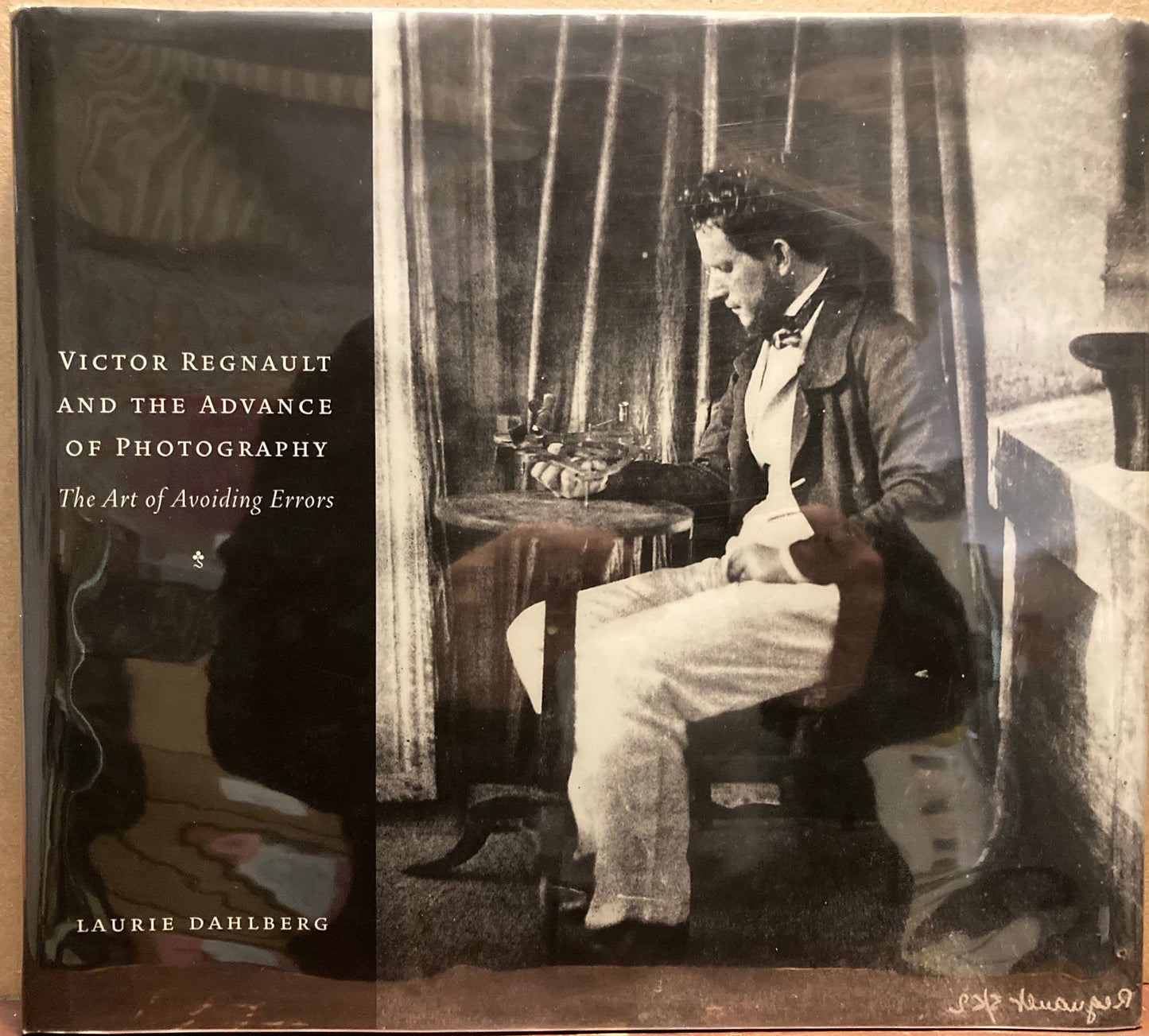
Regnault, Victor. Victor Regnault and the Advance of Photography: the Art of Avoiding Errors by Laurie Dahlberg.
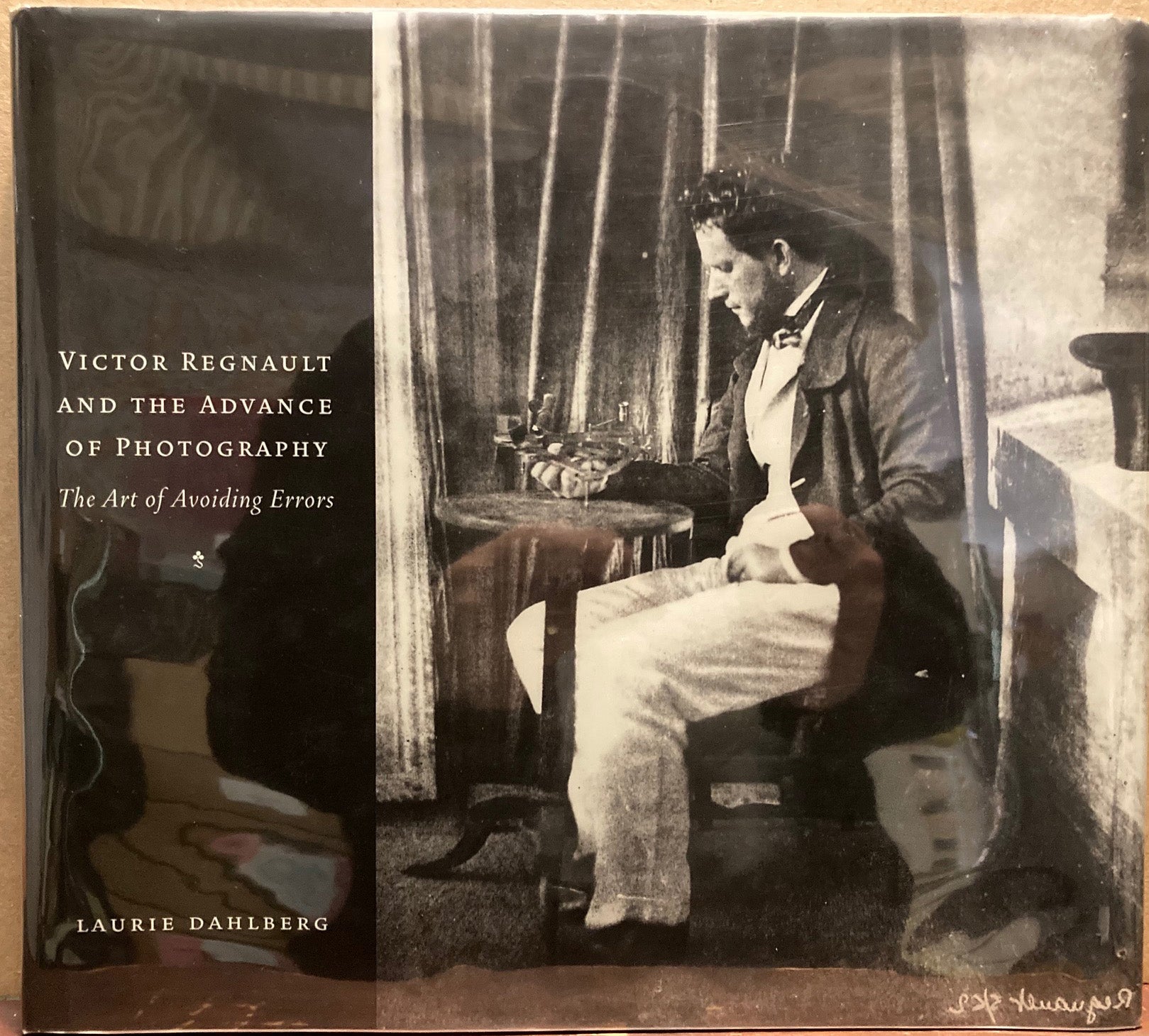
Regnault, Victor. Victor Regnault and the Advance of Photography: the Art of Avoiding Errors by Laurie Dahlberg.
受取状況を読み込めませんでした
Princeton University Press. [The most complete book yet available on a leading calotype photographer of the 1850s in France, with high quality reproductions.] 1st edition, 1st printing. Like new in hardcover with protected dust jacket.
Henri Victor Regnault (1810–1878) was a prominent French chemist, physicist, and pioneer of early paper photography.Originally taking up photography around 1847 to explore its application as a tool for empirical research, he soon embraced the medium for expressive, artistic purposes, producing scenic landscapes, portraits, architectural studies, and genre scenes. Regnault made significant technical improvements to William Henry Fox Talbot's calotype process and Louis-Désiré Blanquart-Evrard's paper negative techniques, applying his background as a meticulous experimentalist to refine early photographic methods. A key organizational figure in French photographic history, he co-founded the Société Héliographique in 1851 and was elected in 1855 as the founding president of the Société Française de Photographie.While serving as director of the Manufacture Nationale de Sèvres, he integrated photographic techniques into porcelain manufacturing and continued his scientific studies. Though his photography was largely overlooked immediately following his death, Regnault's surviving calotypes are now recognized for their delicate tonal quality and historical importance in 19th-century French photography.
Victor Regnault and the Advance of Photography: The Art of Avoiding Errors (published by Princeton University Press in 2005) by art historian Laurie Dahlberg is the first comprehensive study of Henri Victor Regnault, a towering 19th-century French scientist who was also a foundational, yet frequently overlooked, figure in early photography.
Dahlberg explores Regnault’s dual identity as a world-renowned physicist and chemist and the president of the Société française de photographie, mapping out how his rigorous scientific training fundamentally shaped his photographic practice.
Core Themes & Analytical Framework
1. The Scientific Mindset: "The Art of Avoiding Errors"
The book's subtitle stems from Regnault's professional philosophy. As a scientist working in thermodynamics and chemistry, Regnault was obsessed with empirical precision and minimizing human and mechanical error. Dahlberg argues that he brought this exact methodology to the darkroom. While early photography was often treated as an unpredictable, almost magical craft, Regnault approached it as an experimental science, systematically testing chemical behaviors, exposure times, and paper types to master the medium.
2. The Calotype and Aesthetic Expression
Despite his cold, empirical approach to data, Regnault's actual photographs were remarkably artistic, intimate, and moody. He favored the paper-based calotype process (which yielded soft, textured images) over the sharp, metallic daguerreotype. Dahlberg examines this fascinating duality, showcasing his private portfolio of:
-
Idyllic, romanticized landscapes of the French countryside.
-
Intimate, informal portraits of his family, friends, and fellow scientists.
-
Still lifes and domestic scenes around his home and laboratory at the Sèvres porcelain factory.
3. Photography as an Intellectual Bridge
Dahlberg positions Regnault as a vital bridge between the worlds of art and science during a period of shifting cultural boundaries. As a high-ranking academic and the founding president of France's premier photographic society, Regnault championed photography not merely as a mechanical recording tool for labs or a commercial gimmick for studios, but as an elite intellectual and creative pursuit worthy of institutional support.
Dahlberg's monograph reclaims Regnault's spot in the history of photography, showing that the division between scientific objectivity and artistic subjectivity in the mid-19th century was highly fluid. Regnault demonstrated that the same discipline used to map thermodynamic laws could be harnessed to capture deeply poetic visual expressions.