Gary Saretzky Photo Books
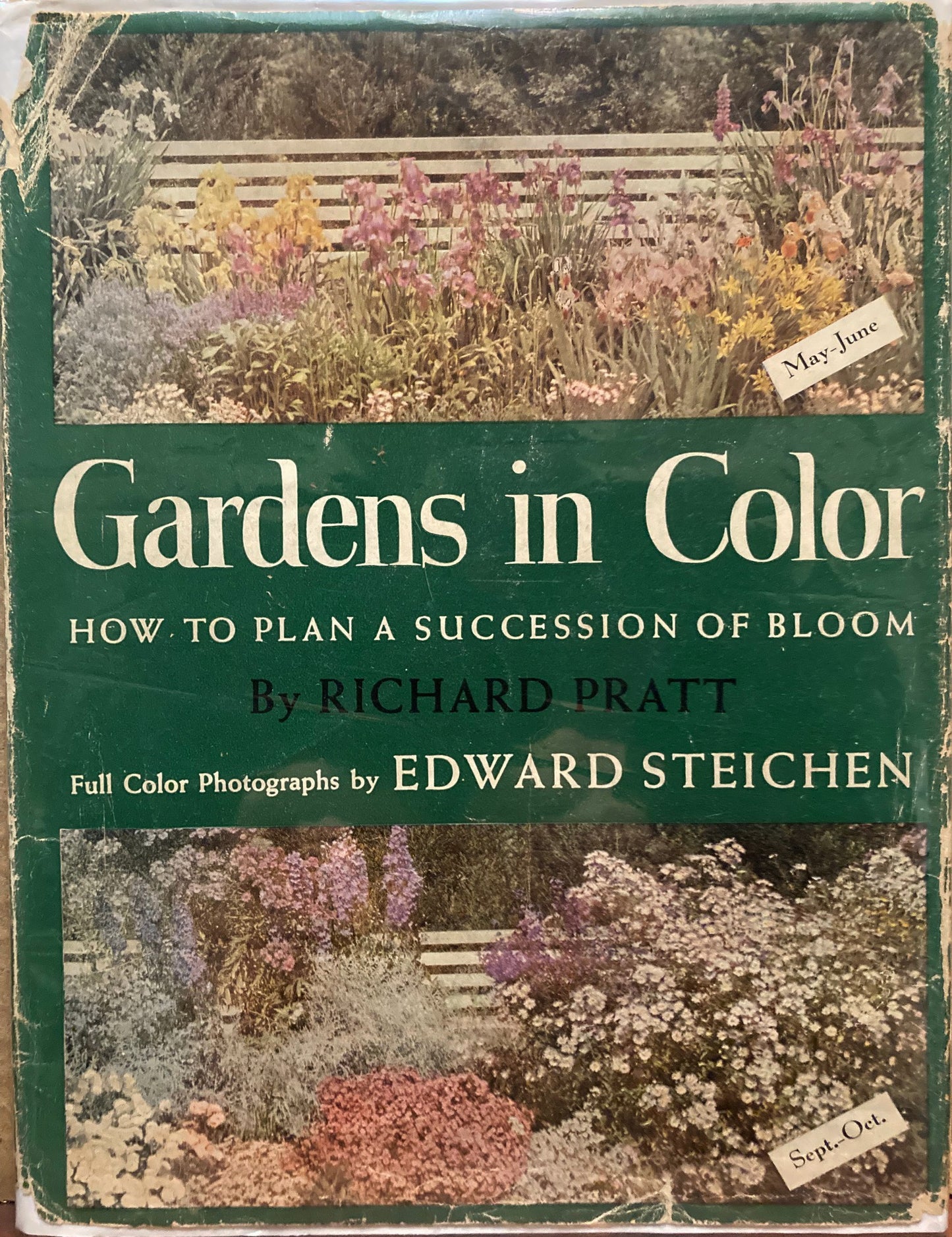
Steichen, Edward. Gardens in Color: How to Plan a Succession of Bloom by Richard Pratt and Edward Steichen.
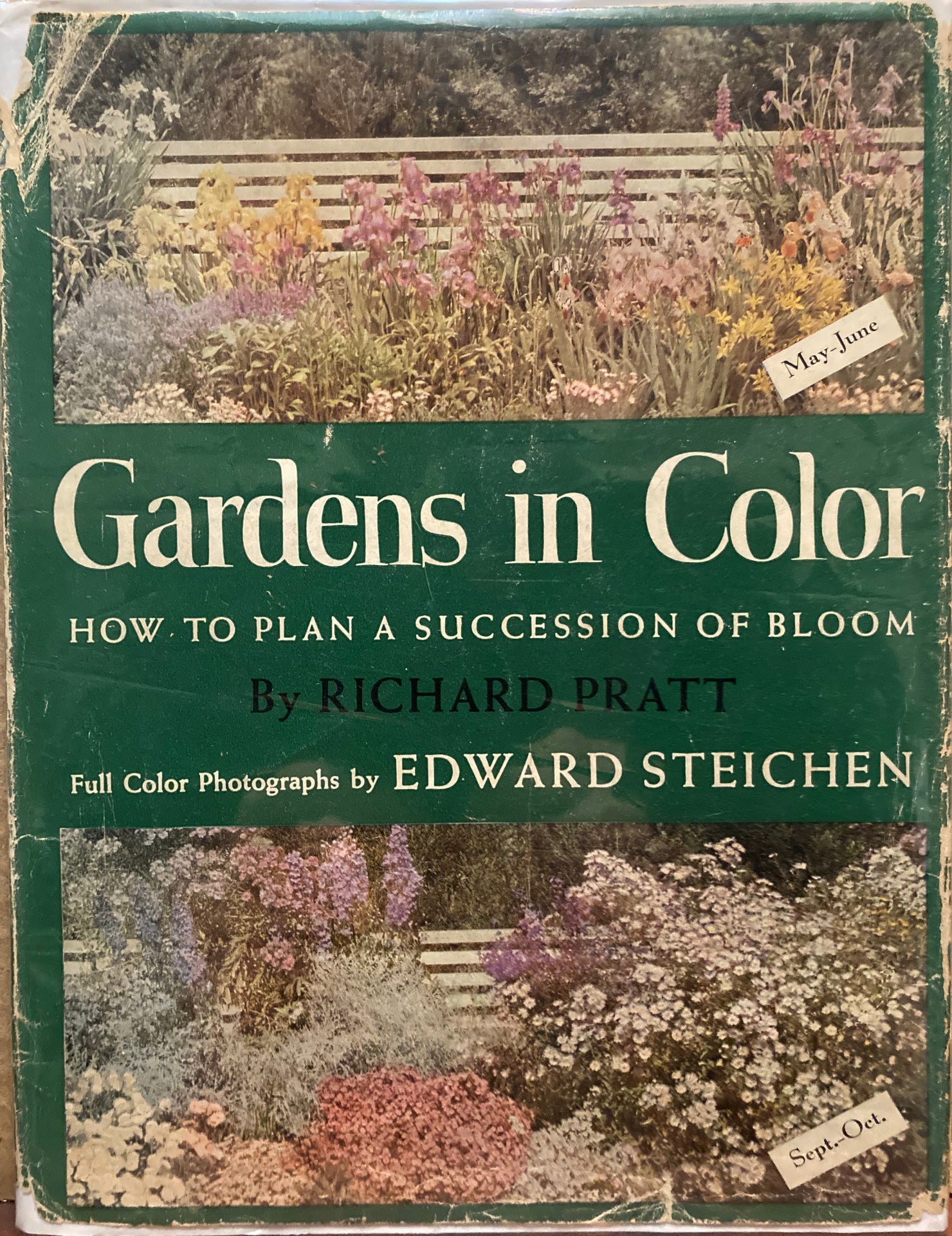
Steichen, Edward. Gardens in Color: How to Plan a Succession of Bloom by Richard Pratt and Edward Steichen.
受取状況を読み込めませんでした
Garden City Publishing, 1944. (Color photos by Steichen.) In addition to being a photographer, Steichen was very involved with horticulture at his home in Connecticut and even had an exhibit of flowers at the Museum of Modern Art. Very good hardcover with edge-worn dust jacket. Summary:
Gardens in Color: How to Plan a Succession of Bloom (published by Garden City Publishing in 1944) is a beautifully produced gardening guide written by architectural and landscape writer Richard Pratt, featuring extensive color photography by legendary modern photographer and passionate horticulturist Edward Steichen. Originally serialized in part as The Picture Garden Book, this 143-page volume combines practical landscape design advice with high-end color plates to help homeowners create visually striking gardens that flower continuously throughout the changing seasons.
Core Themes & Content Structure
1. The Strategy of "Succession of Bloom"
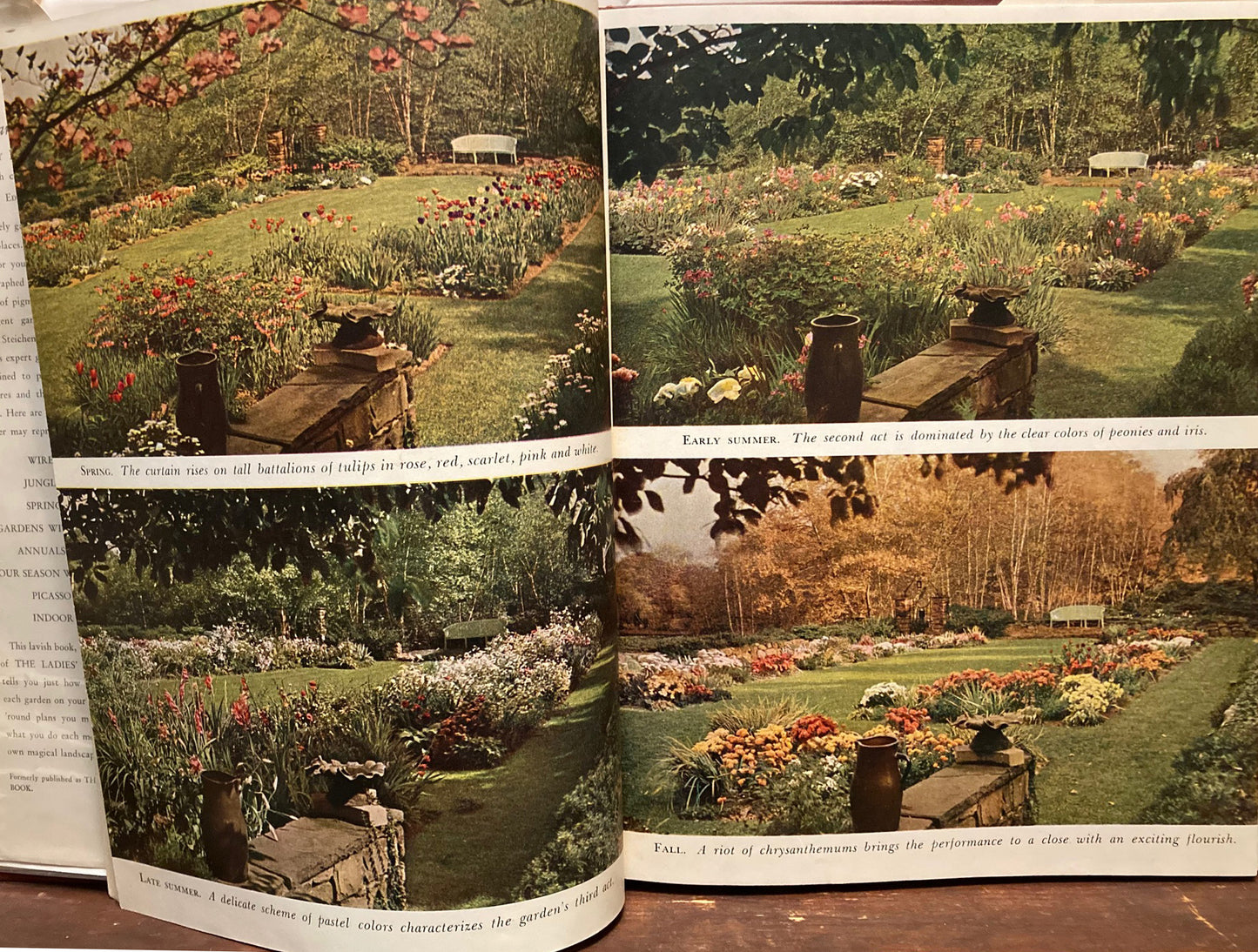
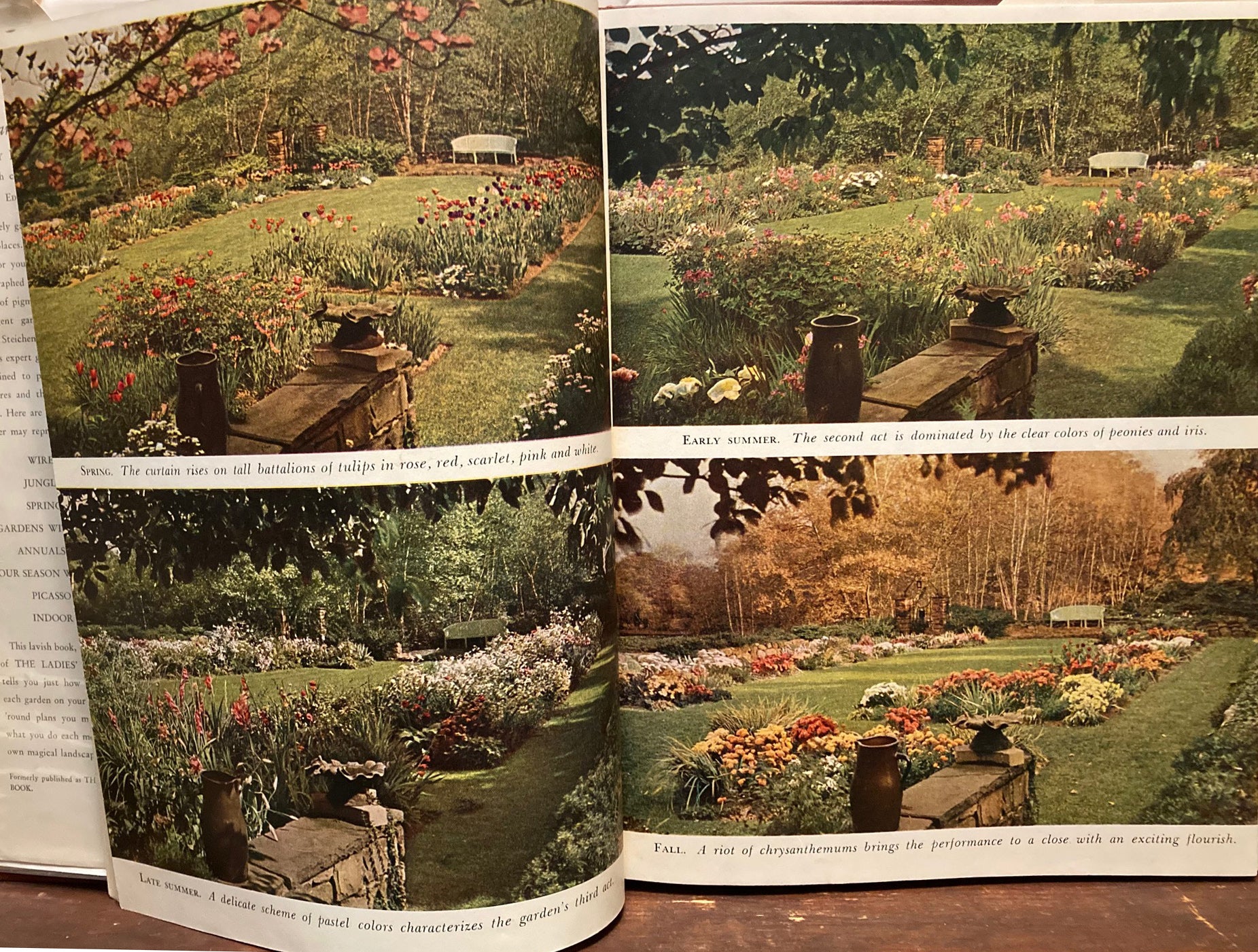
The core instructional thesis of the book is teaching gardeners how to orchestrate a landscape so that as one variety of plant fades, another immediately begins to flower. Pratt provides detailed layouts and chronological planting advice to eliminate the "mid-summer slump" common in amateur gardens. The text focuses on mixing annuals, perennials, and flowering shrubs to guarantee a seamless handoff of color from early spring through late autumn.
2. Diversified Theme Gardens
Pratt categorizes garden planning into creative, distinct themes designed to fit different spaces, architectural styles, and maintenance levels. The book provides comprehensive details, structural sketches, and plant lists for seasonal spaces, stylistic and avant-garde concepts, and low-maintenance solutions that rely primarily on the rich textures and varying shades of evergreen and deciduous foliage.
3. Steichen’s Horticultural Photography
A major distinguishing feature of the publication is the involvement of Edward Steichen. While famous for his fashion, portrait, and combat photography, Steichen was also a world-renowned horticulturist who spent decades cross-breeding delphiniums at his Connecticut estate. His vibrant, full-color photographs in the book serve a dual purpose: they function as precise visual proof of the plant pairings discussed by Pratt, while elevating the volume into a work of photographic art that captures the luminous textures and deep saturation of mid-century flora.
Published during the closing years of World War II, Gardens in Color arrived at a time when American domestic focus was heavily tied to Victory Gardens and home self-sufficiency. By pairing accessible, idea-filled landscape blueprints with the work of one of America's greatest master photographers, the book successfully bridged the gap between a utilitarian planting manual and an aspirational fine-art coffee table book.