Gary Saretzky Photo Books
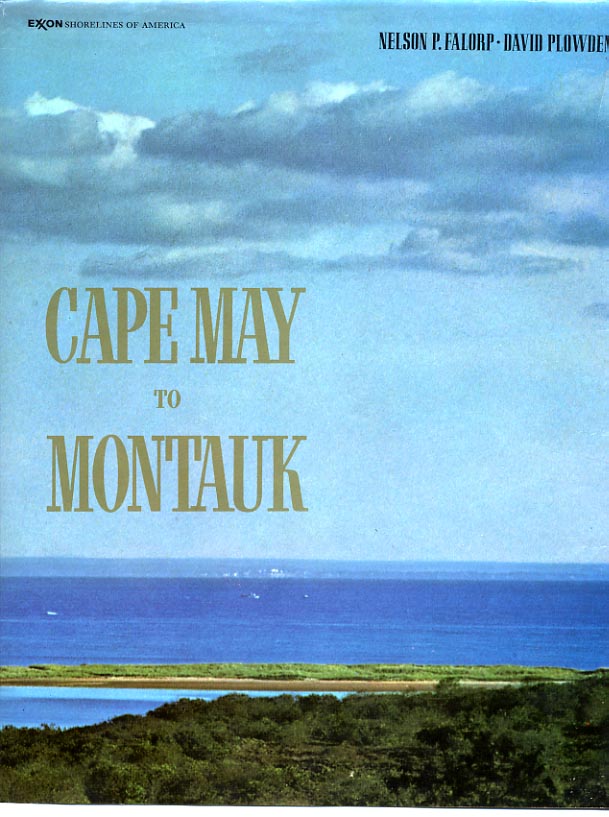
Plowden, David. Cape May to Montauk by David Plowden.
Plowden, David. Cape May to Montauk by David Plowden.
受取状況を読み込めませんでした
Viking, 1973. 1st edition. 127 pages. Photos in color by David Plowden with text by Nelson P. Falorp. Includes the natural beauty of the Jersey Shore, Staten Island, New York Harbor, Long Island, Fire Island, East Hampton, etc. Fine with slightly chipped dust jacket. Summary:
Cape May to Montauk (published by The Viking Press / A Studio Book in 1973) is a poignant visual and textual exploration of the Mid-Atlantic and southern New England coastlines. Featuring photographs exclusively by David Plowden, a master chronicler of disappearing American landscapes, and text co-authored with Nelson P. Falorp, the 127-page book documents the delicate, often strained relationship between natural coastal geography and human development along a critical stretch of the American eastern seaboard.
Core Content & Regional Survey
1. The Sweep of the Mid-Atlantic Coast
The book functions as a geographic and photographic journey following the shoreline from the southern tip of New Jersey up to the easternmost point of Long Island, New York. The sequencing traces a highly diverse landscape, balancing untouched barrier islands and wildlife preserves with historic beach communities and industrial shipping lanes. The visual journey maps out distinct sub-regions:
-
Cape May and the Jersey Shore: Highlighting the distinct Victorian architecture of Cape May, the sprawling salt marshes, and the mid-century boardwalk infrastructures that define early American resort culture.
-
The New York Bight and Harbor: Capturing the heavy industrial textures, tugboats, and working waterfront infrastructure where the ocean meets the urban metropolis.
-
Long Island's South Shore and Montauk: Documenting the vast, windswept dunes, shifting barrier beaches like Fire Island, and the historic maritime legacy of the Montauk point.
2. The Interaction of Nature and Human Imprint
True to Plowden's signature documentary style, the book avoids idealized, tourist-brochure imagery. Instead, the high-quality plates focus on the "hand of man" on the land. The structural narrative contrasts the raw, elemental forces of the Atlantic Ocean—such as shifting sands, coastal erosion, and weathering storms—with human attempts to stabilize and commercialize the coast. The imagery captures weathered docks, lighthouses, coastal architecture, and early signs of dense suburbanization encroaching upon fragile ecosystems.
3. Environmental and Cultural Reflections
The accompanying text provides necessary historical context and early environmental warnings. Writing in the early 1970s—a pivotal era for the modern American environmental movement—the authors reflect on what is being lost to rapid, unplanned development. The essays examine the social history of the people who live and work along these shores, from traditional fishermen and lighthouse keepers to seasonal tourists, exploring how the unique ecology of the coast shapes human behavior and community identity.
Cape May to Montauk serves as an important historical benchmark from a transformative decade in American coastal history. By pairing Plowden’s precise, deeply respectful black-and-white photography with a thoughtful narrative, the volume stands as both a celebration of maritime beauty and an early, quiet warning about the vulnerability of our coastal margins in the face of modern expansion.
