Gary Saretzky Photo Books
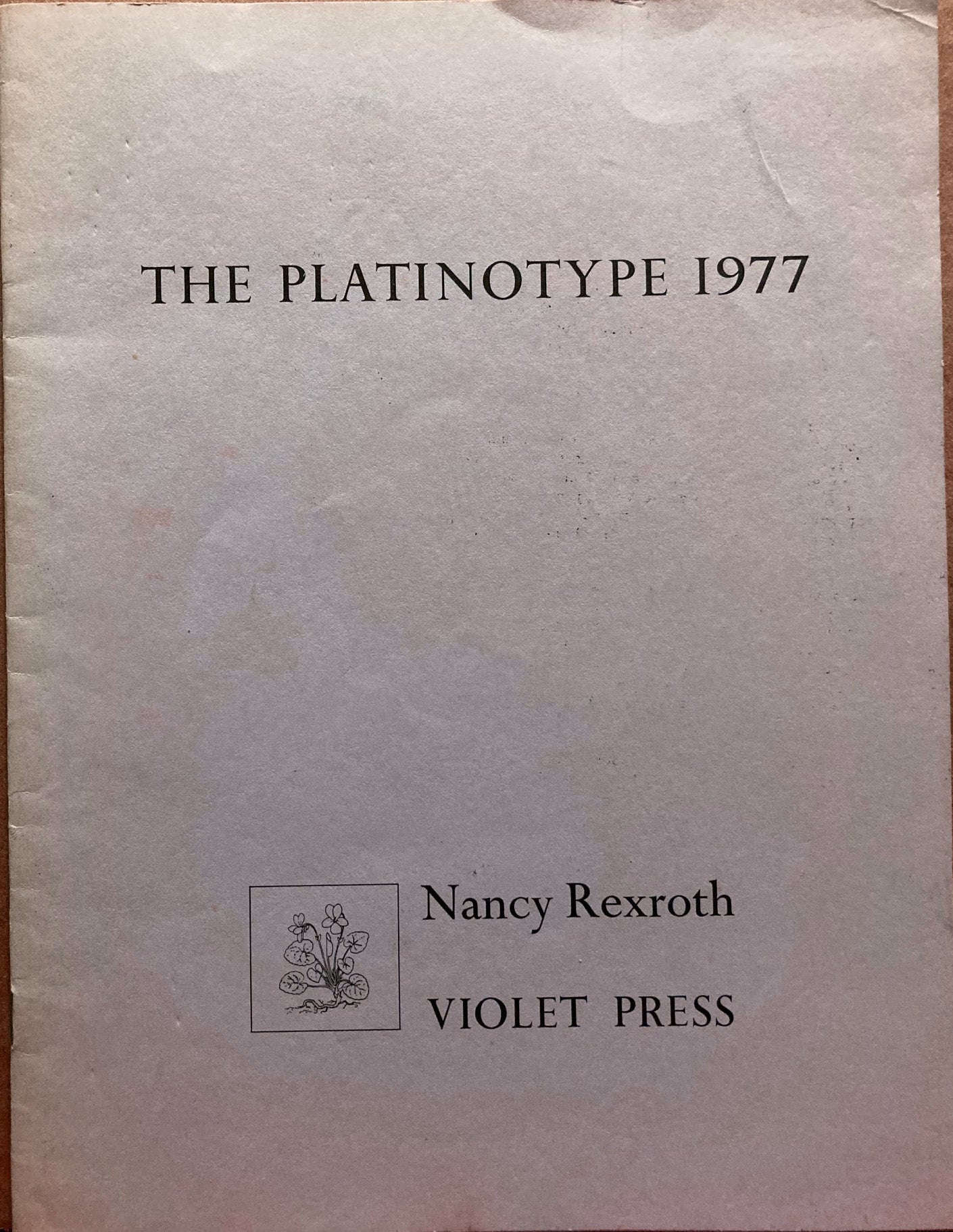
Platinum Prints. The Platinotype 1977 by Nancy Rexroth.
Platinum Prints. The Platinotype 1977 by Nancy Rexroth.
受取状況を読み込めませんでした
Violet Press, 1977. Distributed by Light Impressions. Violet quarto wraps, 30 pages, stapled. 1st ed., VG+ with minor evidence of handling, including crimps on the thin cover. No fading or foxing as common with this title. Has been stored in a zip lock bag since acquisition in 2003. Includes formulas and procedures. Appears to be signed at bottom of Introduction but probably a facsimile signature. Not to be confused with the 1978 reprint by Formulary Press. [Rexroth is best known for her book, Iowa, and for her use of Diana cameras.] Summary:
The Platinotype 1977 (published by Violet Press in 1977) is a specialized, 34-page technical manual and photographic pamphlet written by acclaimed American fine-art photographer Nancy Rexroth. Best known for her pioneering toy-camera monograph IOWA, Rexroth authored this text to demystify and revive historical platinum and palladium printing methods for contemporary late-20th-century artists.
Technical Foundation & Research Context
1. Smithsonian Research and Historical Context
The manual is the direct result of a summer research internship completed in the photography section of the Smithsonian Institution. Rather than a standard artist's book of plates, the text functions as a comprehensive, hands-on instructional guide. The narrative charts the history of the platinotype—a 19th-century process prized for its rich, matte tonal ranges and permanent stability—and breaks down how modern photographers can adapt these archival methods using current chemical alternatives.
2. Formulating the Modern Platinum Print
Presented in an accessible, typewritten layout, the core of the publication acts as a practical workbook for the darkroom. The instructional text provides precise chemical formulas, paper selection recommendations, hand-coating instructions, and exposure guidelines necessary to execute platinum and palladium contact prints. By outlining a clear step-by-step workflow, the manual demystifies a volatile, historic process and bridges the gap between obsolete industrial manuals and contemporary art applications.
3. Alternative Process Movement and Creative Utility
While highly technical, the text emphasizes the expressive and aesthetic qualities of alternative chemistry. The analysis advocates for the unique, velvety black tones and expansive midtone gradations that only noble metals can yield. The writing highlights how these physical textures can elevate fine-art imagery, serving as an invaluable reference tool for a growing movement of post-modern photographers seeking an alternative to standard, commercially produced silver gelatin papers.
Originally printed as a slim, saddle-stitched manual, The Platinotype 1977 became an underground resource distributed via specialized networks like Light Impressions, leading to multiple expanded printings into the late 1970s. Alongside a highly regarded creative practice, this manual played a crucial institutional role in fueling the alternative photographic process revival, preserving historical printing techniques for generations of experimental image-makers.
