Gary Saretzky Photo Books
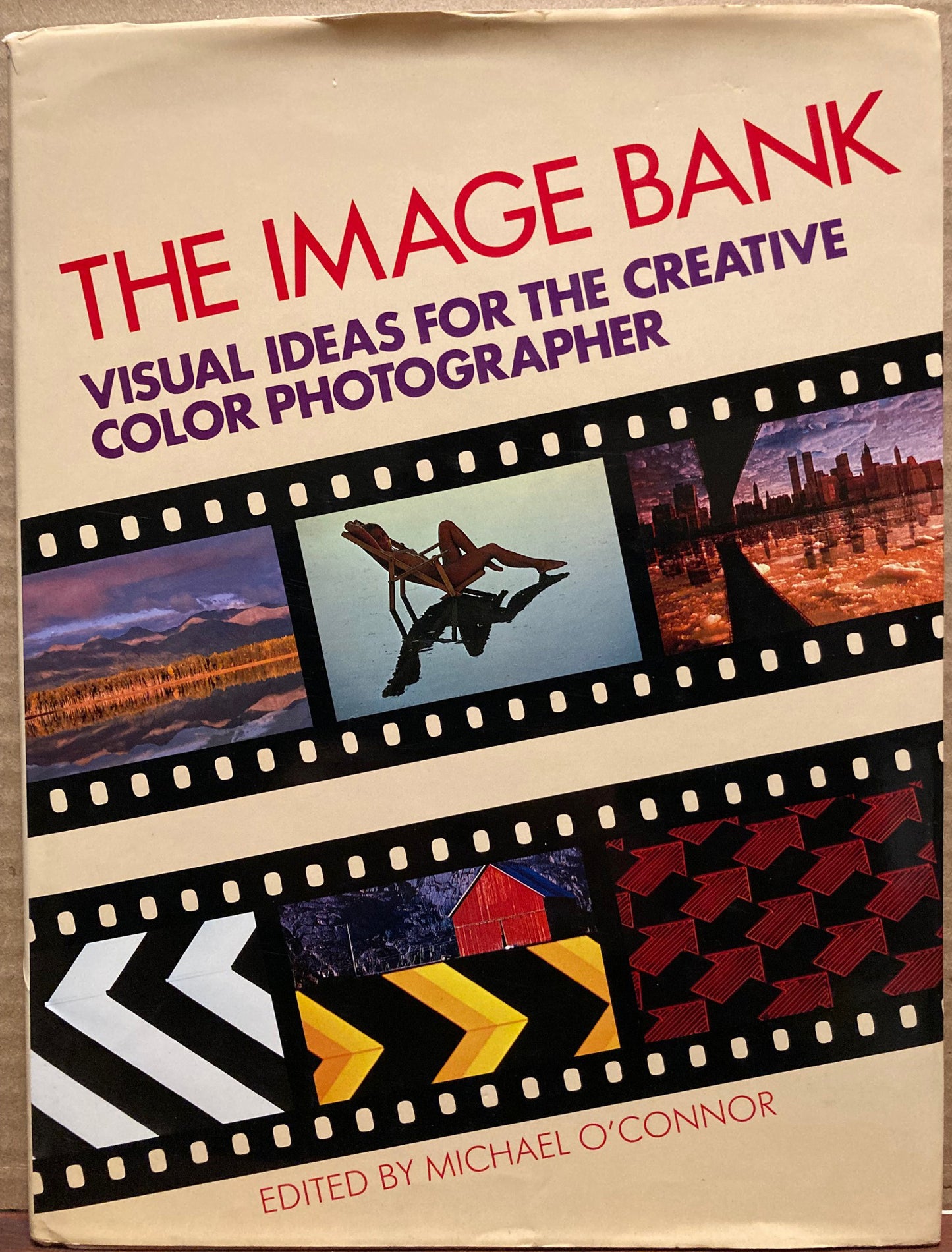
The Image Bank: How You Can Recognize and Use Visual Elements to Produce More Powerful Photographs
The Image Bank: How You Can Recognize and Use Visual Elements to Produce More Powerful Photographs
受取状況を読み込めませんでした
Amphoto, 1983. Edited by Michael O'Connor. 1st edition, first printing. Hard cover with dust jacket, In addition to tips, this very finely reproduced book includes excellent quality reproductions of photographs by numerous exceptional photographers, including Bill Binzen, Sonja Bullaty, Robert Farber, Franco Fontana, Alfred Gescheidt, Douglas Kirkland, Angelo Lomeo, Jay Maisel, David Muench, Yoshikazu Shirakawa, Pete Turner, John Vachon, Christian Vogt, and many others. Fine condition with dust jacket that has slight edge wear and one short tear at top of spine. Book issued at $24.95. Summary:
The Image Bank: How You Can Recognize and Use Visual Elements to Produce More Powerful Photographs (published in 1983 by Amphoto / Fried Kanney Associates, Ltd. and edited by Michael O'Connor) is a highly visual, instructional guide designed to sharpen a photographer's creative vision. Drawing from the massive commercial portfolios of The Image Bank—one of the world's premier stock photography agencies of the era—the 176-page book translates abstract design theory into practical, real-world shooting techniques.
Core Content & Creative Framework
1. Deconstructing the Visual Elements
The primary focus of the book is breaking down a photograph into its fundamental building blocks. Instead of focusing heavily on technical camera settings, the text teaches photographers how to train their eyes to isolate specific design elements within a viewfinder, including:
-
Color and Contrast: Exploring how bold, saturated palettes create emotional impact, and how subtle tonal variations shift a picture's mood.
-
Line, Shape, and Pattern: Demonstrating how geometric structures, leading lines, and repeating rhythms naturally guide a viewer's eye through a composition.
-
Texture and Form: Using light and shadow to emphasize the tactile qualities of a subject, transforming flat two-dimensional images into dynamic three-dimensional spaces.
2. Learning from Masters of Visual Communication
Rather than relying on generic diagrams, the book uses high-quality color reproductions from a world-class roster of commercial, editorial, and fine-art photographers. Each image functions as a case study, showing how industry professionals utilize visual elements to craft memorable imagery. The volume analyzes the distinct structural strategies of celebrated image-makers, including:
-
Graphic Mastery: Celebrating artists renowned for their handling of bold geometry, minimalist framing, and vibrant color relationships.
-
Atmospheric Approach: Showcasing sophisticated approaches to human form, soft lighting, and cinematic atmosphere.
-
Environmental Observations: Illustrating how to discover patterns, balance, and unexpected compositions within nature and urban streetscapes.
3. Practical Composition and Creative Application
The concluding sections translate these design principles into actionable advice for both amateur and professional photographers. The text provides specific strategies for analyzing a scene before pressing the shutter, encouraging shooters to actively look for geometric relationships, negative space, and framed perspectives. By learning to consciously manipulate these visual components, photographers are shown how to elevate standard snapshots into powerful, communicative pieces of visual art.
Published during the pre-digital golden age of commercial film photography, The Image Bank remains an essential textbook on visual literacy. By pulling back the curtain on the exact types of imagery that drove global advertising, media, and design in the early 1980s, the publication provides an enduring framework for understanding how timeless design principles dictate the psychological impact of a photograph.