Gary Saretzky Photo Books
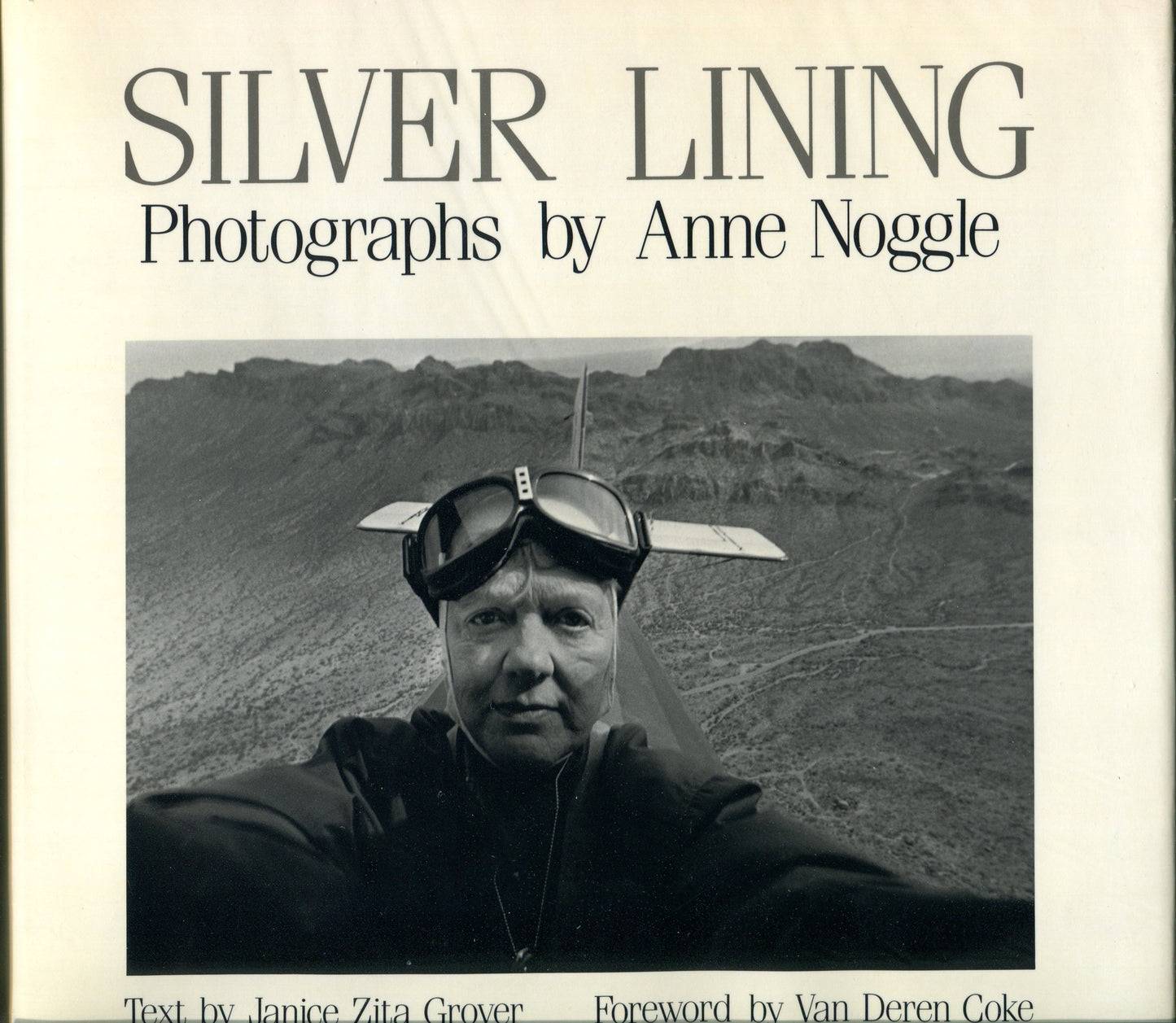
Noggle, Anne. Silver Lining: Photographs by Anne Noggle. Signed.
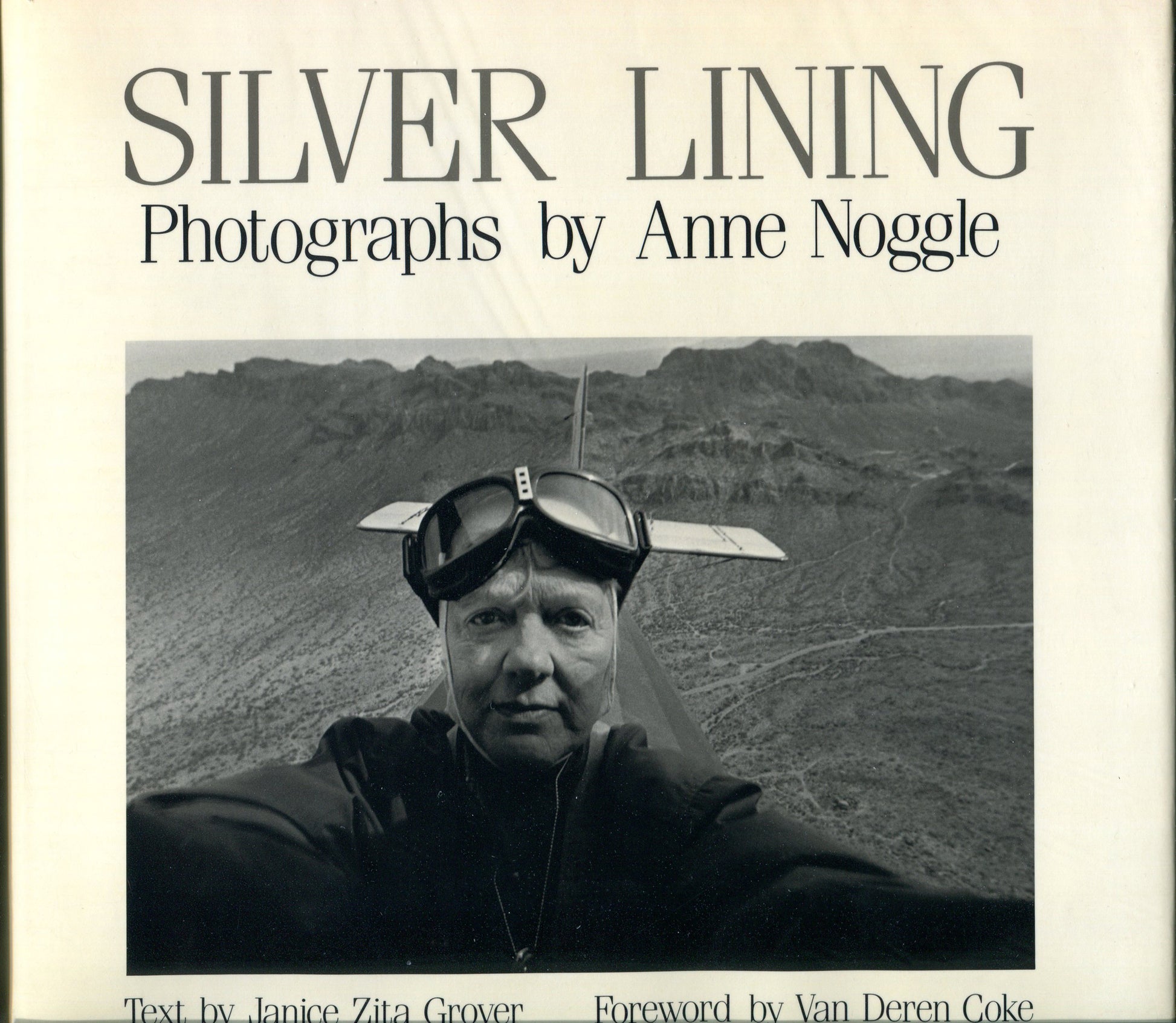
Noggle, Anne. Silver Lining: Photographs by Anne Noggle. Signed.
受取状況を読み込めませんでした
University of New Mexico Press, 1983. Essay by Janice Zita Grover. Speech text by Noggle. Foreword by Van Deren Coke. [Noggle's portraits, mostly of older women including herself in a self-portrait.] First edition, hardcover in black cloth, fine with very good protected dust jacket that has a bit of wear at top of spine. Inscribed to artist and photographer Ken [Kaplowitz] on title page by Anne Noggle, was an aircraft pilot before becoming a photographer. Summary:
Silver Lining: Photographs by Anne Noggle (published in 1983 by the University of New Mexico Press) is the definitive premier monograph of American photographer, professor, and former World War II pilot Anne Noggle. Featuring a critical essay by Janice Zita Grover and a foreword by Van Deren Coke, the book serves as a foundational text in feminist photography, offering an unblinking, humorous, and deeply empathetic exploration of the psychological and physical realities of female aging.
Core Content & Conceptual Framework
1. Chronology of the "Saga of the Fallen Flesh"
The visual narrative of the book revolves around what Noggle famously termed the "saga of the fallen flesh"—a deliberate, artistic challenge to the youth-obsessed beauty standards of mainstream Western media. Moving chronologically through her early career from the late 1960s to the early 1980s, the images catalog the irreversible passage of time on the female form. Rather than presenting aging as a tragedy or a taboo, Noggle recontextualizes sagging skin, wrinkles, and physical vulnerability as markers of survival, resilience, and personal history.
2. Radical Self-Portraiture and Vulnerability
A core pillar of Silver Lining is Noggle’s pioneering work in self-portraiture. She turns the camera on herself with radical, unstinting honesty, displaying a level of vulnerability rare for artists of the era. The book includes several of her most famous conceptual self-portraits:
-
The Face-Lift Series: A sequence of raw, high-contrast close-ups documenting her swollen, bruised, and stitched face as she recovered from elective plastic surgery.
-
Guises and Alter Egos: Images where Noggle presents herself in various tragicomic, real, or imaginary personas—such as floating underwater while wearing a pearl necklace or posing stoically in the desert—blending humor with deep existential irony.
3. Portraying the Invisible: Friends, Family, and Contemporaries
Beyond herself, Noggle populated the monograph with intimate, environmental portraits of elderly women within her immediate orbit. She treats her subjects—including her aging mother, Agnes, her sister, and various neighborhood matriarchs—with a clinical yet profoundly loving eye. The photographs intentionally mimic the confrontational, straight-gaze aesthetics of master portraitists, forcing viewers to look directly at older women who are otherwise rendered socially invisible by contemporary culture.
4. Flown Horizons and Technical Mastery
The publication subtly weaves in Noggle’s unique personal background as a former Women Airforce Service Pilot (WASP) and stunt flyer. The spatial awareness, expansive southwestern horizons, and stark lighting choices present in her compositions reflect a pilot's relationship with open space and isolation. Technically, the book highlights her mastery of wide-angle lenses and fine gelatin silver printing, utilizing sharp focus and deep tonal contrasts to accentuate structural textures without softening or romanticizing her subjects.
Published when Noggle was in her early sixties, Silver Lining stands as a watershed moment in the history of feminist art and visual sociology. Alongside contemporary self-portrait innovators, Noggle used the camera to permanently dismantle restrictive cultural mythologies surrounding the female body, establishing an influential legacy for how fine art confronts identity, bodily autonomy, and the universal experience of growing old.