Gary Saretzky Photo Books
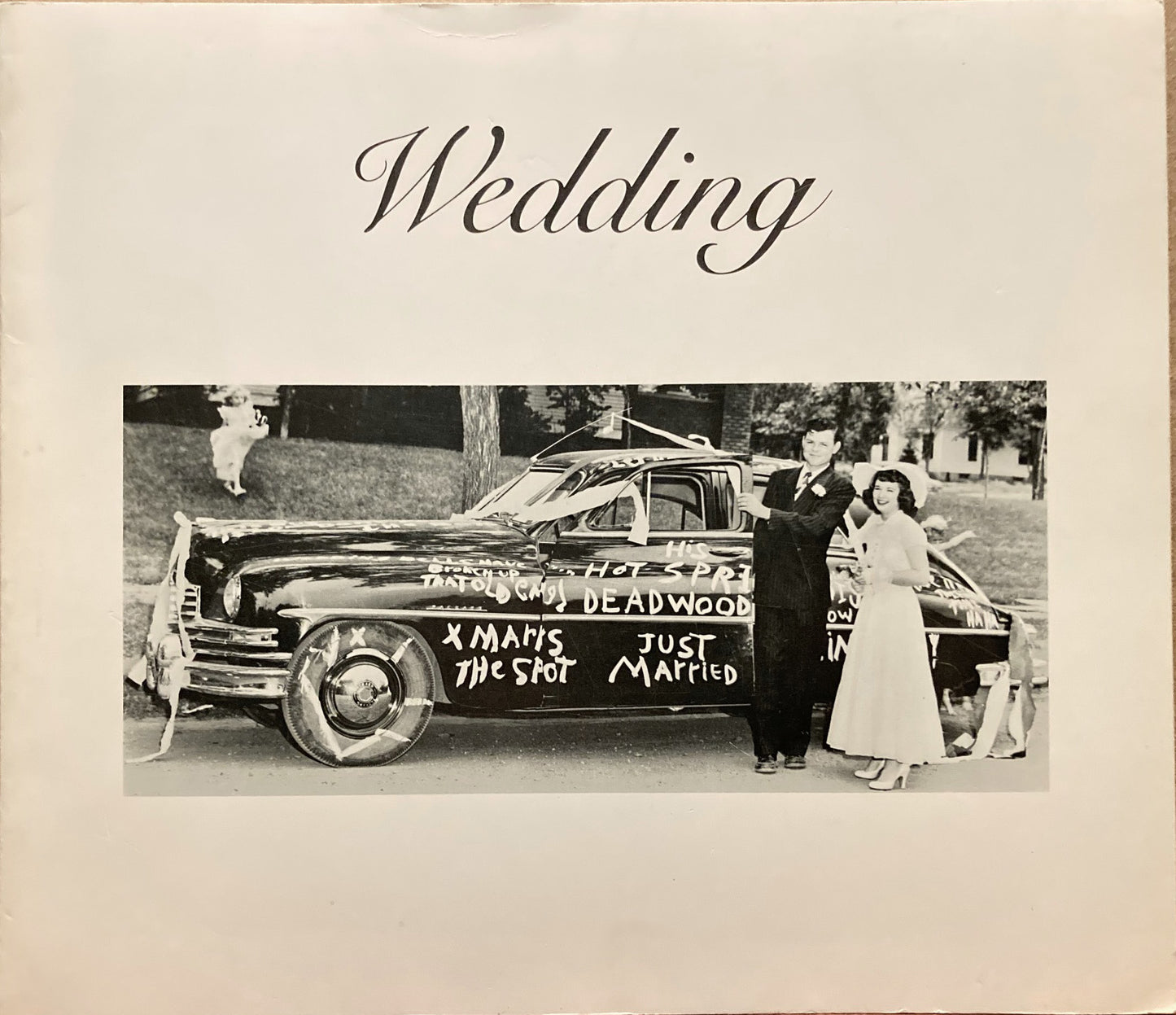
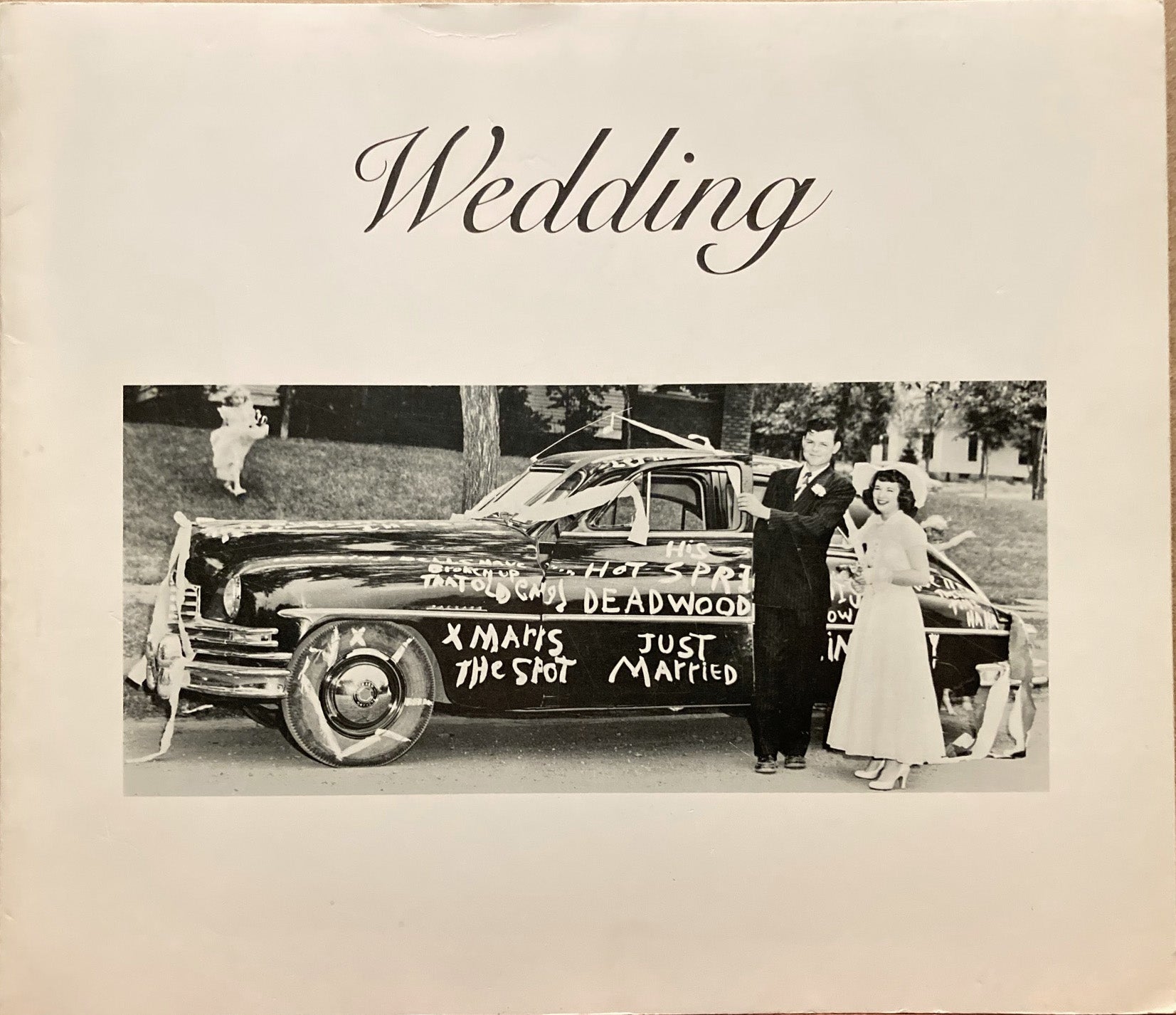
Norfleet, Barbara. Barbara Norfleet: Wedding, March 22 - May 2, 1976. Exhibition catalog.
Norfleet, Barbara. Barbara Norfleet: Wedding, March 22 - May 2, 1976. Exhibition catalog.
受取状況を読み込めませんでした
The Carpenter Center for the Visual Arts, Harvard University, 1976. 19th and 20th century wedding photos from a number of sources with text by Norfleet. Wraps, very good with crimp and some rubbing on cover, 68 pages. Scarce catalog. [Not to be confused with the 1979 book on same subject with same title by Norfleet that some booksellers are offering erroneously as this 1976 edition.]
Barbara Norfleet (b. 1926) is an American photographer, social scientist, curator, and educator known for her incisive visual studies of social class, environmental degradation, and American material culture. Born in Lakewood, New Jersey, Norfleet earned a BA from Swarthmore College and a PhD in social psychology from Radcliffe College/Harvard University. While working as a lecturer in social relations at Harvard, she taught herself photography in the late 1960s and subsequently established the university's photography archive at the Carpenter Center for the Visual Arts, where she served as Curator of Photography for over two decades. Combining rigorous sociological analysis with artistic documentary photography, Norfleet published pioneering photobooks such as The Illusion of Orderly Progress (1999), Manscape with Beasts (1990), and Looking at Death (1993), alongside influential curatorial projects like Wedding (1979) and Champion of the Zoo (1979) that examined vernacular visual archives. Recipient of a Guggenheim Fellowship and a National Endowment for the Arts grant, her work is held in major permanent collections, including the Museum of Modern Art, the Whitney Museum of American Art, the San Francisco Museum of Modern Art, and the Boston Museum of Fine Arts.
Wedding, March 22 - May 2, 1976 (published in 1976 by the Carpenter Center for the Visual Arts at Harvard University) is a rare, 68-page exhibition catalog curated by American photographer, academic, and social scientist Barbara P. Norfleet. Formulated during her tenure building Harvard's photography archives, the volume compiles 19th and 20th-century vernacular, commercial studio, and social documentary photographs to analyze the American wedding through a rigorous sociological lens.
Core Content & Analytical Framework
1. The Wedding as a Social Performance
The central thesis of the catalog, outlined in introductory text by Norfleet, reframes the traditional wedding day. Rather than treating it merely as a private, romantic ritual, the publication positions the event as an elaborate public staging ground. Through the curated imagery, the text deconstructs how individuals utilize the ceremony to broadcast specific cultural variables:
-
Class and Economic Status: Analyzing how venue selection, floral arrangements, and reception scale serve as signifiers of wealth and upward mobility.
-
Gender and Costume: Examining the heavily codified uniforms of the bride, groom, and wedding party, noting how clothing choices reinforce historical gender roles and societal expectations.
-
American Aspiration: Tracing how couples across different eras mirror popularized media ideals to showcase their assimilation into the American dream.
2. Deconstructing the Vernacular Archive
The visual layout brings together photographs from disparate and often overlooked historical sources. By pulling imagery out of private family albums and small-town commercial studio archives, Norfleet highlights the value of vernacular photography—images made for everyday utility rather than high art. The catalog organizes these historical snapshots to contrast how different communities, varying socioeconomic classes, and diverse ethnic groups localized the same basic cultural tradition across the span of a century.
3. The Evolutionary Shift in Photographic Framing
Beyond its sociological commentary, the book tracks a major technological and stylistic evolution in the photography industry itself. The plates demonstrate a clear historical trajectory in how weddings have been recorded. It charts the progression from early, rigid Victorian studio portraits—dictated by long exposures and formal staging—to the mid-20th-century advent of candid photojournalism, which prioritized spontaneous emotion, movement, and behind-the-scenes family dynamics.
Published during the American Bicentennial, this Carpenter Center catalog represents an early, foundational intersection of visual sociology and photographic curation. By elevating commercial and amateur studio work to the level of serious academic study, Norfleet challenged traditional fine-art museum hierarchies and established an influential framework for using vernacular photography to decode the hidden social structures of American history.