Gary Saretzky Photo Books
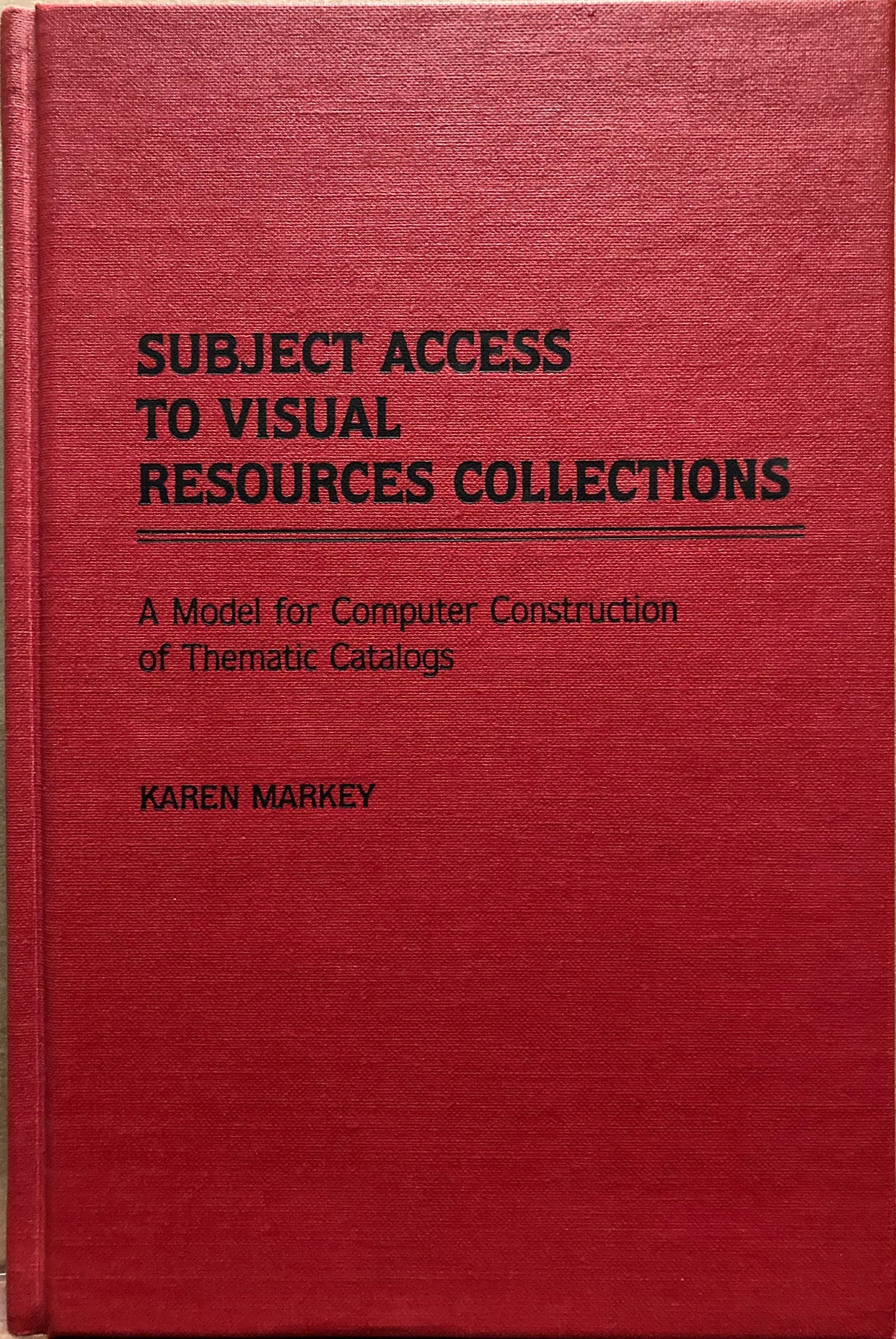
Subject Access to Visual Resources Collections: A Model for Computer Construction of Thematic Catalogs by Karen Markey.
Subject Access to Visual Resources Collections: A Model for Computer Construction of Thematic Catalogs by Karen Markey.
受取状況を読み込めませんでした
Greenwood, 1986. Academic book on indexing, databases and cataloging of photographs. Hardcover, no dust jacket (probably none issued), fine. Summary:
Subject Access to Visual Resources Collections: A Model for Computer Construction of Thematic Catalogs is a pioneering textbook and methodological guide in the field of library and information science, authored by prominent database search researcher Karen Markey. The book addresses a fundamental challenge in information retrieval: the immense difficulty users experience when attempting to search and locate specific images within vast, complex art and museum collections without possessing specialized historical or classification knowledge.
Key Focus Areas
-
The Theoretical Foundation: Markey heavily roots her database and cataloging frameworks in the classic theories of art historian Erwin Panofsky. Specifically, she leverages Panofsky's three levels of meaning in the visual arts—pre-iconographical description (identifying factual objects and primary forms), iconographical analysis (recognizing conventional secondary meanings, themes, and stories), and iconological interpretation (exploring deeper, culture-specific internal meanings).
-
The Indexing Challenge: The text highlights a critical systemic flaw in traditional archives, where visual assets are frequently indexed or organized solely by secondary iconographical themes. Markey argues that because users often lack this precise specialized knowledge, searching through complex art databases results in user frustration unless broader primary "factual" subject access is properly mapped out.
-
The Step-by-Step Computational Model: At the heart of the book is a practical, step-by-step approach designed to help museums, galleries, and libraries construct computer-assisted, automated thematic catalogs. This model provides systematic data structures for translating a casual user's natural query into appropriate controlled vocabulary metadata and symbolic themes.
-
User-Centered System Design: Drawing on comprehensive studies of actual patrons navigating iconographical collections, Markey emphasizes the importance of user behavior in system development. The text advocates for the digital integration of cross-referenced data fields that map generic descriptions to complex artistic terms, laying the groundwork for modern digital image discovery networks.
