Gary Saretzky Photo Books
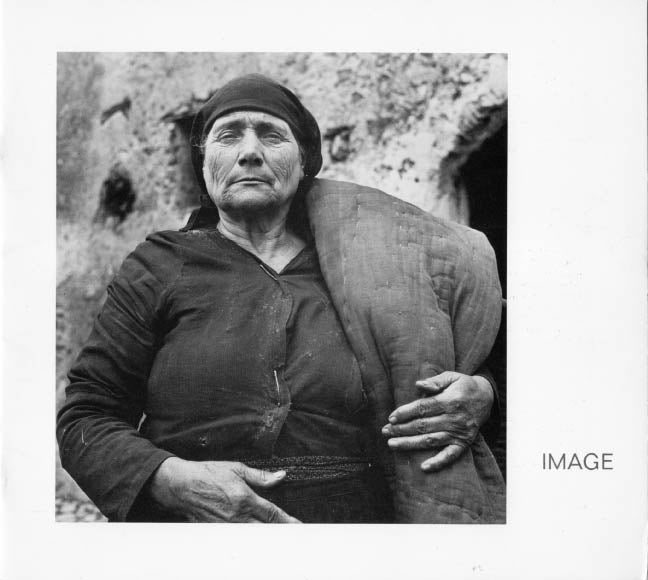
Lee, Russell. Russell Lee. Image, Volume 16, No. 3, September 1973.
Lee, Russell. Russell Lee. Image, Volume 16, No. 3, September 1973.
受取状況を読み込めませんでした
Journal of the George Eastman House. Essay by F. Jack Hurley. Wraps, 32 pages, 28 illustrations, including covers by the photographer best known for his FSA work. Includes photographs taken in New York, Chicago, North Dakota, California, Louisiana, China, West Virginia, Pennsylvania, Saudi Arabia, Italy, Sicily, and Texas. Near fine with linear indentation on back cover. Summary:
mage (Volume 16, No. 3, September 1973) is a highly notable, 32-page monographic issue of the journal published by the International Museum of Photography at the George Eastman House. This entire issue is dedicated to a critical appraisal and historical overview of the American documentary photographer Russell Lee, featuring a central biographical and analytical essay by photo historian F. Jack Hurley.
Core Themes and Content
-
The Scope of Lee's Career: While Russell Lee is widely celebrated for his extensive work with the Farm Security Administration (FSA), this publication deliberately expands beyond that single era. It tracks his evolution from his early training as a chemical engineer and painter to his lifelong commitment to socially conscious photography.
-
The Portfolio (28 Illustrations): The issue functions as a curated retrospective, reproducing 28 sharp illustrations that span Lee's global travels and long career. The images include his famous 1930s and 40s domestic documentation—ranging from New York and Chicago to rural North Dakota, California, Louisiana, and Texas—as well as his lesser-known international post-war assignments in China, Italy, Sicily, and Saudi Arabia.
-
Technique and Philosophy: Hurley's essay highlights Lee’s distinct approach to documentary work, noting how his scientific background shaped a technically precise, highly detailed style. Unlike contemporaries who focused purely on dramatic emotionalism, Lee's imagery is characterized by its clarity, exhaustive thoroughness, and a deep respect for the everyday routines, industrial tasks, and domestic interiors of ordinary people.
-
A Visual Record of Social Patterns: The volume emphasizes Lee's ability to dive into the micro-details of a social situation. This is showcased through discussions of his unpublished narrative photo-essays, such as "The Hired Man," proving his mastery at charting complex cultural and economic structures through quiet, candid human interactions.
This specific issue of Image remains a vital research document for photo historians, providing one of the earliest comprehensive, post-career summaries of Russell Lee’s profound impact on the American documentary tradition.
Russell Lee (1903–1986) was an acclaimed American documentary photographer and educator, best known for his incredibly prolific work with the Farm Security Administration (FSA) during the Great Depression. Born in Ottawa, Illinois, Lee initially earned a degree in chemical engineering from Lehigh University and worked in industry before abandoning engineering to study painting, which ultimately led him to photography in 1935. Joining the FSA photographic team in 1936 under Roy Stryker, Lee became the agency's most technically precise and travel-heavy photographer; he pioneered the use of multiple-flash photography to crisply illuminate indoor spaces, capturing thousands of candid, extraordinarily detailed images of everyday domestic life, small-town communities, and migrant labor camps—including his famous 1940 photo-essay of Pie Town, New Mexico. During World War II, he served as a captain in the Air Transport Command, documenting global supply routes across the Pacific and Europe, and in 1946, he created a monumental survey of health and safety conditions in American coal mining communities for the Department of the Interior. Settling in Texas in 1947, Lee continued working as an industrial and editorial photographer before becoming the first instructor of photography at the University of Texas at Austin in 1965, where he spent a decade mentoring generations of students and cementing his legacy as a deeply empathetic visual historian of the American working class.
