Gary Saretzky Photo Books
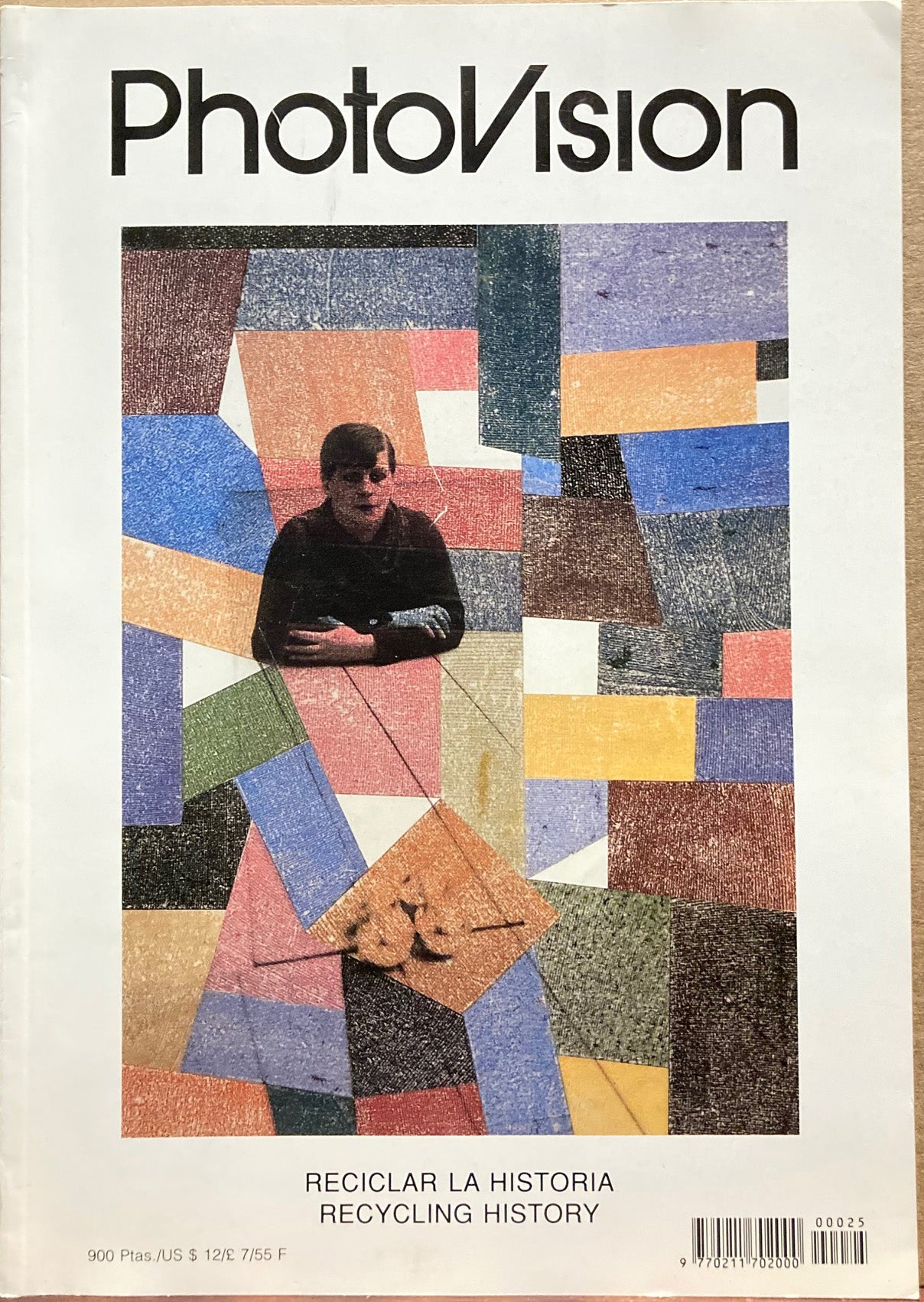
Postmodernism. PhotoVision. Reciclar La Historia. Recycling History. Numero 25. Enereo-Junio 1994.
Postmodernism. PhotoVision. Reciclar La Historia. Recycling History. Numero 25. Enereo-Junio 1994.
受取状況を読み込めませんでした
Theme issue on postmodernism of this quarterly, with text in Spanish and English. Essay by Carmelo Vega. Interview with Ken Josephson by Karen Turk. Portfolio by image scavenger artists: Ulrich Tillman & Wolfgang Vollmer; Karl Baden; Jim Stone; Jay Boersma; Sorel Cohen; Paul Laster; and Joachim Schmid & Adib Fricke; and Klaus Kammerichs. Wraps, 66 pages on heavy weight glossy stock. Very good with small scratch on cover and bump top right corner. Summary:
PhotoVision No. 25 (Enero–Junio 1994), titled Reciclar La Historia / Recycling History, is a comprehensive theme issue of the acclaimed Spanish quarterly journal dedicated to the intersection of photography and postmodernism.Published in a bilingual Spanish and English format, the volume serves as both a critical anthology and a visual gallery exploring how contemporary artists use historic imagery, appropriation, and pastiche to deconstruct traditional historical narratives.
The issue is anchored by a foundational theoretical essay by Spanish art historian and critic Carmelo Vega.
Core Themes & Critical Framework
1. The Postmodern Act of "Recycling" History
The overarching thesis of the volume centers on the concept of "recycling" as a defining strategy of postmodern photographic practice. Rather than striving for the modernist ideal of pure, original snapshots of reality, the featured artists deliberately look backward. They treat the vast archive of existing imagery—historical photographs, classical artworks, family albums, and mass-media advertisements—as raw material to be recontextualized, fragmented, and remade.
2. Carmelo Vega's Theoretical Analysis
In his central essay, Carmelo Vega provides the historical and philosophical scaffolding for this movement. He traces how contemporary photography has shifted from a tool used to objectively document history into a medium used to critique how history itself is written and remembered. Vega analyzes the underlying ironies of appropriation, explaining how the act of altering or rephotographing older images exposes the biases, power structures, and cultural myths embedded within the original historical records.
3. Deconstruction of Photographic Truth
The selected portfolios and accompanying text challenge the traditional notion of the photograph as an absolute, transparent truth. By showcasing works that blend disparate eras, layer text over archival prints, or mimic historical photographic processes to create fictional pasts, the issue highlights how meaning is fluid and entirely dependent on context, style, and interpretation.
Throughout its run, PhotoVision was highly regarded for bridging Western European and Iberian photographic discourse. Issue No. 25 stands out as a crucial primary resource from the mid-1990s, capturing the exact moment when postmodern theories of simulation, authorship, and archival critique became central to international fine art photography.
