Gary Saretzky Photo Books
Annuals. U.S. Camera Annual 1962
Annuals. U.S. Camera Annual 1962
Impossible de charger la disponibilité du service de retrait
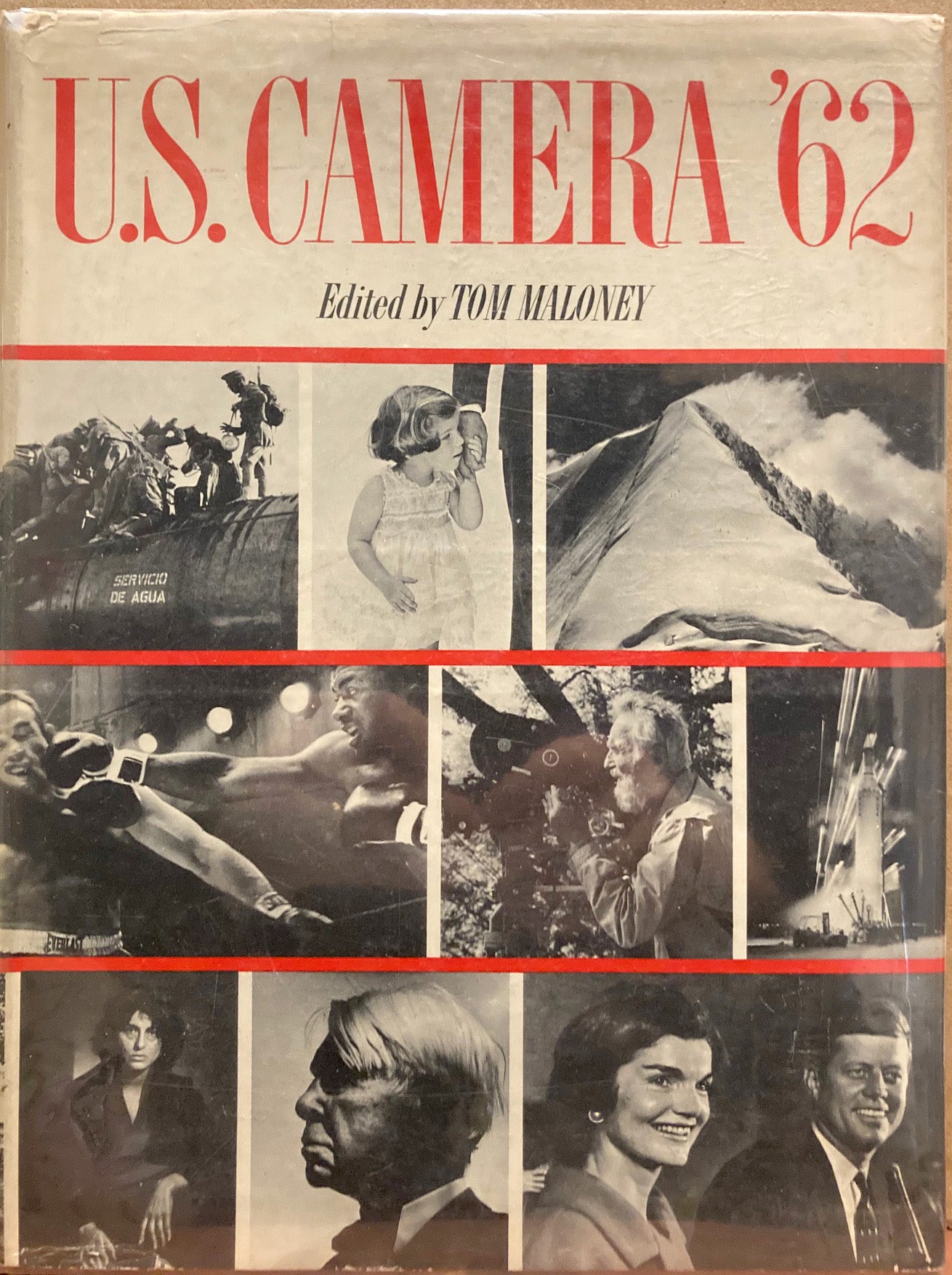
U.S. Camera Annual 1962, edited by Tom Maloney. U.S. Camera Publishing, 1961. Portfolios by Brett Weston (Europe), Mathew Brady, James Abbe, Edward Steichen (with detailed biographical chronology by Grace M. Meyer), Ken Heyman, Robert Freson (portraits of famous photographers plus lovely female nudes), George Silk, Marvin E. Newman, W. Suschitzky, & Peter Suschitzky. Plus two or more images each by Art Kane, Richard Avedon (of Jacqueline Kennedy and children), Bill Brandt, Robert Doisneau, Peter Basch, Bert Stern, Boyce Downy, Hans Hammarskiold, Philipp Giegel, Richard Davis, Jean Ph. Charbonnier, William Klein, Alp Lidman, Karsh, Marvin E. Newman, Bradford Washburn, Ylla, W.I. Parks, Jr, and others. Single images by George Krause, Agnes Varda, Constantine Manos, Andre De Dienes, Philippe Halsman, Yale Joel, and others, inc. the Pulitzer Prize photo by Yasuki Nagoa. Portrait subjects include Anita Eckberg, Anna Magnani, Salvador Dali, Grete Garbo, George Armstrong Custer, Ingemar Johansson, Floyd Patterson, Casey Stengel, Carl Sandburg, Margaret Bourke-White, Alfred Eisenstaedt, Eliot Elisofon, Arnold Newman, Horst, John Rawlings, Norman Parksinson, W. Eugene Smith, Edward Steichen, Edward Albee, John F. Kennedy, Also, special features on rocket photography and the Presidency. This copy is 1st and only edition, hardcover, very good with good plus protected dust jacket. Summary:
U.S. Camera Annual 1962, edited by Tom Maloney, is a high-profile yearbook that serves as a visual and cultural time capsule of the year 1961. Published at the dawn of the "New Frontier" era, it reflects a shift in photography from the post-war humanism of the 1950s toward the more aggressive photojournalism and avant-garde experimentation of the 1960s.
Key Themes and Sections
1. Space and the Cold War
Reflecting the zeitgeist, the 1962 edition places a heavy emphasis on the Space Race. It features dramatic documentation of the first manned space flights, including:
-
Project Mercury: Images of Alan Shepard and the technical marvels of NASA’s early rockets.
-
Political Tension: Photo-essays covering the Berlin crisis and the escalating Cold War, providing a gritty, journalistic look at world events.
2. The "Stars of Photography"
The annual is famous for its "Special Features" section, which highlights portfolios from the masters of the era, including Brett Weston and Edward Steichen, recently retired from the Museum of Modern Art.
3. "The Bright New World of Color"
As color film (specifically Kodachrome) became more accessible and reliable, this edition showcases an increased number of color plates. The editors highlight how color was being used not just for realism, but as a compositional tool in advertising and abstract art.
Technical and Creative Philosophy
The book maintains the tradition of including a Technical Section, providing data on the cameras, lenses, and film speeds used for the featured shots. This reinforced the annual's role as a textbook for the serious amateur.
The editorial tone of 1962 is one of optimism mixed with urgency. The selection moves between:
-
The Heroic: Capturing athletes, explorers, and politicians.
-
The Intimate: Candid street photography in the tradition of the "Family of Man," though with a sharper, more modern edge.
Notable Contributors
Beyond the "greats," the 1962 annual features work by rising stars and international photographers, including Bert Stern, Richard Avedon, and influential members of the Magnum agency, illustrating the global reach of the medium.
Summary Takeaway
U.S. Camera Annual 1962 is a landmark of transitional photography. It bridges the gap between the traditional, formal aesthetics of the 1940s/50s and the raw, kinetic, and socially conscious style that would define the 1960s. It remains a primary resource for understanding how photography documented the birth of the space age and the deepening complexity of global politics.