Gary Saretzky Photo Books
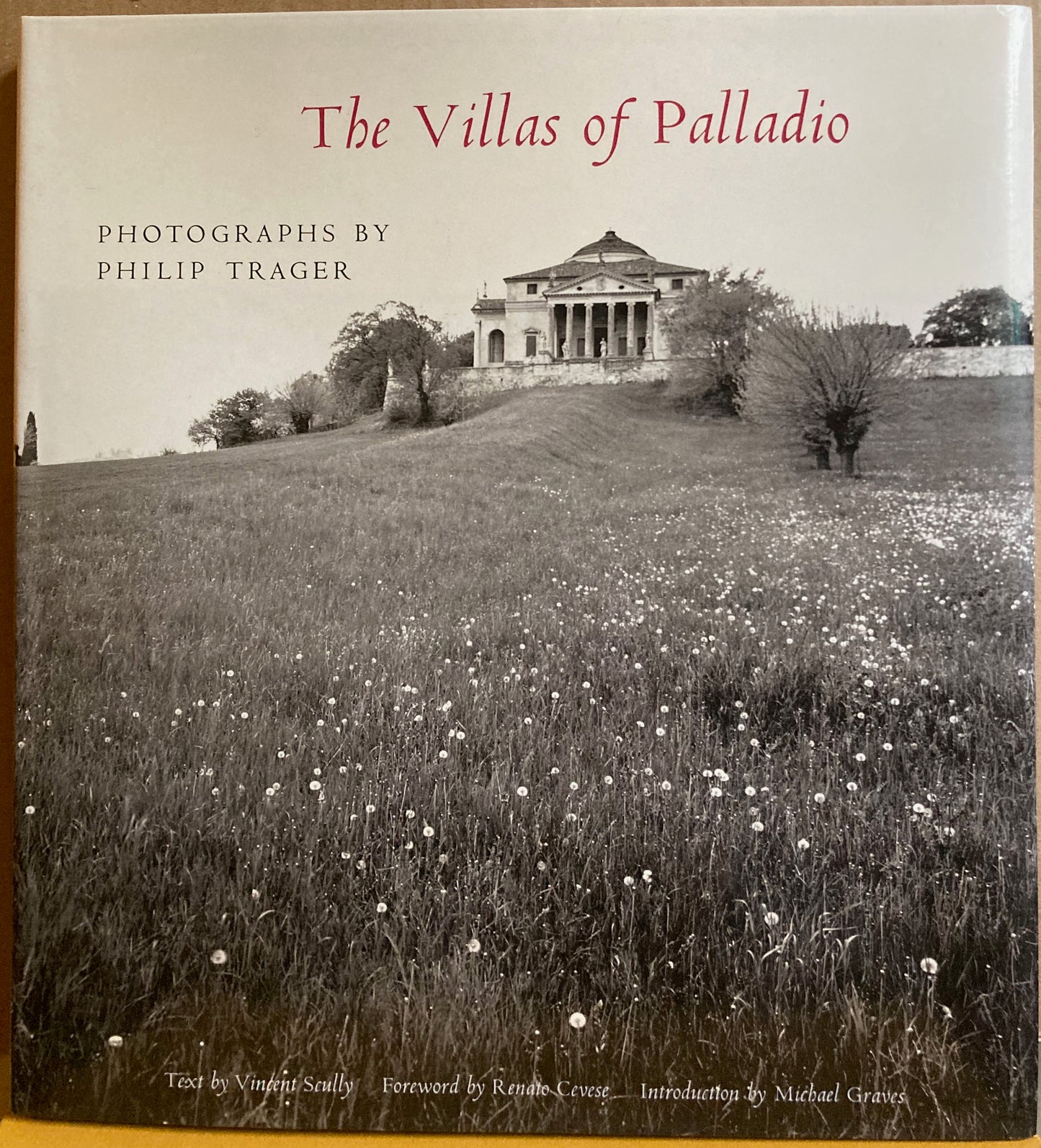
Trager, Philip. The Villas of Palladio. Photographs by Philip Trager. Text by Vincent Scully.
Trager, Philip. The Villas of Palladio. Photographs by Philip Trager. Text by Vincent Scully.
Impossible de charger la disponibilité du service de retrait
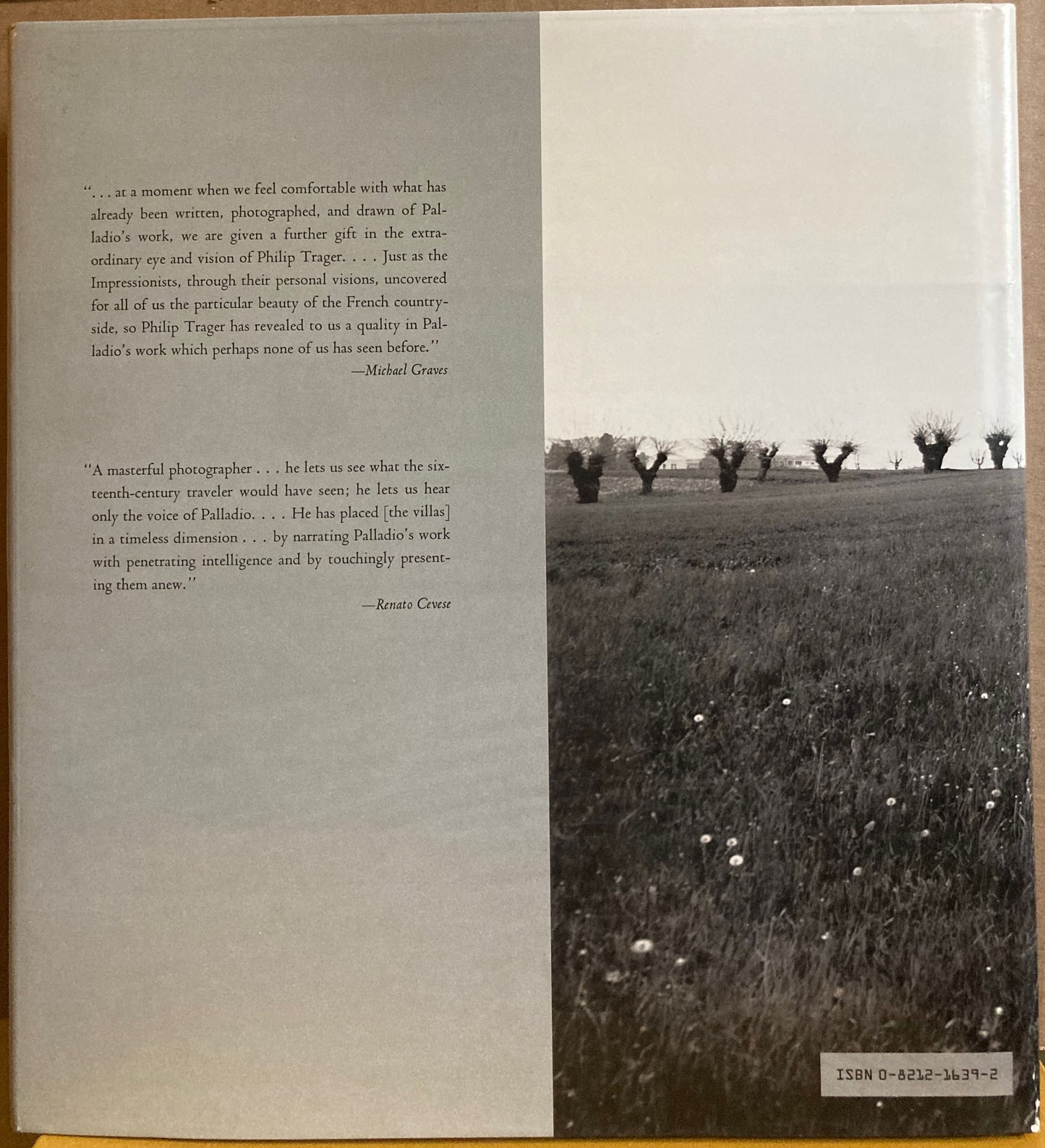
NYGS/Little Brown, 1986. Foreword by Renato Cevese. Introduction by Michael Graves. First edition, fine hardcover in red cloth with very good plus protected dust jacket that has small area of wear and short closed tear at base of spine at rear (see photo). Large format, 167 pages. Architectural photographer Philip Trager's beautifully composed and printed views of villas in Italy designed by Andrea Palladio, "the most influential architect to emerge from the Renaissance." Summary:
The Villas of Palladio (1986) is a masterful photographic and architectural survey of the 16th-century country estates designed by Andrea Palladio in the Veneto region of Italy. This collaboration pairs the rigorous, black-and-white formalist photography of Philip Trager with a scholarly, evocative text by Yale architectural historian Vincent Scully.
Core Themes and Content
-
The Palladian Ideal: The book examines how Palladio synthesized Roman antiquity with the practical needs of the Venetian landowning class. It focuses on his signature use of symmetry, the pedimented portico, and the integration of the villa into the agricultural landscape.
-
Scully’s "Humanist" Narrative: Vincent Scully provides more than just a history; he argues that Palladio’s architecture was a "theater of the world," designed to elevate the human experience through mathematical harmony and a deep connection to the earth.
-
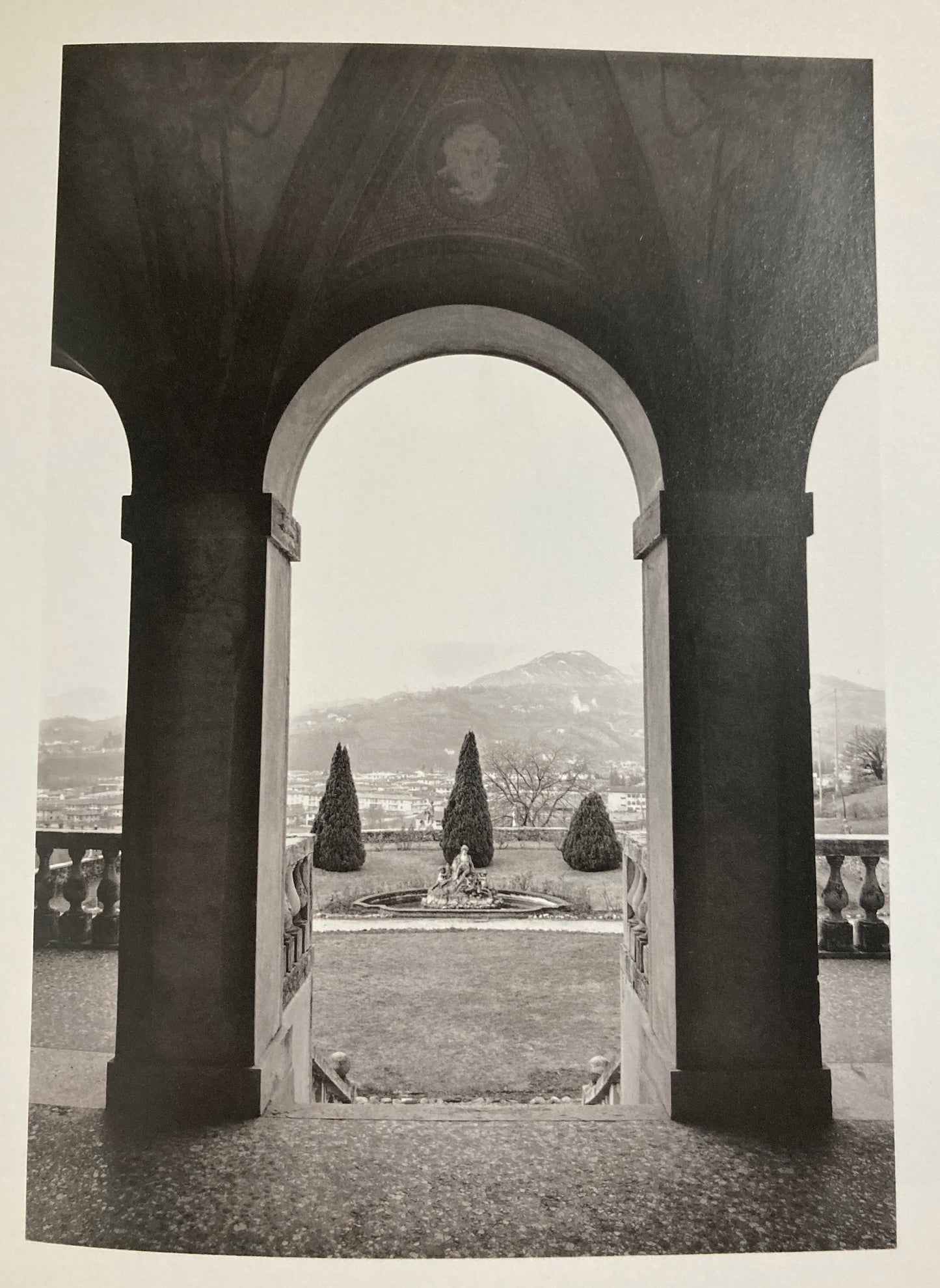
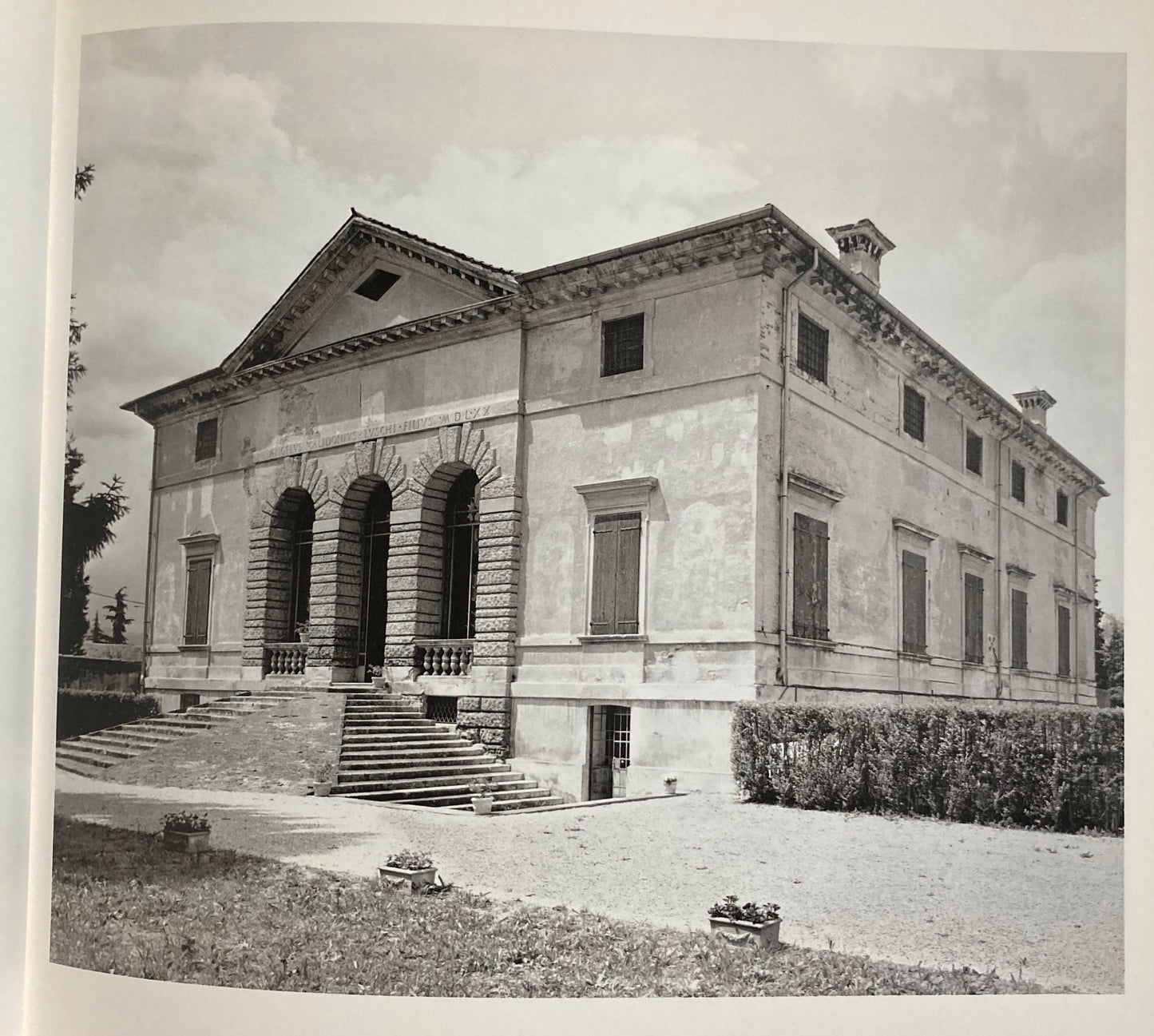
A Study of Geometry: Trager’s lens ignores the lush colors of the Italian countryside to focus entirely on the structural logic of the villas. By stripping away color, he highlights the play of light and shadow on stucco, stone, and brick, revealing the "bones" of Palladian design.
Visual and Technical Style
-
Large-Format Precision: Philip Trager used a large-format view camera to achieve a "distortion-free" perspective. This allows the vertical lines of the columns and the horizontal planes of the facades to remain perfectly true, mirroring Palladio's own architectural drawings.
-
The "Stillness" of Stone: Trager often captures these spaces without people, allowing the architecture to speak as a silent, monumental presence that has survived for five centuries.
- Philip Trager (born 1935) is an acclaimed American photographer best known for his pristine, architectural black-and-white studies and his dynamic, light-filled documentations of modern dance. Raised in Bridgeport, Connecticut, Trager earned a law degree from Columbia University and practiced law for decades while concurrently building an internationally recognized photographic career. Using large-format view cameras to capture precise perspectives and delicate tonalities, he produced landmark architectural monographs on topics ranging from 18th- and 19th-century New England homes and Palladian villas in Italy to the changing skyline of Manhattan and historic monuments in Paris. In the late 1980s and 1990s, Trager expanded his focus to performance, capturing legendary choreographers and dancers—such as Bill T. Jones, Merce Cunningham, and Mark Morris—in outdoors, jump-framed motion against classical architectural backdrops. Honored with numerous awards and major retrospectives at institutions like the National Museum of American Art and the Eastman Museum, Trager’s vast archive is held in the permanent collection of the Library of Congress.