
Gary Saretzky Photo Books
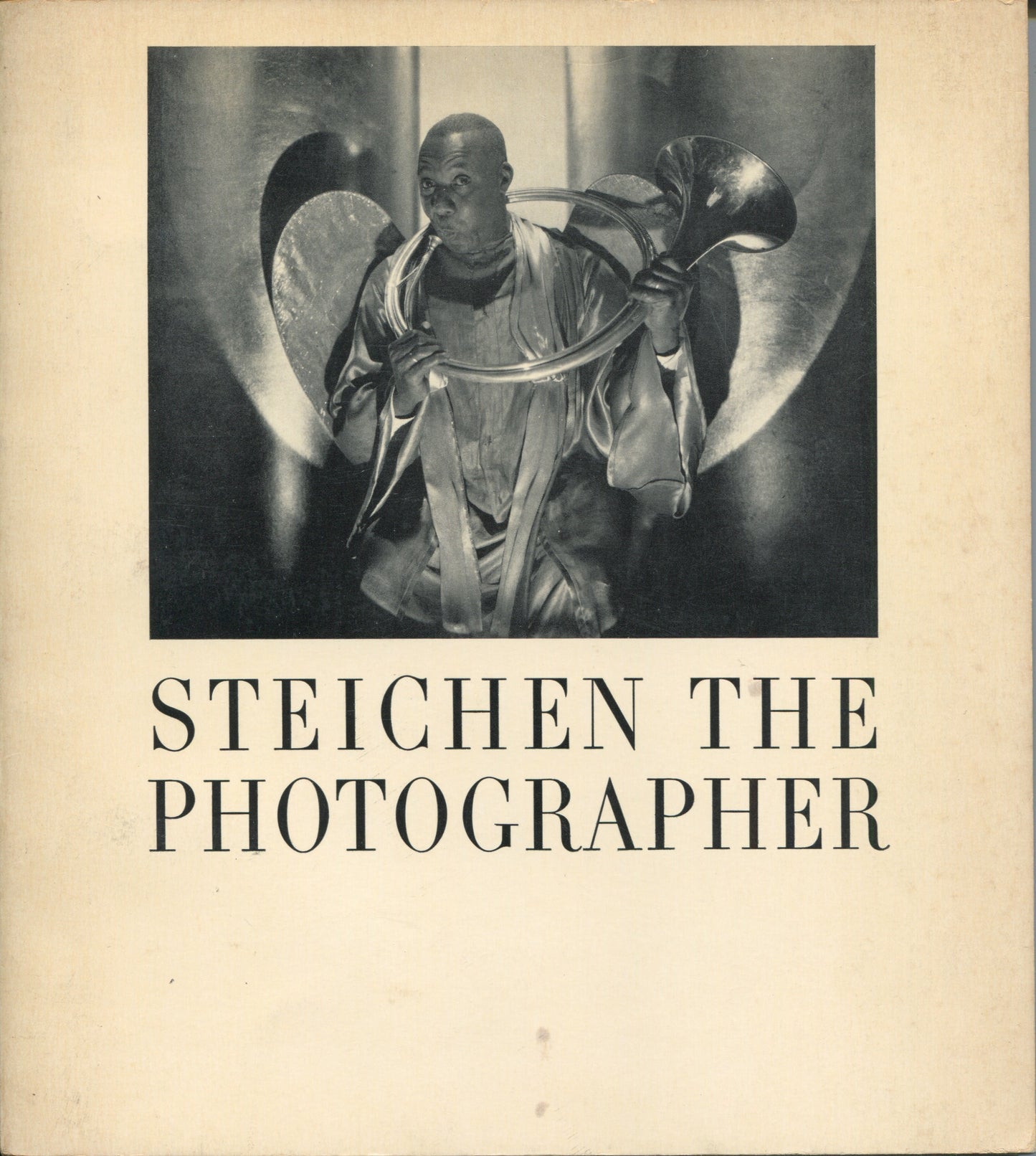
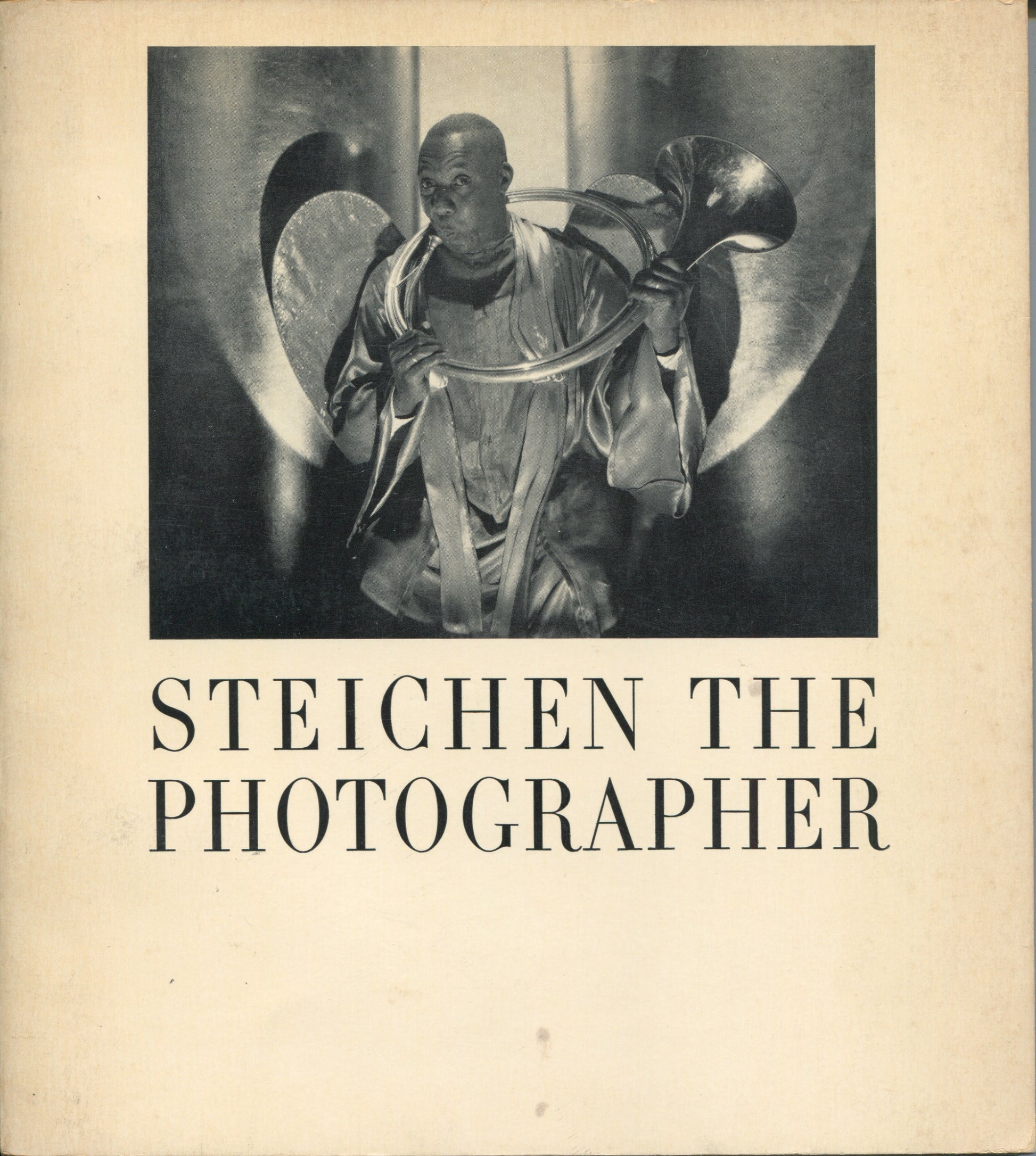
Steichen the Photographer. Exhibition Catalog, 1961.
Steichen the Photographer. Exhibition Catalog, 1961.
Impossible de charger la disponibilité du service de retrait
Museum of Modern Art, 1961. Wraps, VG- with a few spots on covers (see photos) and on margin of first glossy page before title page. First printing (no later printings indicated). 80 pages. Catalog for exhibit at the Museum of Modern Art, New York. Texts by René D’Harnoncourt, Edward Steichen, Alexander Liberman, and Carl Sandburg. Biographical Outline by Grace M. Mayer. Selected Bibliography by Bernard Carpel. Nearly 50 plates with many of Steichen’s most renowned photographs and some less well known, 1897 to 1940s. Summary:
Steichen the Photographer (1961) is the definitive retrospective catalog published by the Museum of Modern Art (MoMA) to accompany the landmark exhibition of Edward Steichen’s own work. Curated by his successor, John Szarkowski, with a biographical outline by Grace M. Mayer, the book serves as a "victory lap" for the man who arguably did more than any other to define photography as a legitimate high art and a powerful commercial tool in the 20th century.
Core Themes and Artistic Evolution
-
The "Chameleon" of Photography: The catalog tracks Steichen’s extraordinary transition through three distinct phases:
-
The Pictorialist: Early, moody, "painterly" landscapes and portraits (like the famous The Flatiron).
-
The Modernist/Commercial Master: His crisp, high-fashion work for Vogue and Vanity Fair and his revolutionary advertising "Real Fantasies."
-
The Documentarian/Curator: His service as a naval photographer in two World Wars and his later "humanist" phase culminating in The Family of Man.
-
-
The Bridge Between Art and Industry: Steichen is presented as the ultimate "integrator."
-
Technical Mastery: The book emphasizes Steichen’s command of photographic technique—from his early experiments with gum bichromate prints to his razor-sharp, deep-focus studio work of the 1930s.
Visual and Curatorial Style
-
Iconography of the 20th Century: The catalog is a "Who's Who" of the modern era, featuring Steichen's iconic portraits of Greta Garbo, Charlie Chaplin, J.P. Morgan, and Gloria Swanson.
-
The "Szarkowski" Perspective: This volume marks a shift in MoMA's philosophy. While Steichen was the "Great Romantic," Szarkowski’s involvement in the catalog begins to steer the conversation toward the "formalist" qualities of the image—line, shape, and contrast.
- Edward Steichen (1879–1973) was a towering figure in 20th-century photography whose multifaceted career transformed the medium from soft-focus Pictorialism into crisp commercial modernism and influential museum curation. Born in Luxembourg and raised in the United States, Steichen co-founded the Photo-Secession movement with Alfred Stieglitz in 1902 and helped launch the influential journal Camera Work, earning early fame for painterly, moody landscapes and portraits. During World War I, he served in the U.S. Army Signal Corps, where directing aerial reconnaissance photography led him to abandon painterly effects in favor of sharp focus, high contrast, and clean realism. Capitalizing on this modern aesthetic, he became the chief photographer for Condé Nast from 1923 to 1937, virtually inventing modern fashion and celebrity portraiture through his iconic work for Vogue and Vanity Fair. After leading the U.S. Navy's Naval Aviation Photographic Unit during World War II, Steichen served as Director of the Department of Photography at New York's Museum of Modern Art (MoMA) from 1947 to 1962, where he curated the landmark 1955 exhibition The Family of Man, cementing his legacy as one of the most versatile and influential photographers in history.