Gary Saretzky Photo Books
Postmodernism. Art After Modernism: Rethinking Representation, edited by Brian Wallis.
Postmodernism. Art After Modernism: Rethinking Representation, edited by Brian Wallis.
Impossible de charger la disponibilité du service de retrait
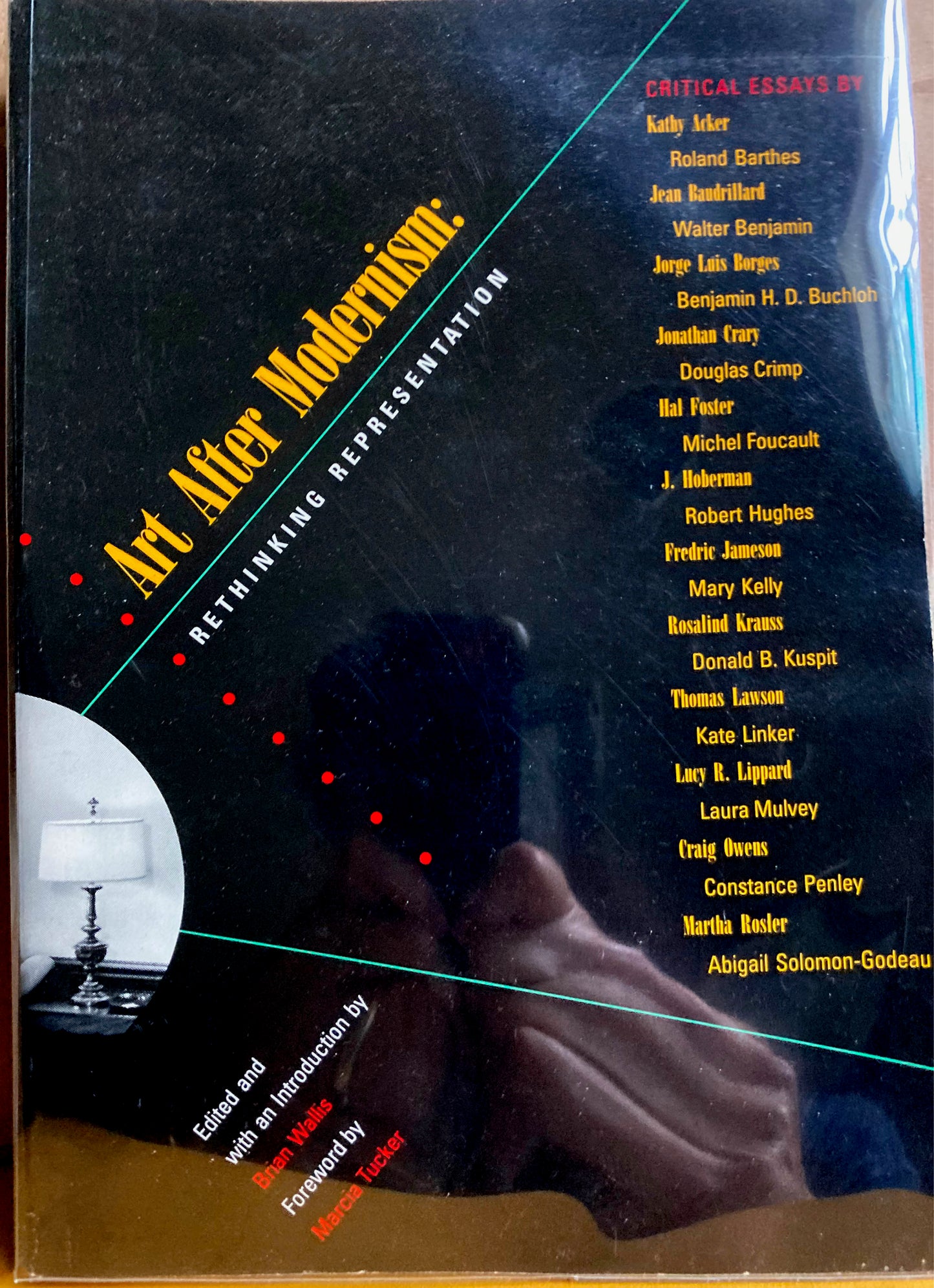
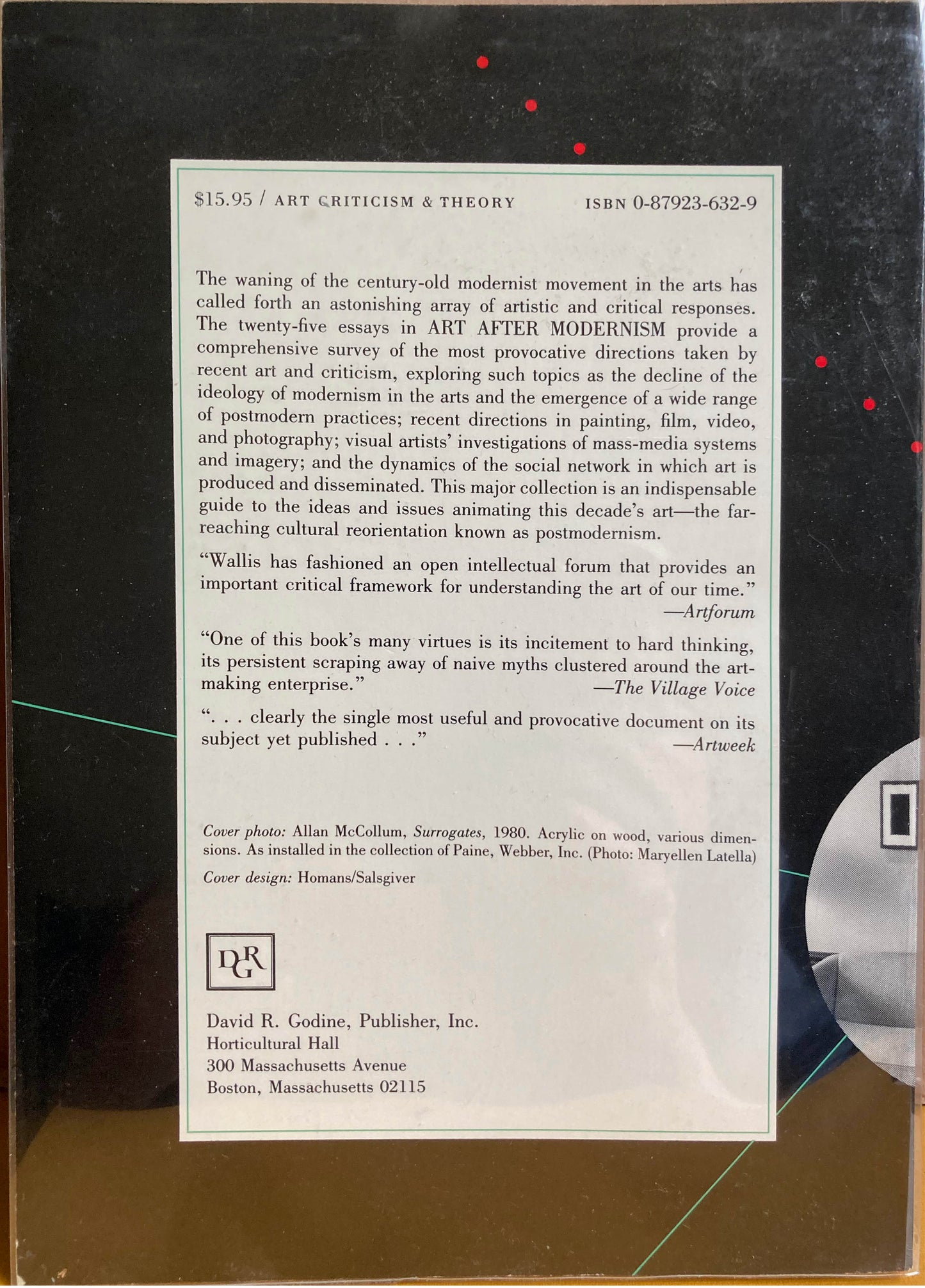
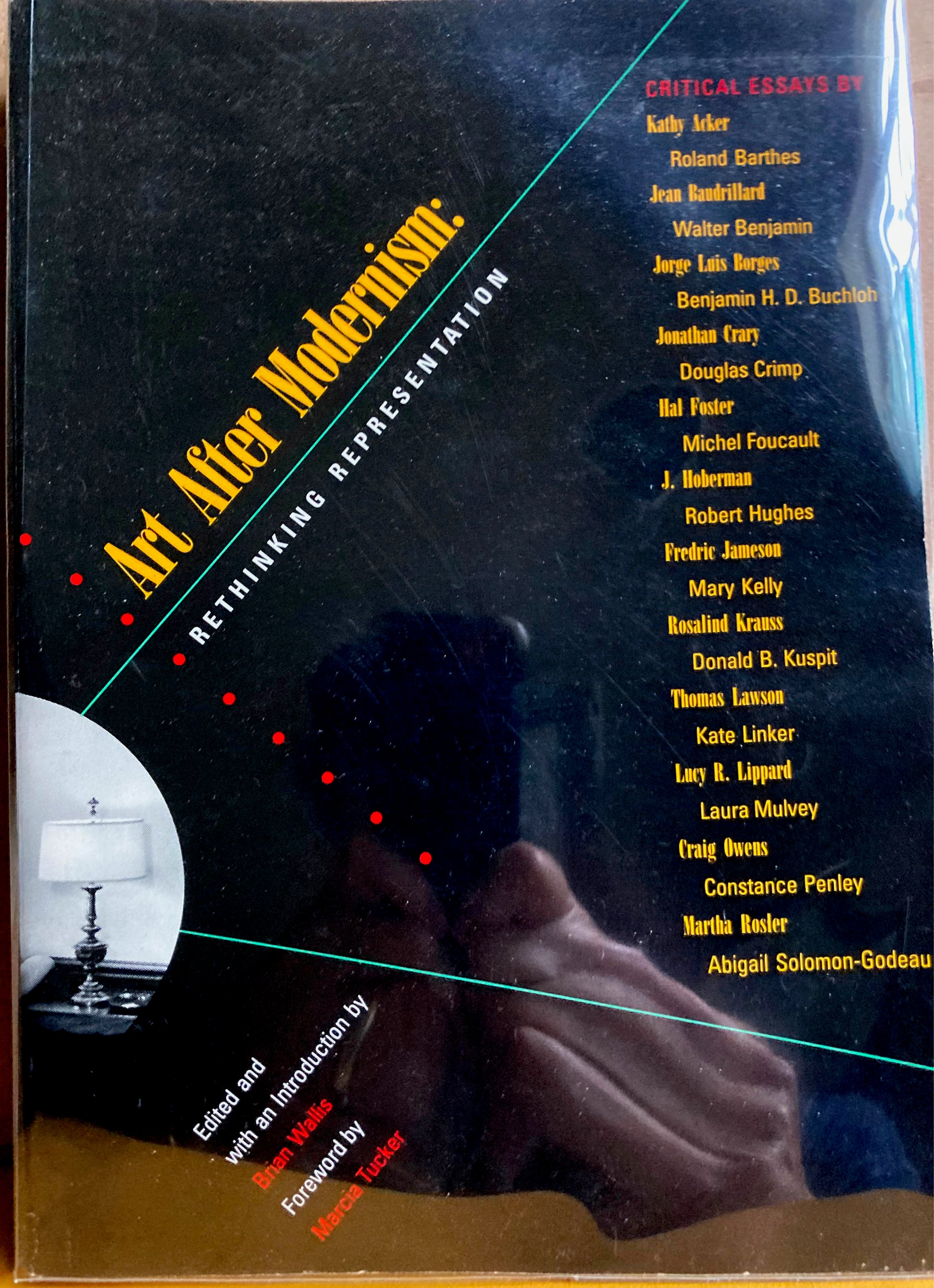
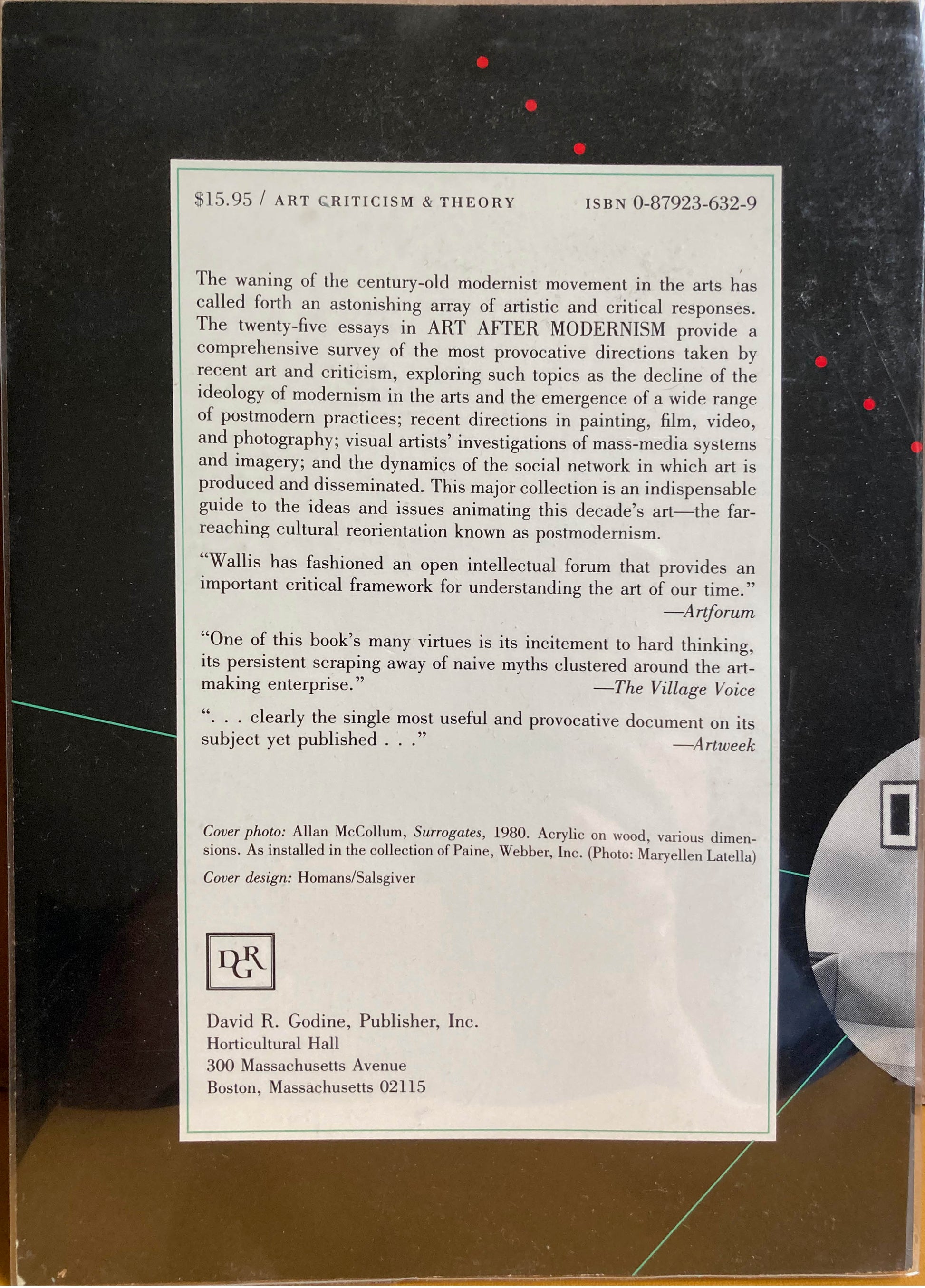
New Museum of Contemporary Art, 1984, 1988. 3rd printing, wraps, like new with custom-made 4-mil polyester jacket. 459 pages. Illustrated chapters by Jorge Luis Borges, Rosalind Krauss, Kathy Acker, Robert Hughes, J. Huberman, Abigail Solomon-Godeau, Mary Kelly, Benjamin H.D. Buchloh, Donald B. Kuspit, Thomas Lawson, Roland Barthes, Douglas Crimp, Hal Foster, Craig Owens, Frederic Jameson, Jean Beaudrillard, Jonathan Crary, Walter Benjamin, Martha Rosner, Lucy R. Lippard, Laura Mulvey, Constance Penney, Kate Linker, and Michel Foucault. From the back cover: "The twenty-five essays in Art After Modernism provide a comprehensive survey of the most provocative directions taken by recent art and criticism, exploring such topics as the decline of the ideology of modernism in the arts and the emergence of a wide range of postmodern practices; recent directions in painting, film, video, and photography; visual artists' investigations of mass-media systems and imagery; and the dynamics of the social network in which art is produced and disseminated." Note: in photos of the book, please ignore reflections. Summary:
Published in 1984 by the New Museum of Contemporary Art, Art After Modernism: Rethinking Representation, edited by Brian Wallis, is a seminal anthology that served as a foundational "reader" for Postmodern theory. It brings together 25 influential essays that challenge the traditionalist, formalist views of Modernism that dominated the mid-20th century.
Core Objective
The book aims to deconstruct the "myth of the artist" as an isolated genius and instead examines art as a social and political construct. It shifts the focus from the aesthetic quality of an object to the politics of representation—how images carry power, enforce ideologies, and shape our understanding of reality.
Key Theoretical Themes
-
The Death of the Author: Drawing on post-structuralism, the text argues that meaning is not dictated by the creator but is generated by the viewer and the cultural context.
-
Critique of Originality: Many essays explore appropriation art (like the work of Sherry Levine or Richard Prince), questioning the value of "original" works in an age of mechanical and digital reproduction.
-
Gender and the Gaze: The anthology was pivotal in introducing feminist critiques into the mainstream art world, specifically analyzing how visual culture often objectifies women.
-
Institutional Critique: Several contributors analyze how museums and galleries function as "power structures" that decide what is considered "high art."
Notable Contributors
The volume features a "who’s who" of critical theory and art history, including:
-
Walter Benjamin (specifically his work on mechanical reproduction).
-
Roland Barthes and Michel Foucault.
-
Rosalind Krauss, Douglas Crimp, and Craig Owens.
-
Laura Mulvey (on the "male gaze").
-
Martha Rosler and Abigail Solomon-Godeau.
Impact
Art After Modernism is credited with bridges the gap between complex continental philosophy and the practical art world. It remains a staple in university curricula for its comprehensive mapping of the transition from Modernist "purity" to the fragmented, self-aware, and politically charged landscape of Postmodernism.