Gary Saretzky Photo Books
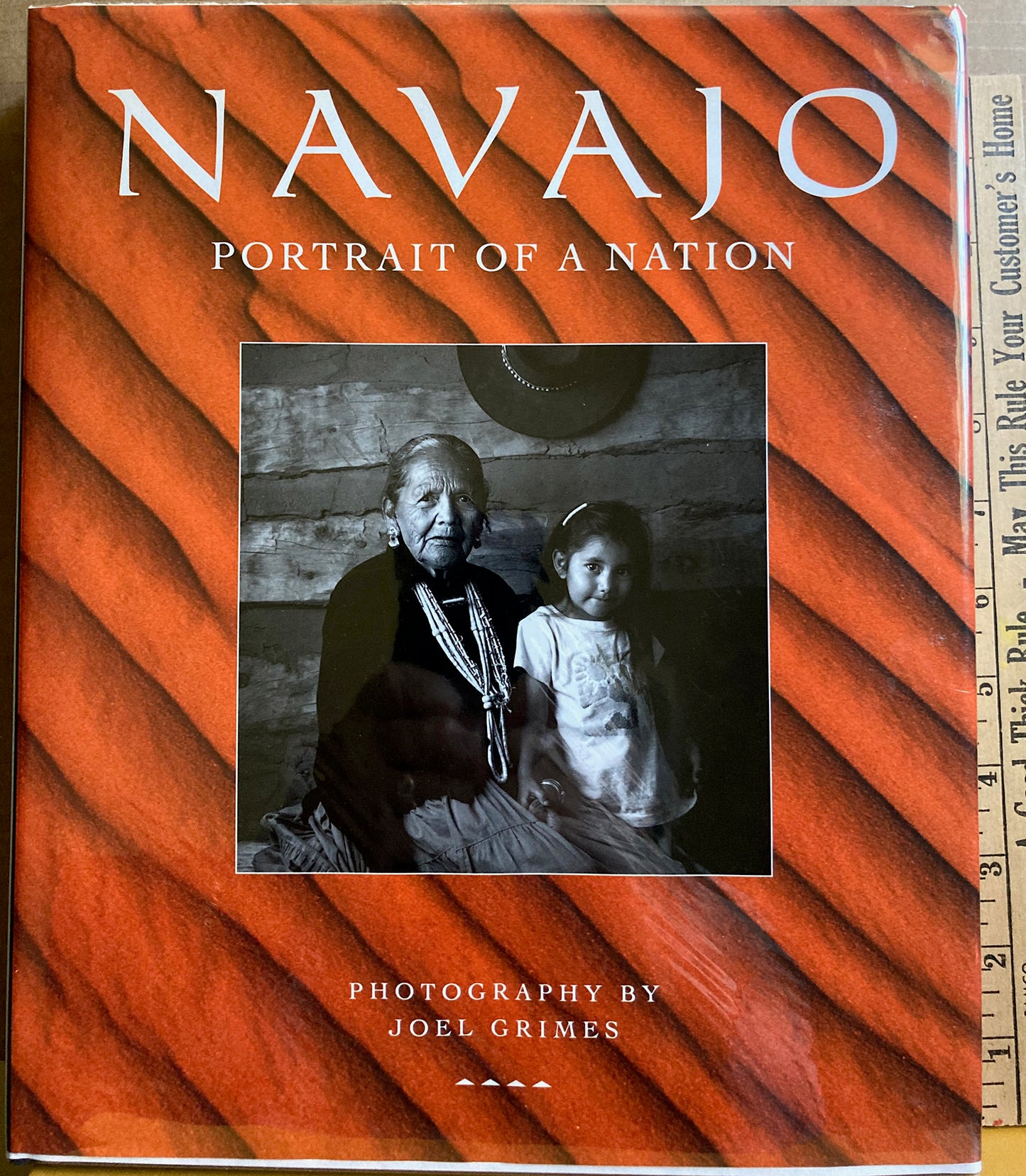
Navajo: Portrait of a Nation by Joel Grimes.
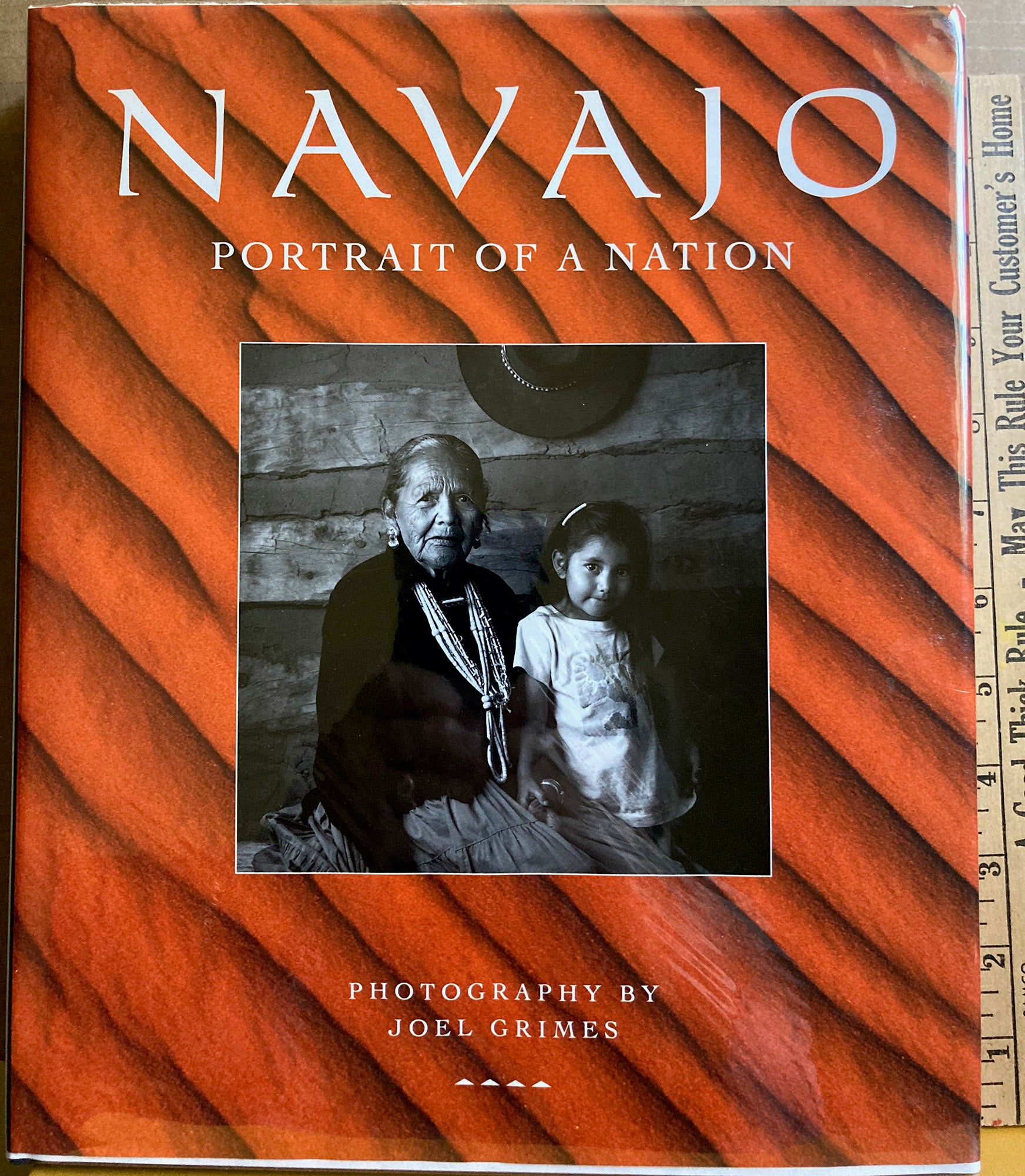
Navajo: Portrait of a Nation by Joel Grimes.
Impossible de charger la disponibilité du service de retrait
Westcliffe, 1992. Foreword by Stuart L. Udall. Hardcover with protected dust jacket, large heavy book, 192 pages, in black cloth, ex-library, rear flyleaf scuffed where card pocket removed, otherwise fine/fine, no spine labels on dust jacket or rubber stamps anywhere. Text and sumptuous color and black-and-white formal portraits of Indigenous Americans and landscape photographs on heavy-weight paper by Joel Grimes, who majored in photography at the University of Arizona and became a successful professional photographer. Summary:
Navajo: Portrait of a Nation (1992) is a profound photographic study by Joel Grimes that captures the spirit, land, and people of the Navajo (Diné) Nation. Moving beyond mere travelogue, the book is a collaborative effort featuring a foreword by Rex Lee Jim and an introduction by the photographer, aiming to provide a contemporary yet timeless look at a culture deeply rooted in the soil of the American Southwest.
Core Themes and Narrative
-
The Spiritual Landscape: Grimes treats the geography of the Navajo Nation—Monument Valley, Canyon de Chelly, and the Painted Desert—not as a backdrop, but as a living participant. The narrative emphasizes the Navajo concept of Hózhó (balance and harmony with the universe).
-
Cultural Continuity: The book focuses on the "Eternal Thread" connecting generations. Grimes photographs elders and youth alike, documenting traditional practices (weaving, shepherding) alongside the quiet dignity of modern Rez life.
-
The Strength of the Individual: Rather than "typical" ethnographic shots, Grimes produces intimate, respectful portraits that focus on the resilience and wisdom etched into the faces of his subjects.
Visual and Technical Notes
-
The "Pan-Focus" Aesthetic: Grimes demonstrates his technical mastery of the large-format camera. His images are characterized by depth of field and tack-sharp detail, ensuring that the texture of a cedar-root basket is as clear as the distant mesas.
-
The "Staged" Naturalism: While the photos feel organic, Grimes utilized sophisticated lighting techniques—often bringing studio strobes into the desert—to give his subjects a "Heroic Glow" that separates them from the background. This creates a high-contrast, sculptural finish that honors the monumental nature of the people.
- Joel Grimes (born 1957) is an American commercial, portrait, and fine-art photographer as well as a prominent educator, widely recognized for pioneering hyper-realistic compositing techniques and a dramatic, high-contrast lighting style that transformed modern advertising and sports photography. Earning his Bachelor of Fine Arts in photography from the University of Arizona in 1982, Grimes established a commercial studio in Denver, Colorado, building a prestigious international client list that includes major corporate brands, athletic franchises, and advertising agencies. He gained widespread acclaim in 1992 with his award-winning monograph Navajo: Portrait of a Nation, which spent eighteen months touring museum venues nationwide and showcased his mastery of environmental portraiture. Grimes is best known as a technical innovator for popularizing the dynamic "HDR edge look"—a signature composite methodology where subjects photographed with dramatic multi-light setups in-studio are seamlessly integrated with heavily textured, high-dynamic-range background environments. A Canon Explorer of Light and a highly sought-after workshop instructor and author, Grimes has educated generations of photographers on creative lighting, digital post-processing, and the business of photography, establishing himself as a defining influence in contemporary commercial imaging.