Gary Saretzky Photo Books
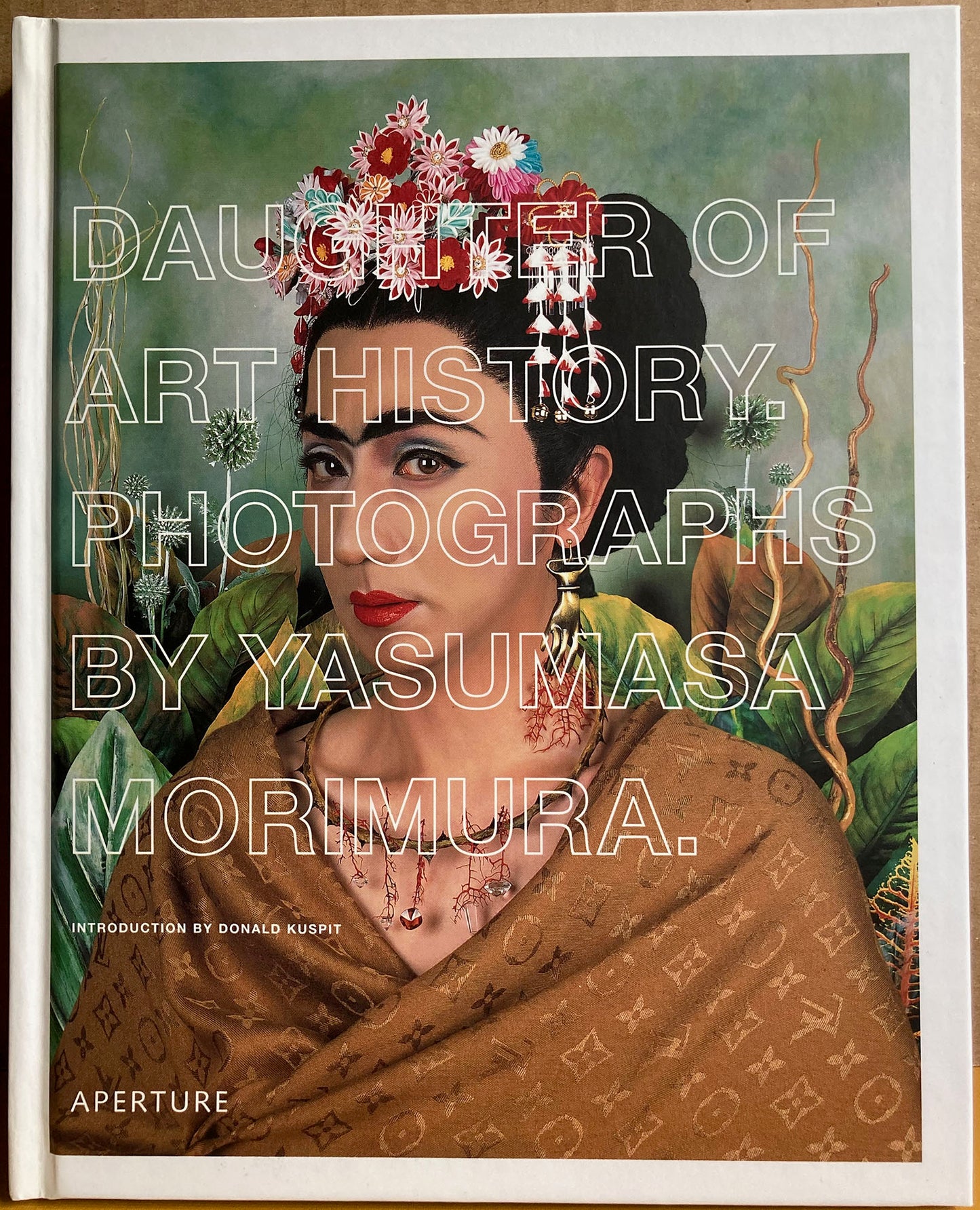
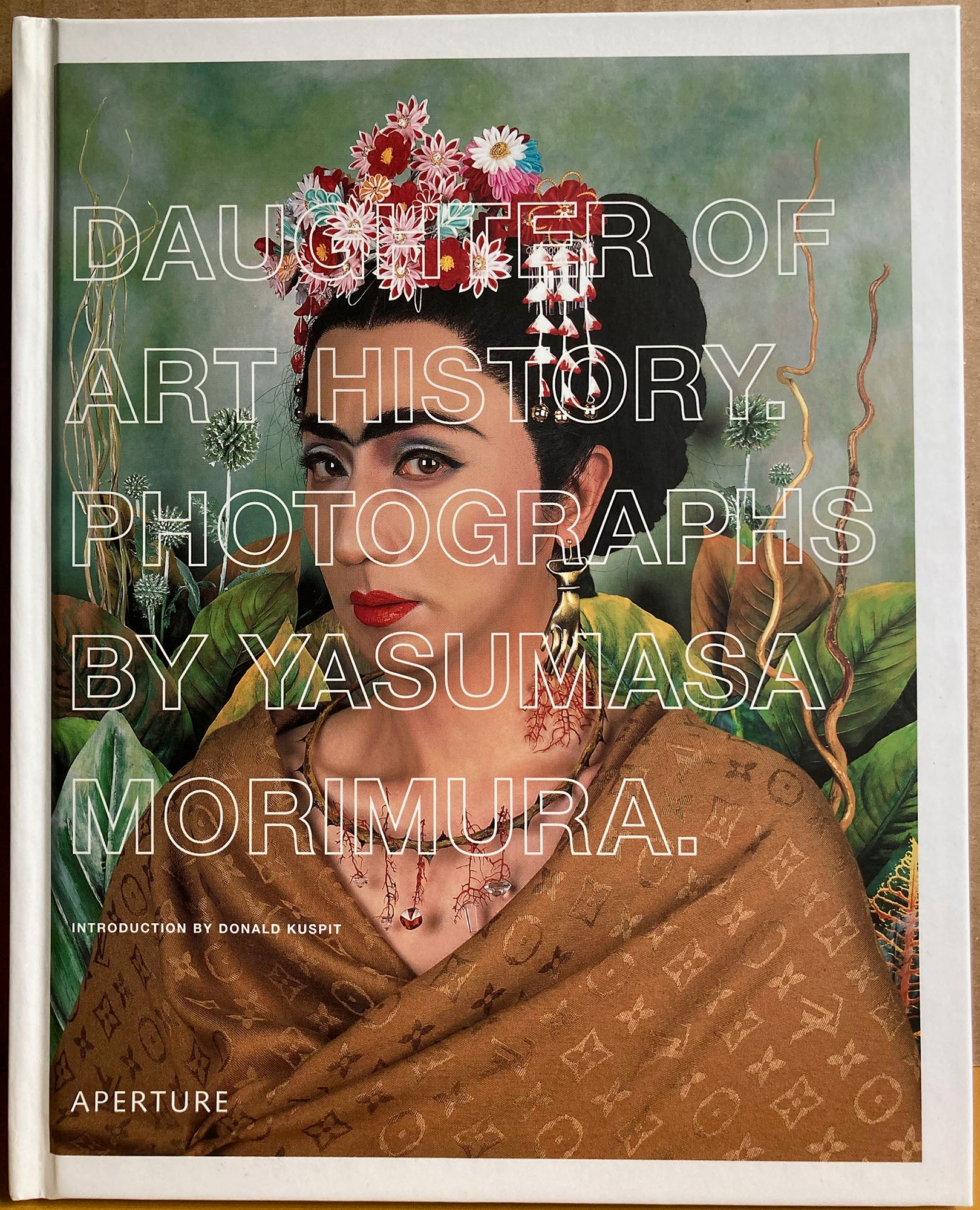
Morimura, Yasumasa. Daughter of Art History. Photographs by Yasumasa Morimura. Introduction by Donald Kuspit.
Morimura, Yasumasa. Daughter of Art History. Photographs by Yasumasa Morimura. Introduction by Donald Kuspit.
Impossible de charger la disponibilité du service de retrait
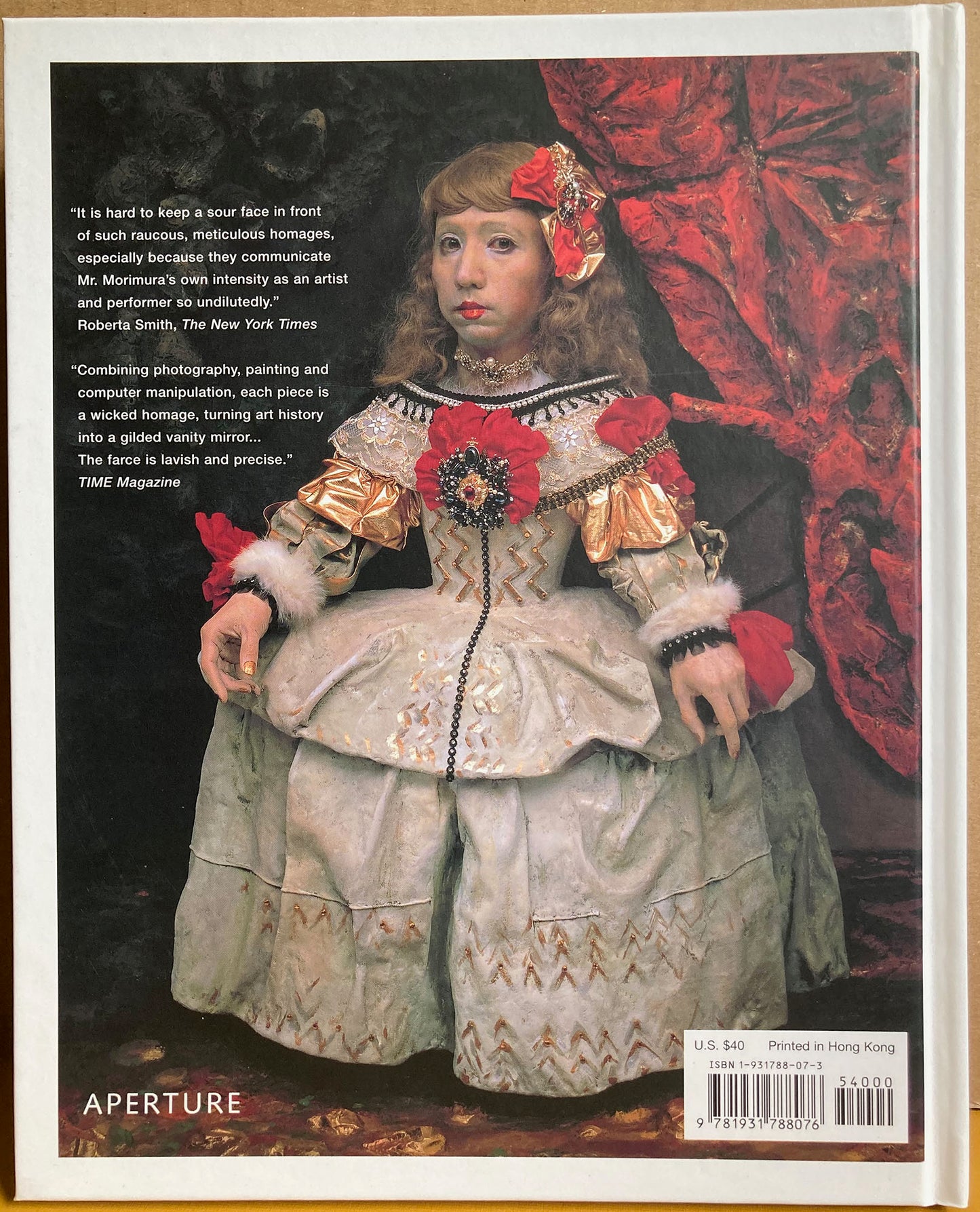
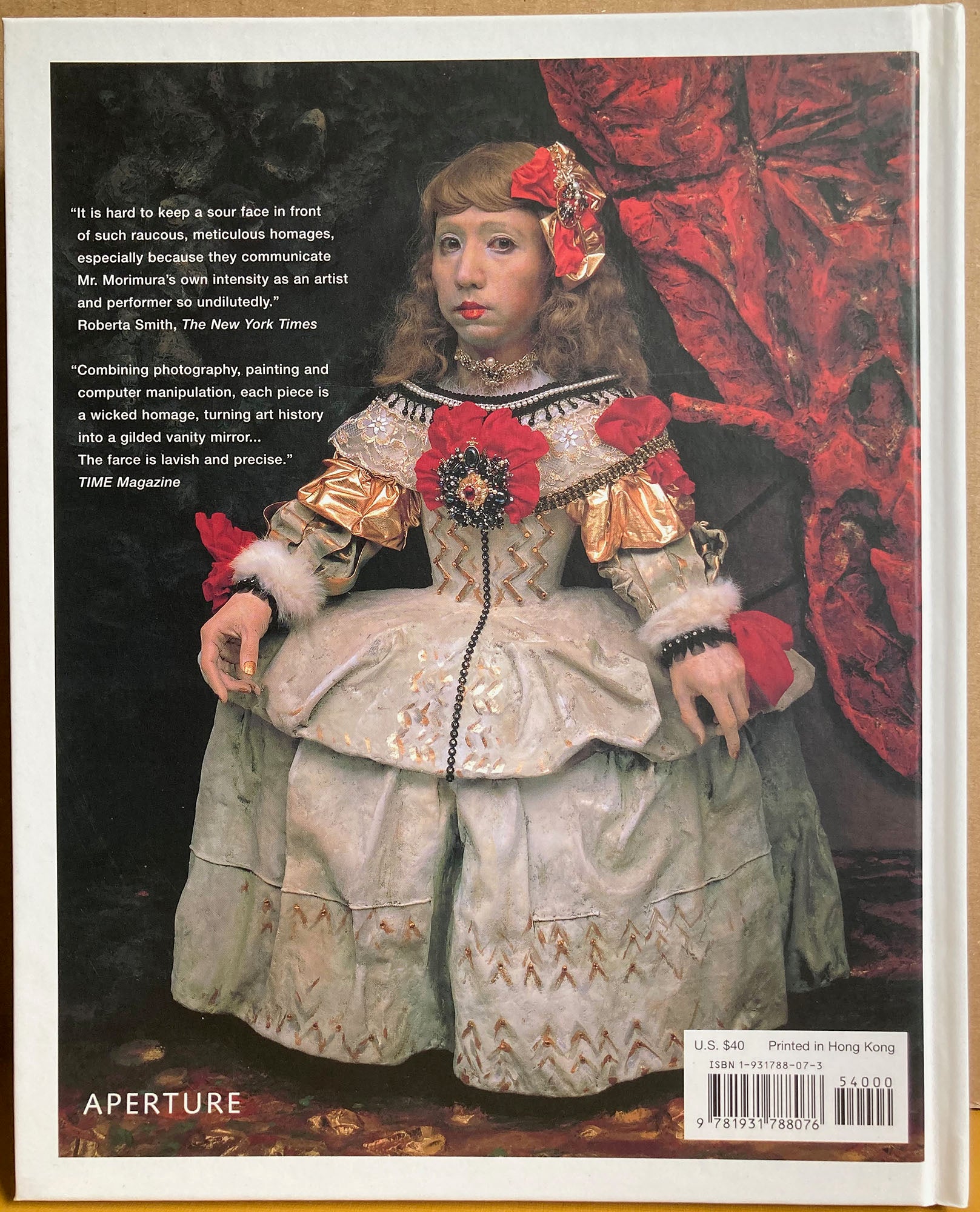
Aperture, 2003. First edition, first printing. Like new. Illustrated boards, not issued with dust jacket. Custom made 4-mil polyester jacket. An homage to art history with take-offs on famous paintings, most featuring the artist in outlandish self-portraits. Time magazine commented, “Combining photography, painting and computer manipulation, each piece is a wicked homage, turning art history into a guided vanity mirror…The farce is lavish and precise.” Morimura, born in 1951 in Osaka, graduated from Kyoto City University and came to the U.S., where he studied at Philadelphia College of Art and Columbia University. His photographs concern postmodern issues of originality and self, as well as race, gender, and sexuality in art. 128 pages. Not to be confused with later reprint. Summary:
Daughter of Art History (2003) is a provocative and visually stunning monograph by the Japanese contemporary artist Yasumasa Morimura. The book serves as a definitive collection of Morimura’s most famous series, in which he uses elaborate costumes, makeup, and digital manipulation to insert himself into the "canvases" of iconic Western masterpieces.
Core Themes and Concept
-
The "Self-Portrait" as Subversion: Morimura challenges the traditional Western art canon by physically replacing the subjects of famous paintings with his own image. By doing so, he deconstructs the boundaries of race, gender, and geography, reimagining the "Daughter of Art History" as a Japanese man.
-
Performative Photography: Morimura does not just use Photoshop; he builds massive, 3D physical sets and applies heavy prosthetic makeup to mimic the brushstrokes of the original artists. The resulting photographs are a hybrid of painting, sculpture, and performance art.
-
The "Male Gaze" and Identity: By posing as famous female subjects—such as Manet’s Olympia, Vermeer’s Girl with a Pearl Earring, or Velázquez’s Infanta Margarita—Morimura forces the viewer to confront the "male gaze" and the history of Western cultural imperialism.
Significant Works in the Collection
-
Manet's Olympia: One of his most celebrated works, where he plays both the reclining nude and the Black servant, highlighting the racial and social hierarchies present in the original 1863 painting.
-
Frida Kahlo Series: Morimura pays homage to Kahlo’s suffering and strength by recreating her intensely personal self-portraits, finding a shared language of "pain and performance".
Critical Legacy
Morimura’s work is often categorized as Postmodern Appropriation. While his images are often humorous or campy, they carry a deep critique of how art history is taught and who is allowed to be the "subject" of a masterpiece.
Born in Osaka, Japan, in 1951, Yasumasa Morimura is an internationally acclaimed conceptual photographer and appropriation artist known for masterfully inserting his own body into canonical masterpieces of Western art history and pop culture. After graduating from Kyoto City University of Arts in 1978, he launched his signature practice in 1985 with Portrait (Van Gogh), embarking on decades of performative self-portraiture. Utilizing elaborate costumes, makeup, props, and later digital manipulation, Morimura transforms himself into iconic figures—ranging from Frida Kahlo, Rembrandt, and Velázquez to Marilyn Monroe—to challenge traditional notions of identity, gender, the male gaze, and Japan's complex absorption of Western culture. A recipient of Japan's Order of the Purple Ribbon and nominated for the Hugo Boss Prize, his work has been featured in major global solo exhibitions and is held in the permanent collections of institutions such as the Museum of Modern Art, the Whitney Museum of American Art, and the San Francisco Museum of Modern Art.