Gary Saretzky Photo Books
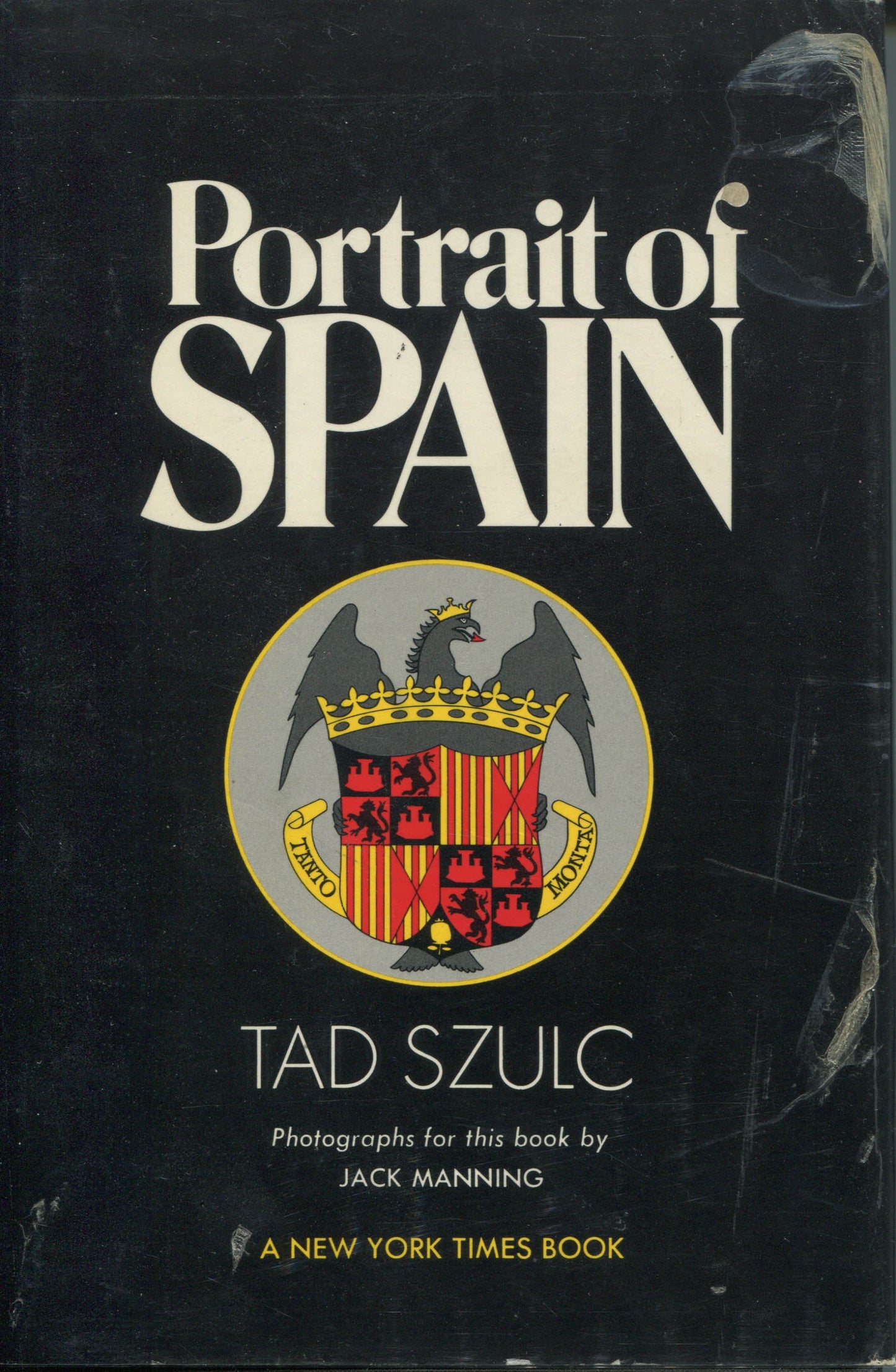
Manning, Jack. Portrait of Spain. Text by Tad Szulc. Photographs by Jack Manning.
Manning, Jack. Portrait of Spain. Text by Tad Szulc. Photographs by Jack Manning.
Impossible de charger la disponibilité du service de retrait
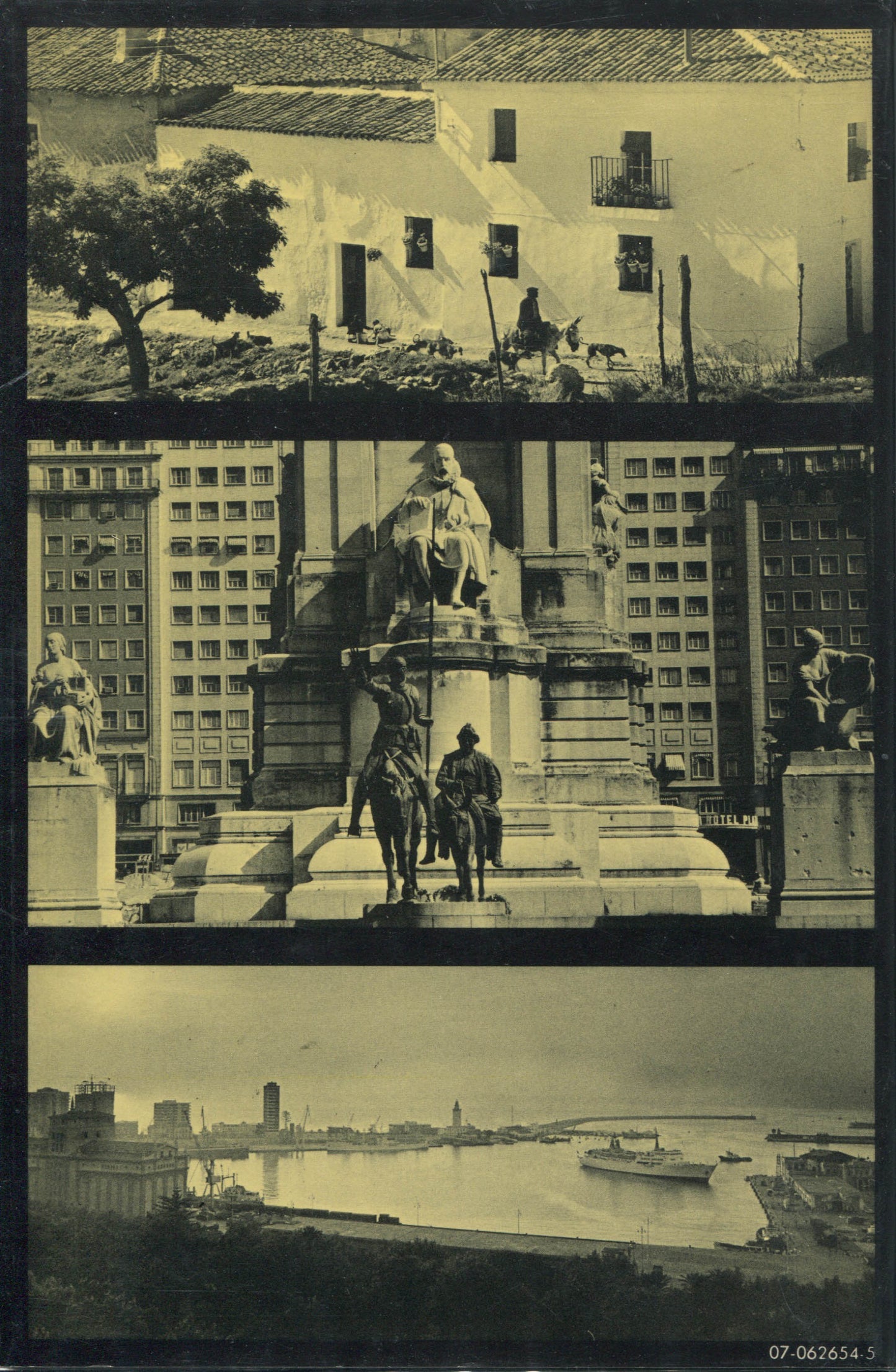
American Heritage Press, A Division of McGraw-Hill, 1972. Hardcover in black cloth. First edition, fine with price clipped, good plus, protected dust jacket. A New York Times Book. Divided into three sections, This Is Spain, Spain’s Past and Trauma, and The New Spain, in 348 indexed pages, including a resources guide on pages 291 to 335 with its own table of contents. Numerous black-and-white photographs by Jack Manning, a past member of the renowned Photo League. With a folded certificate laid in that was given to Virginia Ruth Ortleb (1929–1983) for crossing the Equator.
Jack Manning (1920–2001) was an American photojournalist and staff photographer for The New York Times whose versatile, long-career oeuvre captured pivotal socio-political events, literary icons, and street life throughout the mid-to-late 20th century. Born in New York City, Manning developed an early passion for photography and joined the Photo League in the late 1930s, aligning himself with its socially conscious approach to urban documentary. During World War II, he served as a military photographer in the U.S. Army Signal Corps, photographing combat and reconstruction across the European theater. Upon returning to New York, he freelanced for major publications including Life, Look, Collier's, and The Saturday Evening Post before joining the staff of The New York Times in 1964, where he worked for over two decades. Known for his keen eye for candid human moments and insightful portraiture, Manning covered critical historical milestones ranging from the Civil Rights Movement and Presidential campaigns to intimate portraits of cultural figures such as Malcolm X, James Baldwin, and Pablo Casals. An advocate for photographic technology and technique, he also authored educational books on 35mm photography, leaving behind a prolific, highly respected archive that remains a vital chronicle of American post-war social history.
Portrait of Spain, published in 1972, is a collaborative travelogue and cultural study that captures Spain during a pivotal moment of transition—the final years of Francisco Franco’s dictatorship. The book combines the political and social insights of New York Times correspondent Tad Szulc with the evocative street photography of Jack Manning.
The Narrative Perspective
Tad Szulc provides a nuanced, scholarly, yet accessible text that moves beyond the typical tourist tropes of bullfights and flamenco. His contributions focus on:
-
The "Two Spains": The tension between the traditional, deeply religious rural society and the emerging, modern industrial nation.
-
Historical Context: A deep dive into how the Spanish Civil War and the subsequent decades of isolation shaped the national character and the stoicism of its people.
-
Political Climate: Subtle observations on the state of the country as it sat on the precipice of post-Franco democratization.
The Visual Elements
Jack Manning’s black-and-white photography serves as the "eyes" of the book, utilizing a compassionate, documentary style reminiscent of the mid-century humanists.
-
Human-Centric Imagery: Rather than focusing solely on architecture, Manning highlights the faces of the Spanish people—peasants, priests, and city dwellers—capturing a sense of dignity and "eternal Spain."
-
Atmospheric Detail: His images utilize the harsh, high-contrast light of the Iberian Peninsula to underscore the ruggedness of the landscape and the austerity of Spanish life.
Significance
Portrait of Spain is valued today as a historical time capsule. It offers a sophisticated "outsider's" look at a nation caught between its imperial past and its European future, documenting the textures of a culture that was about to be radically transformed by globalization and political change.