Gary Saretzky Photo Books
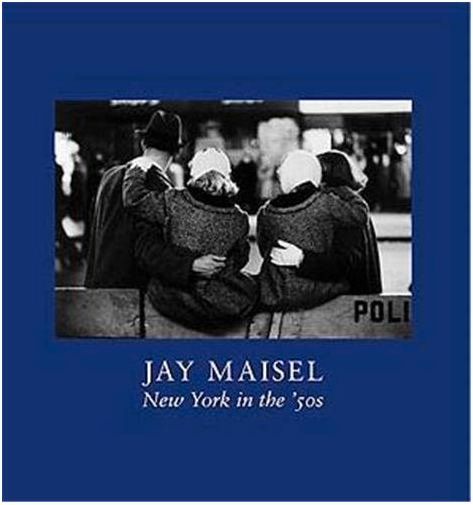
Maisel, Jay. New York in the '50s by Jay Maisel.
Maisel, Jay. New York in the '50s by Jay Maisel.
Impossible de charger la disponibilité du service de retrait
Nazraeli Press, 2014. First edition. Cloth with photo on cover, new in original shrink wrap. About 11.75 x 12.5 inches, 92 pages. Born in 1931, Maisel's awards include the Art Directors Club Hall of Fame, the Lifetime Achievement Award from the American Society of Media Photographers, and the International Center of Photography's Infinity Award. One of his best known images is the cover photo for Miles Davis' Kind of Blue LP album in 1959. For this book, Maisel commented, “I have been shooting New York for over 60 years now. And though I have achieved age, I can safely say I have never made my way to maturity so I have never been jaded or bored. I think all this is due to the grittiness and hectic quality of the city, you never capture it, it captures you.” Image below is a stock photo. Summary:
New York in the '50s is a vibrant photographic collection by the legendary Jay Maisel, showcasing his early work as a street photographer. Unlike his later fame as a master of color, this book is primarily a study of the city in black and white, captured when Maisel was a young man wandering the streets of Manhattan with a Leica.
Core Themes and Visual Style
1. The Energy of the Street
The book captures New York City during a post-war "golden age." Maisel’s lens focuses on the raw, unscripted choreography of daily life, including:
-
The Lower East Side: Pushcarts, street markets, and the immigrant communities that defined the neighborhood.
-
Commuters and Characters: Businessmen in fedoras, children playing in the spray of fire hydrants, and the anonymous faces of the subway.
-
Atmospheric Conditions: The grit of the city heightened by steam, shadows, and the harsh light of midtown.
2. Formative Modernism
The collection reveals the early development of "The Maisel Eye." Even in these early monochrome shots, his obsession with gesture, light, and color (expressed here as tonal range) is evident. He avoids sentimentality, opting instead for a graphic, direct style that emphasizes the geometry of the urban environment.
3. A Vanished City
The book serves as a historical document of a New York that no longer exists—one of open-air markets, distinct ethnic enclaves, and a physical landscape before the dominance of glass-and-steel skyscrapers. It portrays the city as a crowded, dirty, but deeply human stage.
Technical and Artistic Significance
-
Black and White Mastery: For those familiar with Maisel’s iconic color work, this book provides a rare look at his ability to use shadow and contrast to create depth and narrative without the aid of hue.
-
Candid Approach: Maisel’s work in the 1950s was defined by his "omnipresence"—he was a photographer who lived the street life he documented, resulting in images that feel intimate rather than voyeuristic.
-
The "Leica" Aesthetic: The photographs reflect the era's shift toward small, handheld cameras, allowing for the quick, spontaneous "snap" shots that revolutionized documentary photography.
Summary Takeaway
New York in the '50s is a love letter to a bygone era. It is an essential volume for fans of street photography, offering a gritty, energetic, and sophisticated portrait of Manhattan through the eyes of a photographer who would go on to become one of the most influential visual artists of the 20th century.
