Gary Saretzky Photo Books
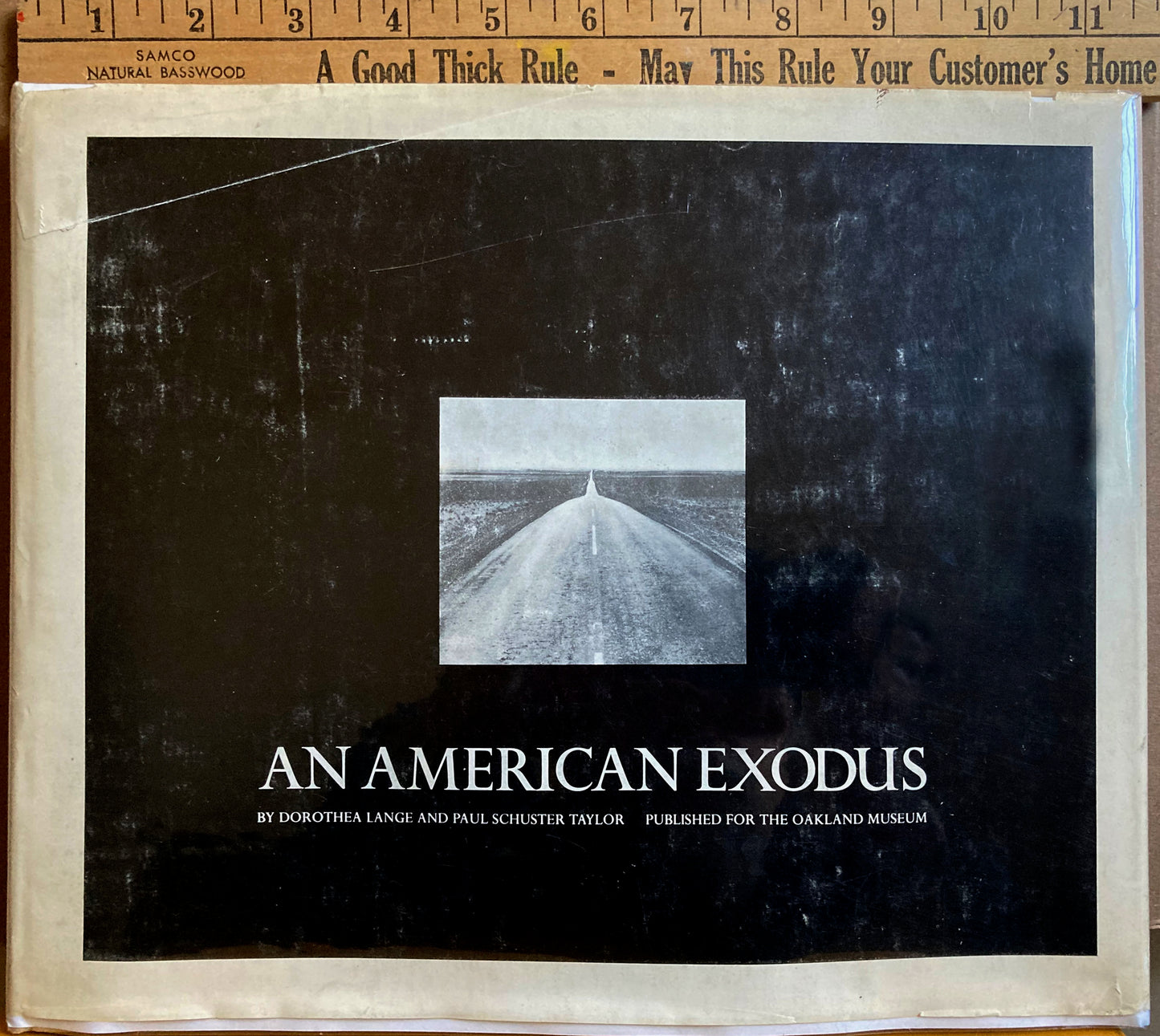
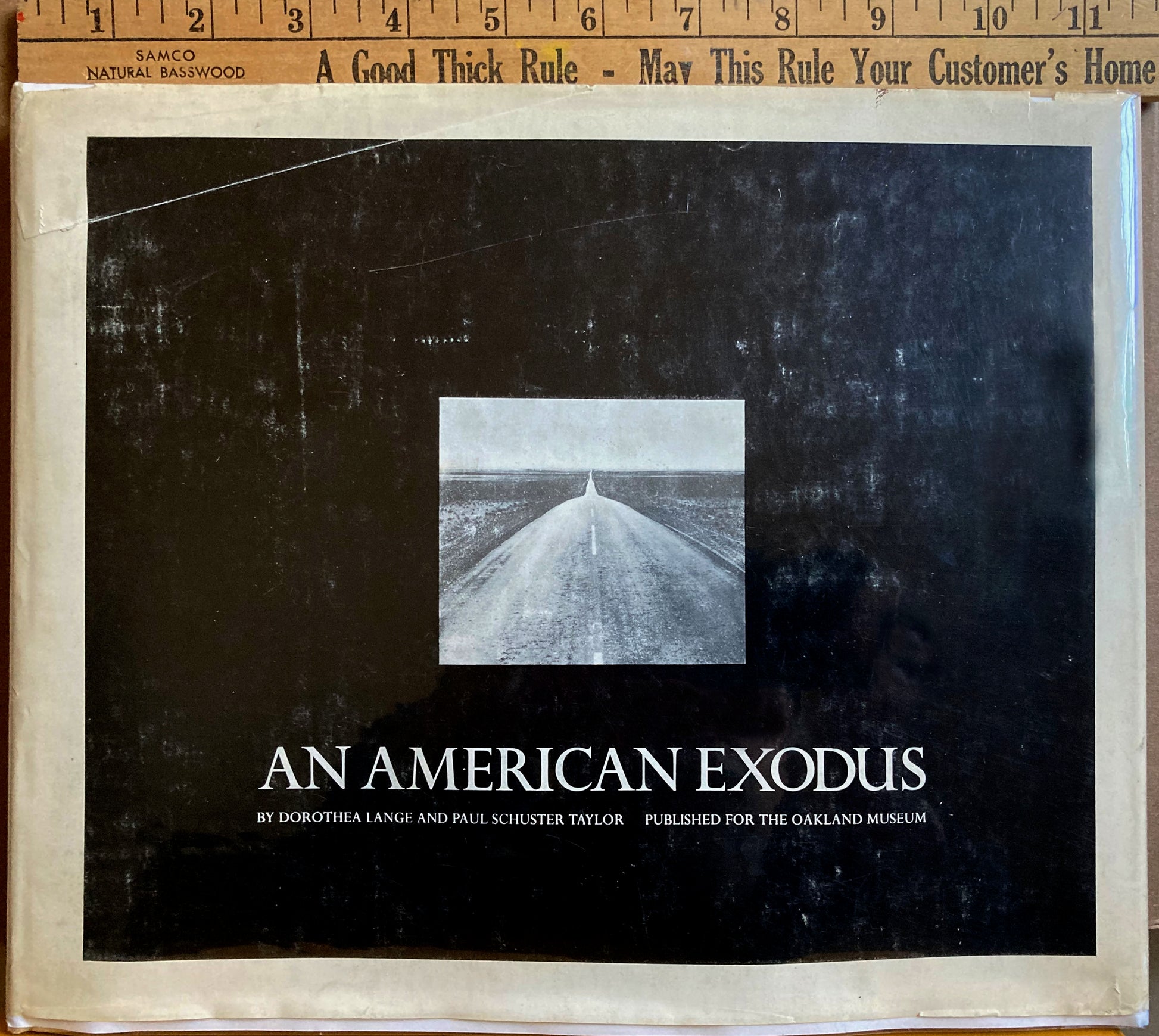
Lange, Dorothea. An American Exodus: A Record of Human Erosion in the Thirties by Dorothea Lange and Paul Schuster Taylor.
Lange, Dorothea. An American Exodus: A Record of Human Erosion in the Thirties by Dorothea Lange and Paul Schuster Taylor.
Impossible de charger la disponibilité du service de retrait
Yale University Press for the Oakland Museum, 1969. White cloth, very good, with edge chipped, price-clipped, protected dust jacket. Interior fine. Originally issued in 1939, the first edition is rare and listed in Roth 101. This edition has a revised text and better quality reproductions than the first edition, with an added preface by Lange’s husband and co-author, Paul Schuster Taylor, dated August 1, 1969, and a new chapter by Taylor at the end of the book on "the end of the road." Photographs reproduced from Farm Security Administration files at the Library of Congress and Lange's archives at the Oakland Museum. A copy of this 1969 edition with very good plus dust jacket sold for $940 at the Photo-Eye auction in 2004. Very uncommon in hardcover. Note: photos accompanying this listing were taken with the dust jacket protector on the book and show reflections. Not issued with ISBN number. Summary:
An American Exodus (1969 revised edition, originally 1939) is a seminal "sociological documentary" created by photographer Dorothea Lange and her husband, economist Paul Schuster Taylor. The book is a sophisticated integration of field notes, economic data, and powerful imagery that chronicles the mass migration of rural Americans—primarily "Oakies" and "Arkies"—escaping the twin devastations of the Dust Bowl and the mechanization of agriculture.
Core Themes and Narrative
-
"Human Erosion": The title serves as a double entendre. It refers not only to the physical erosion of the soil that made farming impossible but also to the erosion of the human spirit and social fabric as families were uprooted from their ancestral lands.
-
The Machine vs. The Man: A central tension in the book is the "Tractorization" of the American South. Taylor’s text explains how industrial advancements (like the 4WD tractor) allowed landlords to "evict" sharecroppers, replacing dozens of families with a single machine.
-
The Oral History: Unlike other photo books of the era, Lange and Taylor included "captions" that were direct quotes from the subjects. This gave a literal voice to the displaced, turning the book into an early form of multimedia advocacy.
Visual and Technical "Finish"
-
The "FSA" Aesthetic: Lange’s work, funded by the Farm Security Administration, is the pinnacle of the "Straight Photography" finish. There is no retouching; the "finish" is found in the grit on a child’s face and the stark, unyielding light of the highway.
-
Structural Composition: Lange used her camera to highlight the scale of the crisis. Her photographs of endless rows of cotton or the vast, empty horizons of Texas emphasize the isolation of the individuals moving through them.
- Dorothea Lange (1895–1965), born Dorothea Margaretta Nutzhorn, was a pioneering American documentary photographer and photojournalist whose empathetic, razor-sharp visual chronicling of human suffering humanized the consequences of the Great Depression and reshaped modern documentary photography. Born in Hoboken, New Jersey, Lange studied photography at Columbia University under Clarence H. White before opening a successful portrait studio in San Francisco in 1918. Driven outdoors by the onset of the Great Depression, she turned her view camera toward the urban unemployed, catching the attention of agricultural economist Paul Taylor—her future husband and collaborator—and Roy Stryker, who recruited her to the Farm Security Administration (FSA) in 1935. Working alongside Walker Evans and Russell Lee, Lange produced some of the most iconic images of 20th-century photojournalism, including her celebrated 1936 portrait Migrant Mother, which brought immediate national awareness and federal relief to displaced Dust Bowl farmworkers. During World War II, she was commissioned by the War Relocation Authority to document the forced internment of Japanese Americans, producing critical, deeply sympathetic photographs that were impounded by the U.S. government until after the war. Awarded a Guggenheim Fellowship in 1941 and later co-founding Aperture magazine in 1952, Lange devoted her final years to global photo essays and preparing a career retrospective for the Museum of Modern Art, solidifying an enduring legacy as a compassionate visual advocate who defined the social documentary tradition.