Gary Saretzky Photo Books
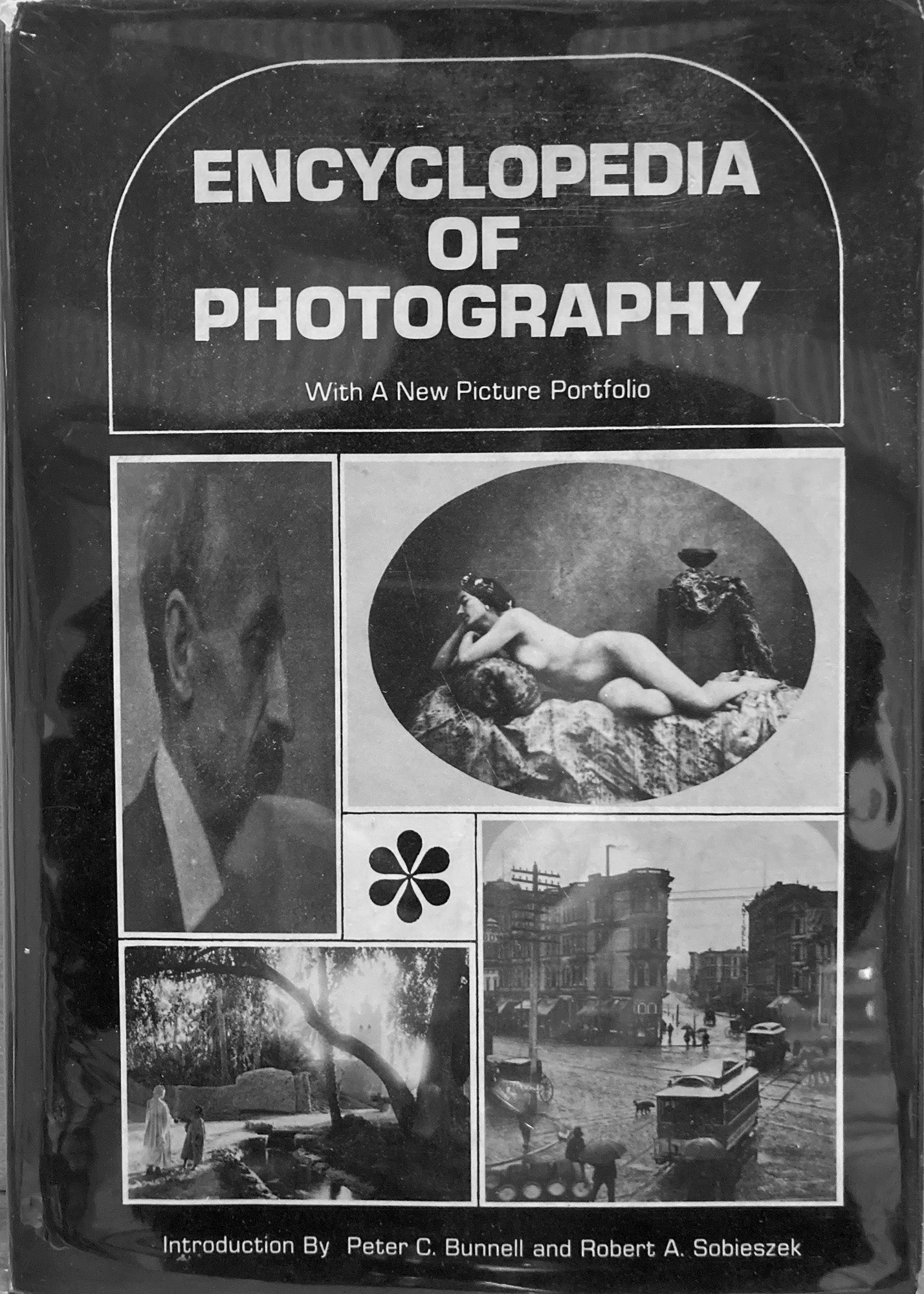
Jones, Bernard E., ed. Encyclopedia of Photography (1911) edited by Bernard E. Jones. Reprint.
Jones, Bernard E., ed. Encyclopedia of Photography (1911) edited by Bernard E. Jones. Reprint.
Impossible de charger la disponibilité du service de retrait
Reprint of 1911 edition by Arno Press, 1974. Introduction by Peter C. Bunnell and Robert Sobieszek, with a new picture portfolio. 572 pages. Near fine with very good dust jacket with evidence of use. Summary:
Originally published in 1911 as The Cyclopaedia of Photography and later reprinted in 1974, this volume edited by Bernard E. Jones stands as one of the most comprehensive records of photography during its chemical and mechanical zenith. It serves as a bridge between the Victorian pioneers and the birth of modern photo-industrialization.
Scope and Structure
The book is organized alphabetically as a true encyclopedia, containing over 2,500 entries and nearly 1,000 illustrations. It covers the entirety of the medium as it existed at the turn of the 20th century:
-
Chemical Processes: Exhaustive guides to daguerreotype, calotype, ambrotype, and the then-standard gelatin dry plates. It includes hundreds of historical formulas for developers, toners, and fixers.
-
Optical Theory: Detailed explanations of lens construction, aberrations, and the physics of light, providing a technical foundation for early photographers.
-
Mechanical Gear: Descriptions and diagrams of various camera types, from massive studio view cameras to the "hand cameras" and early "detective cameras" that were beginning to revolutionize the field.
Core Themes
-
The Transition to Art: While heavily technical, the encyclopedia features significant entries on "Pictorial Landscape" and "Composition," reflecting the era's struggle to have photography recognized as a fine art.
-
Scientific Utility: It documents the era's fascination with photography as a tool for science, featuring sections on micro-photography, astronomical photography, and radiographic (X-ray) imaging.
-
Commercial Practice: The book offers a "how-to" for the professional of 1911, covering studio management, retouching, and the burgeoning field of press photography.
Historical Significance
The 1974 reprint is particularly valued by historians and alternative process photographers. Because it was written at a time when photographers still mixed their own chemistry and understood the mechanics of their equipment from the ground up, it remains a "bible" for those looking to recreate 19th-century photographic methods.
Note: The encyclopedia is a testament to an era of "total photography," where the practitioner was required to be simultaneously a chemist, a carpenter, an optician, and an artist.
