Gary Saretzky Photo Books
Eickemeyer, Rudolf. In My Studio: Rudolf Eickemeyer, Jr. and the Art of the Camera 1885-1930 by Mary Panzer.
Eickemeyer, Rudolf. In My Studio: Rudolf Eickemeyer, Jr. and the Art of the Camera 1885-1930 by Mary Panzer.
Impossible de charger la disponibilité du service de retrait
Hudson River Museum, 1986. Wraps, near fine. Exhibition catalog, including checklist of 114 items on view at the Hudson River Museum, December 3, 1986 - February 3, 1987. 92 illustrations (some full page), chronology, and bibliography. Foreword by Estelle Jussim. Biography by Mary Panzer. Not issued with ISBN number.
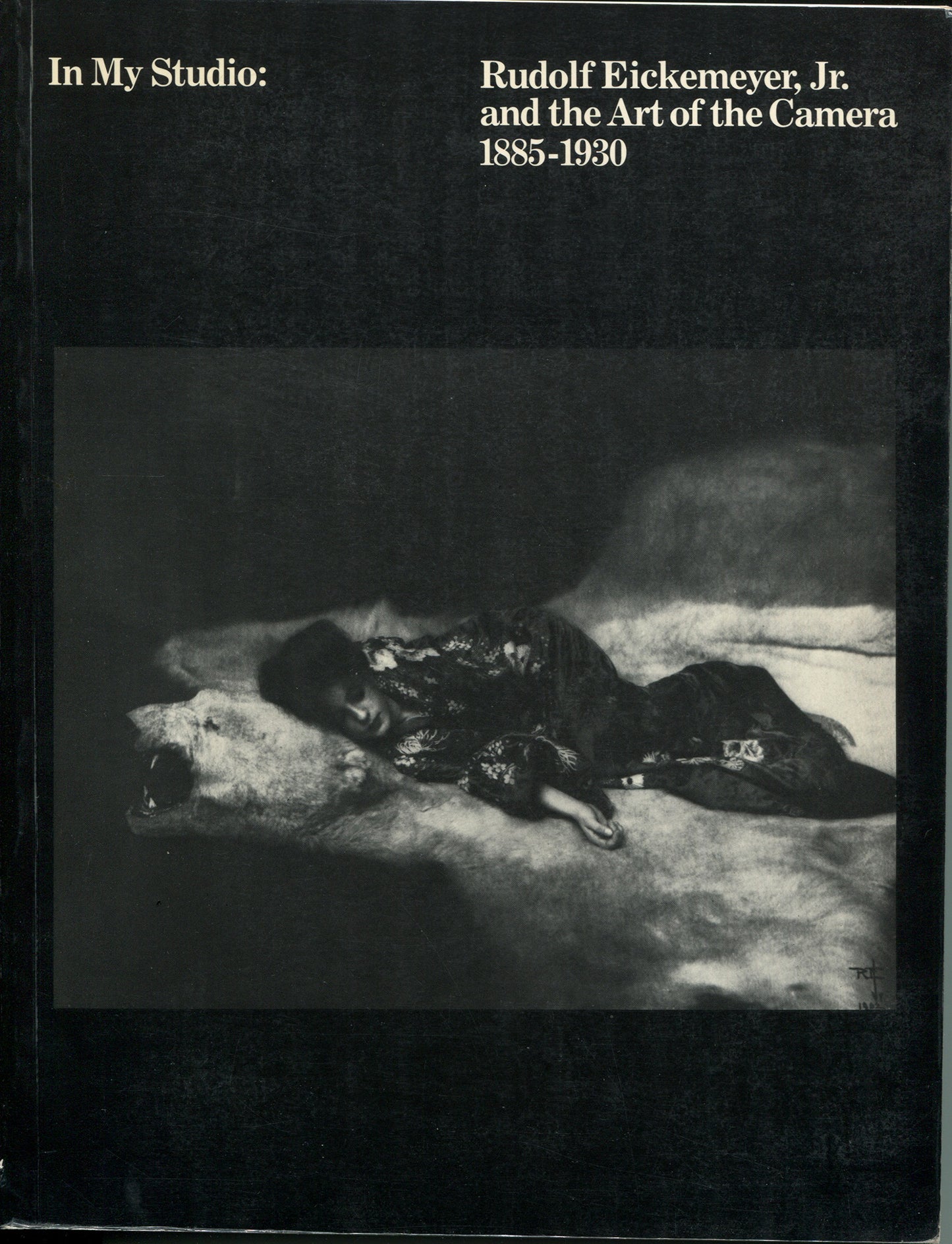
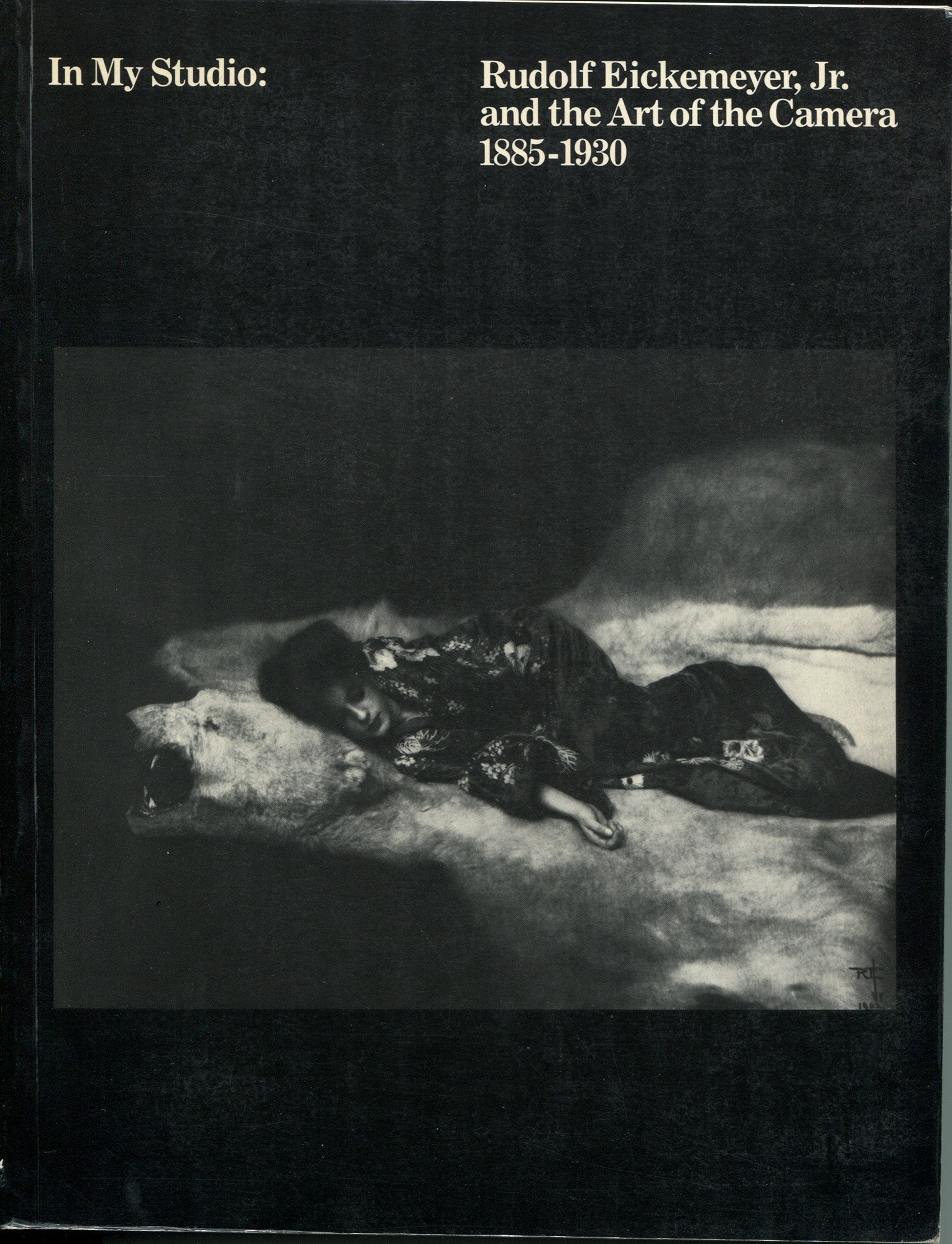
Eickemeyer was a leading Pictorialist photographer in the 1890s and early 1900s and one of the first two Americans admitted to The Linked Ring, along with Alfred Stieglitz. He was a pioneer in the field of large format photography books, such as his portrayal of African Americans in Down South (1900). He also was a very successful portrait photographer in New York, working some of the time in partnership with Charles Davis and at a different stage in his career, operating Alfred S. Campbell's gallery. His widely reproduced photograph of Evelyn Nesbit on a bearskin rug is reproduced on the book's cover. Summary:
In My Studio: Rudolf Eickemeyer, Jr. and the Art of the Camera 1885–1930 (1986) by Mary Panzer is a scholarly restoration of the reputation of one of America’s first "celebrity" photographers. Panzer traces Eickemeyer’s transition from a successful industrialist to a world-renowned Pictorialist, illustrating how he bridged the gap between the amateur camera club movement and the professional world of commercial high-art.
Core Themes and Narrative
-
The Professionalization of Art: Panzer highlights Eickemeyer as a pioneer who proved that photography could be a lucrative "Art-Business." He was one of the first to have solo exhibitions in galleries while simultaneously shooting high-end commercial portraits and advertisements.
-
The Cult of Beauty: The narrative focuses on Eickemeyer’s obsession with idealized forms—from his famous "socialite" portraits (including Evelyn Nesbit) to his meticulously composed landscapes. He believed the camera should "improve" upon nature through careful composition.
-
Technical Mastery as Art: Unlike some Pictorialists who relied on blurry "accidents," Panzer shows that Eickemeyer’s technical success was rooted in his deep understanding of optics, possibly a byproduct of his background in his father’s precision tool and die business.
Visual and Technical Notes
-
The "Painterly" Finish: Eickemeyer was a master of the platinum print, which offered a soft, matte, and permanent "finish" that mimicked the tonal qualities of a charcoal drawing.
-
Studio artifice: The look of his portraits was often achieved through elaborate set dressing. He used the studio as a "controlled stage," using light to create a luminous, ethereal glow on his subjects’ skin that felt both classical and modern.
- Rudolf Eickemeyer Jr. (1862–1932) was a prominent American Pictorialist photographer, whose lyrical landscapes and elegant studio portraits played a key role in raising photography to an accepted art form in the United States around the turn of the 20th century. Born in Yonkers, New York, Eickemeyer initially worked as a draftsman and patent illustrator at his father's machine company before turning to photography in 1884, quickly earning international acclaim and becoming one of the first Americans elected to the prestigious Linked Ring brotherhood in London in 1894. Renowned for his atmospheric winter landscapes, soft-focus naturalistic studies of the Hudson River Valley, and polished portraits of high-society figures—including the famous model Evelyn Nesbit—he favored delicate platinotype and carbon printing techniques. Though he maintained a professional rivalry with Alfred Stieglitz and advocated for a more democratic, widely accessible artistic practice over Photo-Secessionist exclusivity, Eickemeyer served as artistic director of the Campbell Studio in New York and published several celebrated photobooks, including Down South (1900), portraying African American life, and The Old Farm (1901). Prior to his death in 1932, he donated his extensive collection of prints, medals, and equipment to the Smithsonian Institution, securing his legacy as a vital bridge between 19th-century salon photography and American modernism.