Gary Saretzky Photo Books
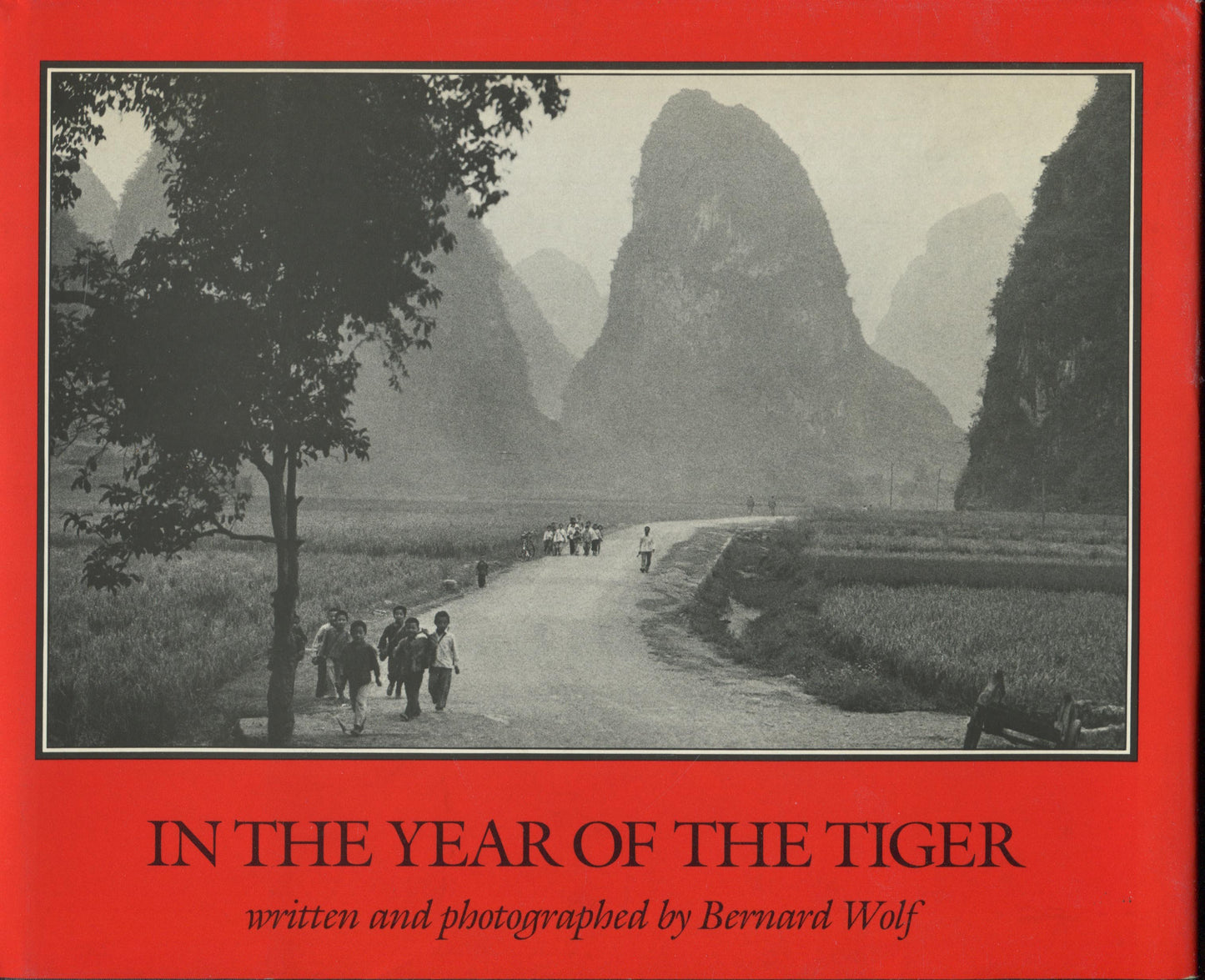
China. In the Year of the Tiger by Bernard Wolf.
China. In the Year of the Tiger by Bernard Wolf.
Impossible de charger la disponibilité du service de retrait
Macmillan, 1988. First edition, 1st printing in hardcover, fine in black cloth with near fine dust jacket that has just a trace of shelf wear and no other signs of use. Experienced photojournalist Bernard Wolf, who previously published many books for children and contributed photos to adult publications such as Fortune magazine, spent three months living in Ai Shan in Yang Shuo county in the Guangxi Autonomous Region, 1,500 miles south of Beijing. He documented the lives of the people and events that took place in this thousand-year-old village. Wolf concentrated on photographing the Chen family and the tasks each member performed to help the family survive and flourish. Wolf attended a wedding feast, went to school with the children, experienced the autumn rice harvest, and learned how the Communist Party impacted Chinese village life through attendance at a town meeting. 124 pages with numerous photographs interspersed throughout Wolf's text.
Bernard Wolf (1930–2021) was an American photojournalist, author, and documentary photographer celebrated for his groundbreaking, humanistic photo-essays that introduced young readers to complex global cultures and social realities.Born in New York City, Wolf contributed editorial feature photography to major national publications including Fortune, National Geographic, and Time-Life books before pioneering a new standard for socially conscious juvenile photo-literature. Beginning with The Little Weaver of Agato (1969), he authored and photographed nearly twenty acclaim-winning books that combined intimate 35mm candid documentary photography with empathetic narrative text. His work was particularly noted for tackling challenging and underrepresented subjects with dignity, including childhood disabilities in Don't Feel Sorry for Paul (1974) and Connie's New Eyes (1976), systemic poverty in Homeless (1995), public health in HIV Positive (1997), and immigrant life in Coming to America: A Muslim Family's Story (2003). Honored by the American Library Association for his advocacy work, Wolf's legacy lies in using non-sentimental documentary photography to bridge cultural divides and foster empathetic social understanding across generations.
In the Year of the Tiger (1988) is a vivid photo-documentary that captures the daily rhythms and cultural transition of China during the late 1980s. Written and photographed by Bernard Wolf, the book focuses on the life of a single family in the village of Chen Men, providing a human-scale perspective on a nation then undergoing rapid economic and social change.
Core Narrative
The book follows the Ai family through a lunar year (the Year of the Tiger). By narrowing his lens to one family, Wolf illustrates the broader complexities of Chinese life during the "Reform and Opening-up" era. Key themes include:
-
The Rural-Urban Divide: The story captures the traditional agricultural practices of the village contrasted with the growing influence of modern technology and education.
-
Family Structure: Wolf documents the interplay between three generations living under one roof, highlighting the tension and harmony between ancient Confucian values and modern aspirations.
-
Cultural Rituals: The book provides detailed visual accounts of seasonal festivals, communal labor, and the specific educational paths of the Ai children.
Photographic Style
Bernard Wolf utilizes a candid, immersive style that prioritizes intimacy over sweeping political statements.
-
Fly-on-the-Wall Perspective: The photographs capture unguarded moments—meals, chores, and quiet reflections—that make the subjects relatable to a Western audience.
-
Rich Visual Detail: Using vibrant color photography, Wolf emphasizes the textures of the Chinese countryside, from the earthen walls of the village homes to the bright silks of festival attire.
Key Information
-
Published: 1988 by Macmillan.
-
Target Audience: Originally published as an educational book for young adults and students, it has since become a valued historical document for its "time capsule" depiction of pre-industrialized rural China.
-
Significance: It is noted for its empathetic approach, avoiding the "exoticizing" tropes often found in Western photography of Asia, and instead focusing on the universal nature of family and hard work.
Summary: In the Year of the Tiger is a poignant, ground-level portrait of China. Through the eyes of the Ai family, Bernard Wolf transforms a massive geopolitical entity into a tangible, deeply personal story of resilience and change.