Gary Saretzky Photo Books
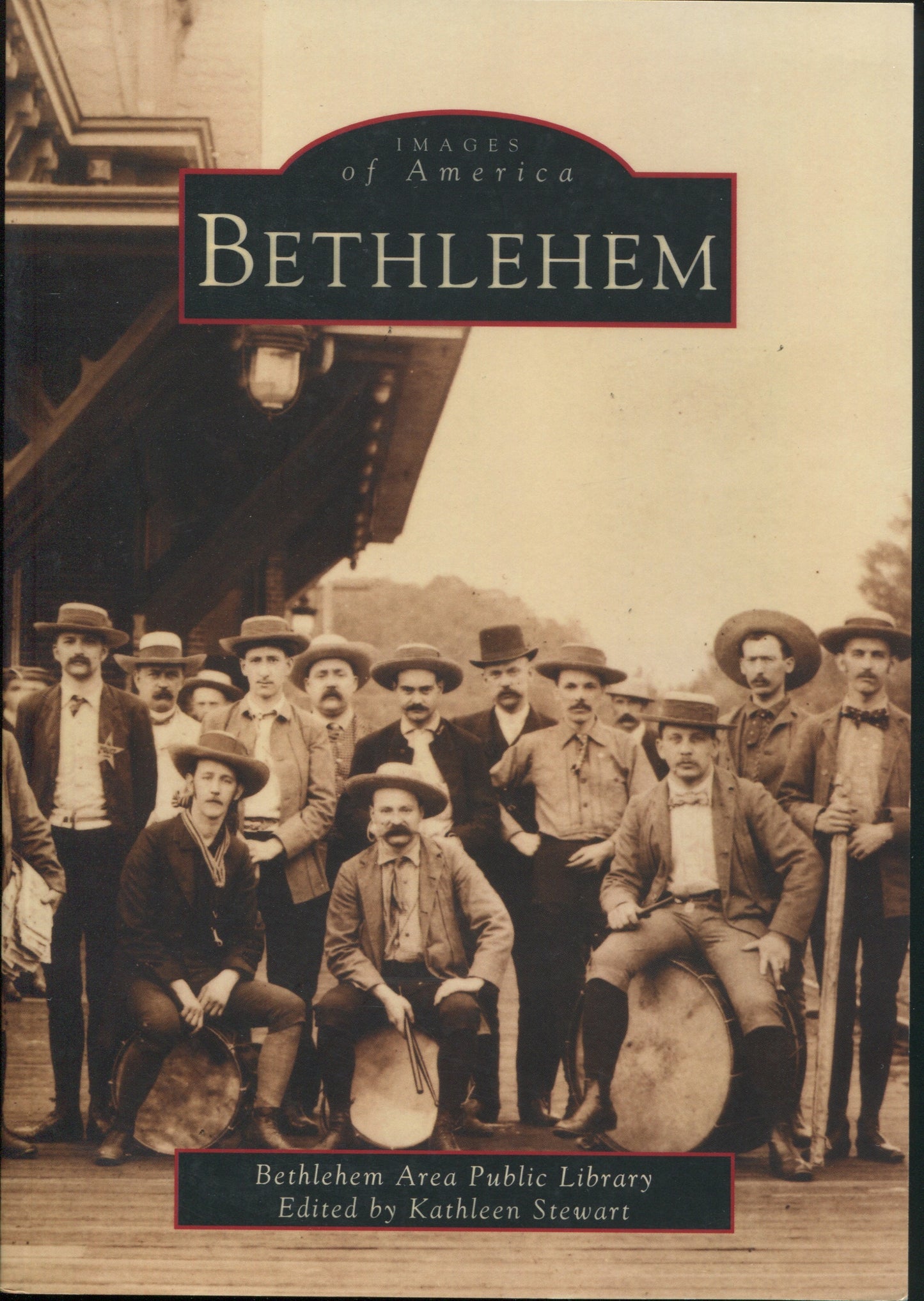
Bethlehem, Pennsylvania. Images of America: Bethlehem, edited by Kathleen Stewart.
Bethlehem, Pennsylvania. Images of America: Bethlehem, edited by Kathleen Stewart.
Impossible de charger la disponibilité du service de retrait
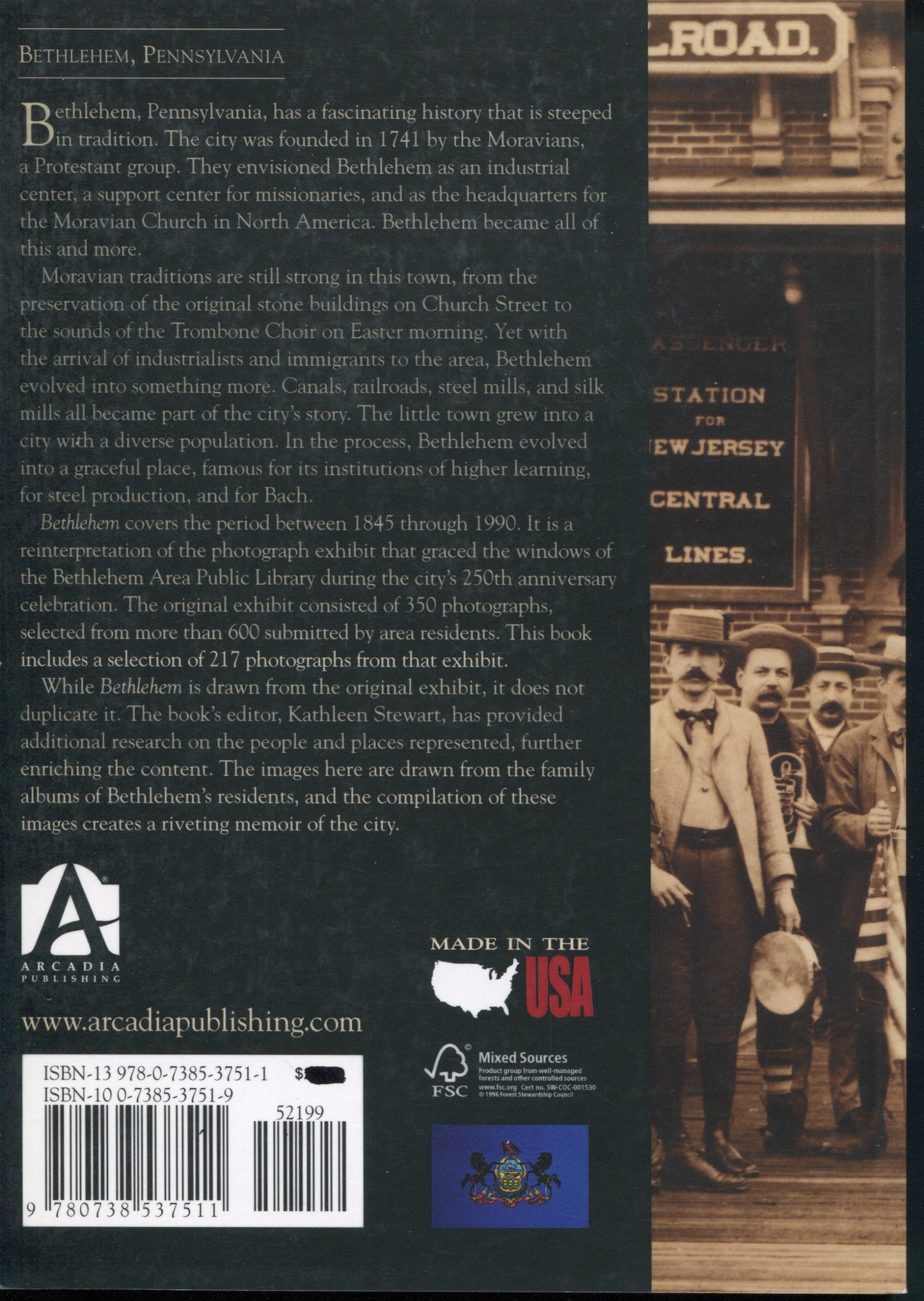
Arcadia, 1997. 128 pages. Chapters: Cityscape, Service, Work, Recreation, Faith, Education, Gatherings, Family and Friends. Like new with price on back cover neatly blacked out. Summary:
Images of America: Bethlehem (2002), edited by Kathleen Stewart, is a focused pictorial history that documents the rise, peak, and transformation of Bethlehem, Pennsylvania. Part of the iconic Arcadia Publishing series, the book serves as a "Structural Archive" of a city defined by the dual forces of religious idealism (the Moravians) and industrial titanism (Bethlehem Steel).
Core Themes and Narrative
-
The Moravian Foundation: The book begins with the mid-18th-century roots of the "Christmas City," highlighting the communal and architectural discipline of the Moravian settlers. It documents their transition from a closed religious society to a central hub of colonial industry.
-
The Steel Giant: The central narrative arc is dominated by the Bethlehem Steel Corporation. Stewart curates images that show the plant not just as a factory, but as a "City within a City." It chronicles the massive scale of the blast furnaces and the thousands of workers who turned the town into the "Arsenal of Democracy" during World Wars I and II.
-
Social and Civic Evolution: Beyond the forge, the book captures the "Human Layer"—the ethnic neighborhoods, the Lehigh River crossings, the development of Lehigh University, and the daily life of a community built around the "glow of the stacks."
Visual and Technical Notes
-
The "Vernacular" Archive: The photography in this volume is largely "un-authored" in the high-art sense. It is a collection of postcards, family albums, and corporate records. The style is documentary and utilitarian, favoring historical evidence over aesthetic manipulation.
-
Monochromatic Industrialism: The black-and-white images possess a "Gritty Finish" that mirrors the soot and iron of the landscape.