Gary Saretzky Photo Books
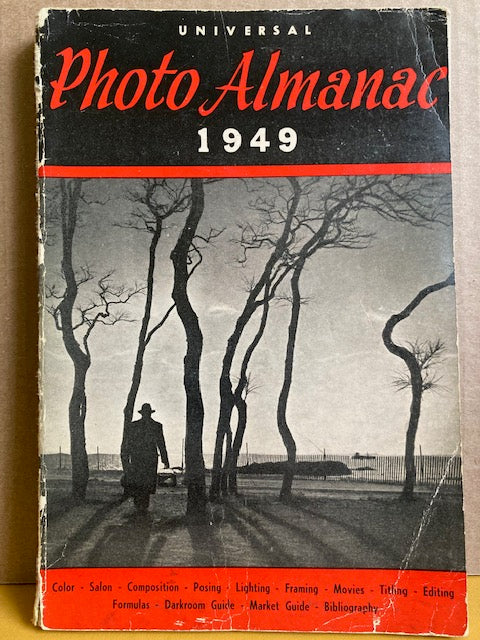
Bernhard, Ruth. Ruth Bernard, Clarence John Laughlin, et al. in Universal Photo Almanac 1949.
Bernhard, Ruth. Ruth Bernard, Clarence John Laughlin, et al. in Universal Photo Almanac 1949.
Impossible de charger la disponibilité du service de retrait
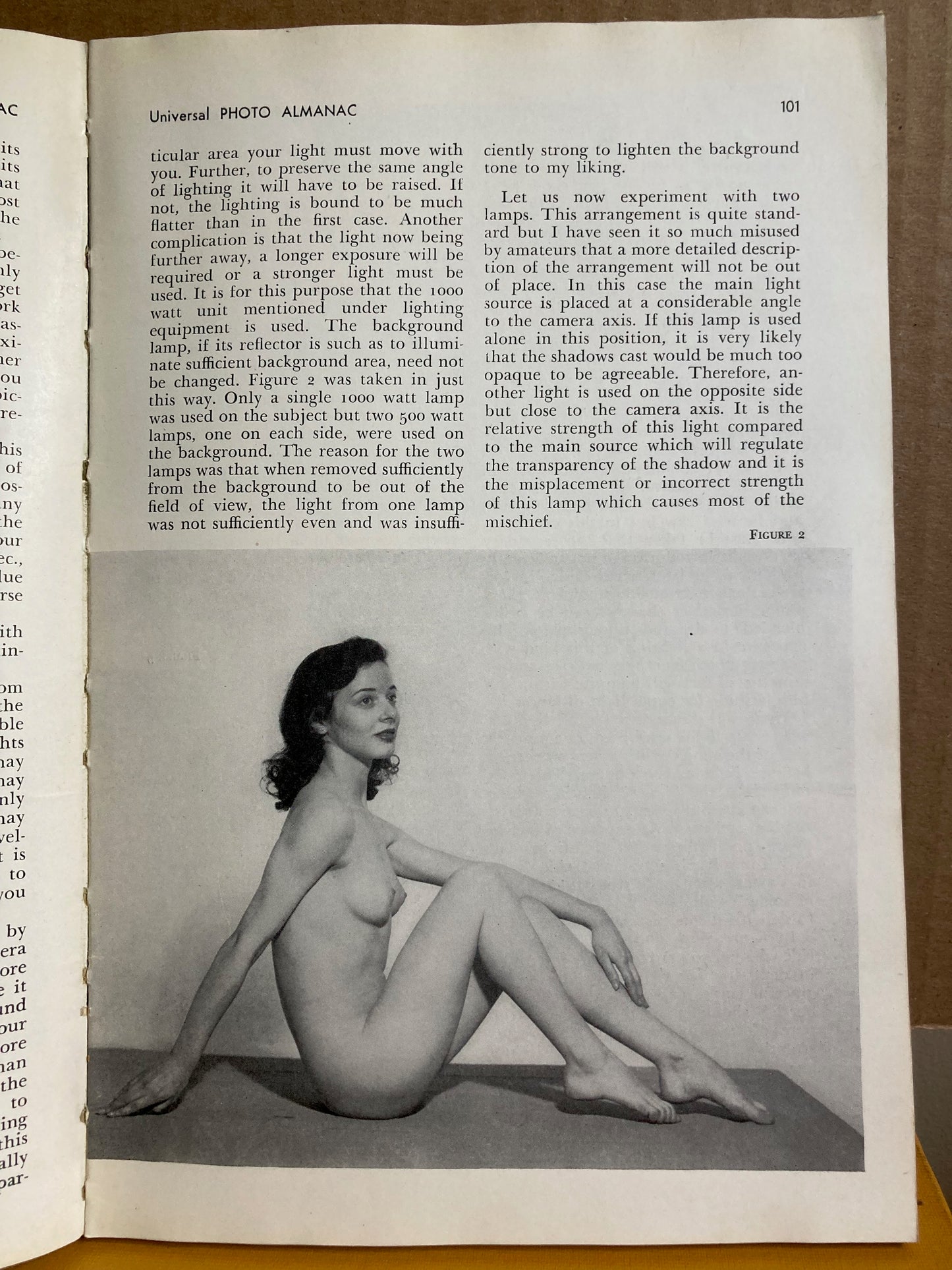
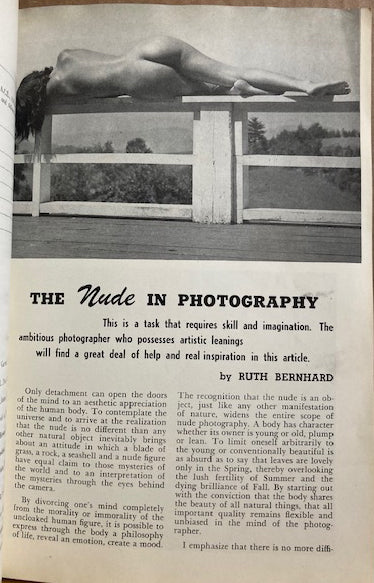
Falk Publishing Co., 1949, more than 240 pages. Wraps, good, wear to cover especially along spine, with crease lower right. Includes “The Nude in Photography” by Ruth Bernhard, “With Benefit of Reflections” by Clarence John Laughlin, “The Fundamentals of Figure Photography” by H.P. Piperoux, and other articles illustrated with the author’s photographs. Back of the book provides chemical formulas and data for photographers. Other photographers whose work is included: Adolph Fassbender; John Springthorpe; Alver J. Olson; Fred H. Ragsdale; P.J. Zioegler; J.J. Hollweg; Edward C. Wilson; J. Elwood Armstrong; Frank J. Soracy; W. Stanley Woodward; Bernard Gorson; Martin Bovey, Jr.; William Martin; Gray-O’Reilly; Norman Rhoads Garrett; Paul B. Miller; Anton Schrieber; David A. Muramoto; Howard E. Foote; F. Eliot Westlake; John H. Vondell; Ignace F. Hoffman; Samuel Grierson; Alfred Watson; and Jack Gunn (cover). Summary:
Universal Photo Almanac 1949, published by Falk Publishing Co., serves as a comprehensive "market guide" and technical compendium, capturing the specific aesthetic transition of the late 1940s. While many annuals of the era focused strictly on news, the Universal Photo Almanac leaned heavily into the artistic craft and studio technique of the medium.
Key Aesthetic Essays
The 1949 edition is distinguished by its sophisticated treatment of the human form and the use of surrealist techniques:
-
“The Nude in Photography” by Ruth Bernhard: This is a cornerstone feature of the volume. Bernhard, a master of light and shadow, argues for the nude as a study in pure form and sculpture rather than mere anatomy. Her accompanying photographs demonstrate her signature use of minimal lighting to transform the body into abstract, organic shapes.
-
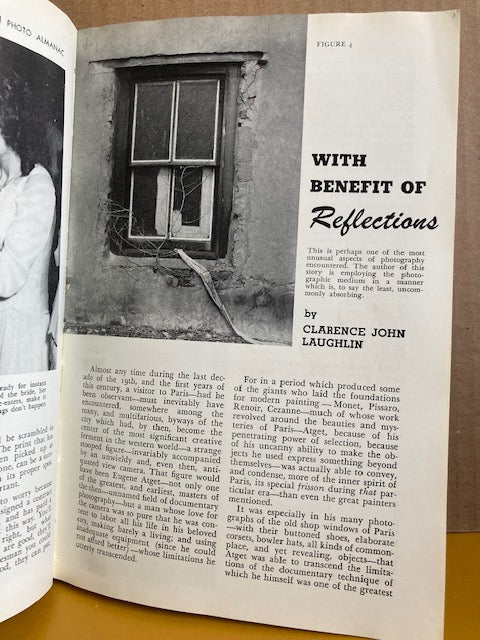
“With Benefit of Reflections” by Clarence John Laughlin: Laughlin, the "Father of American Surrealism," provides a fascinating look at his use of mirrors, windows, and water. He explains how reflections can be used to create multiple layers of reality within a single frame, imbuing the photograph with a dreamlike, haunting quality.
-
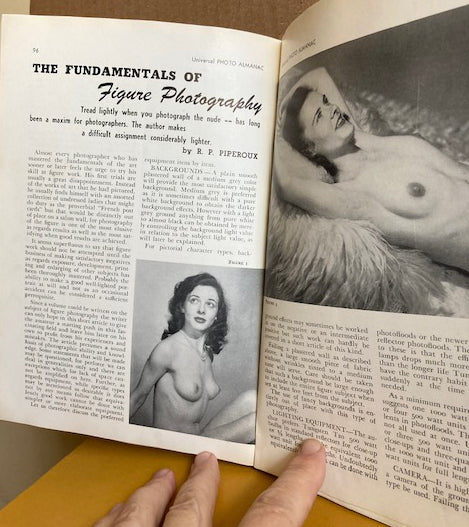
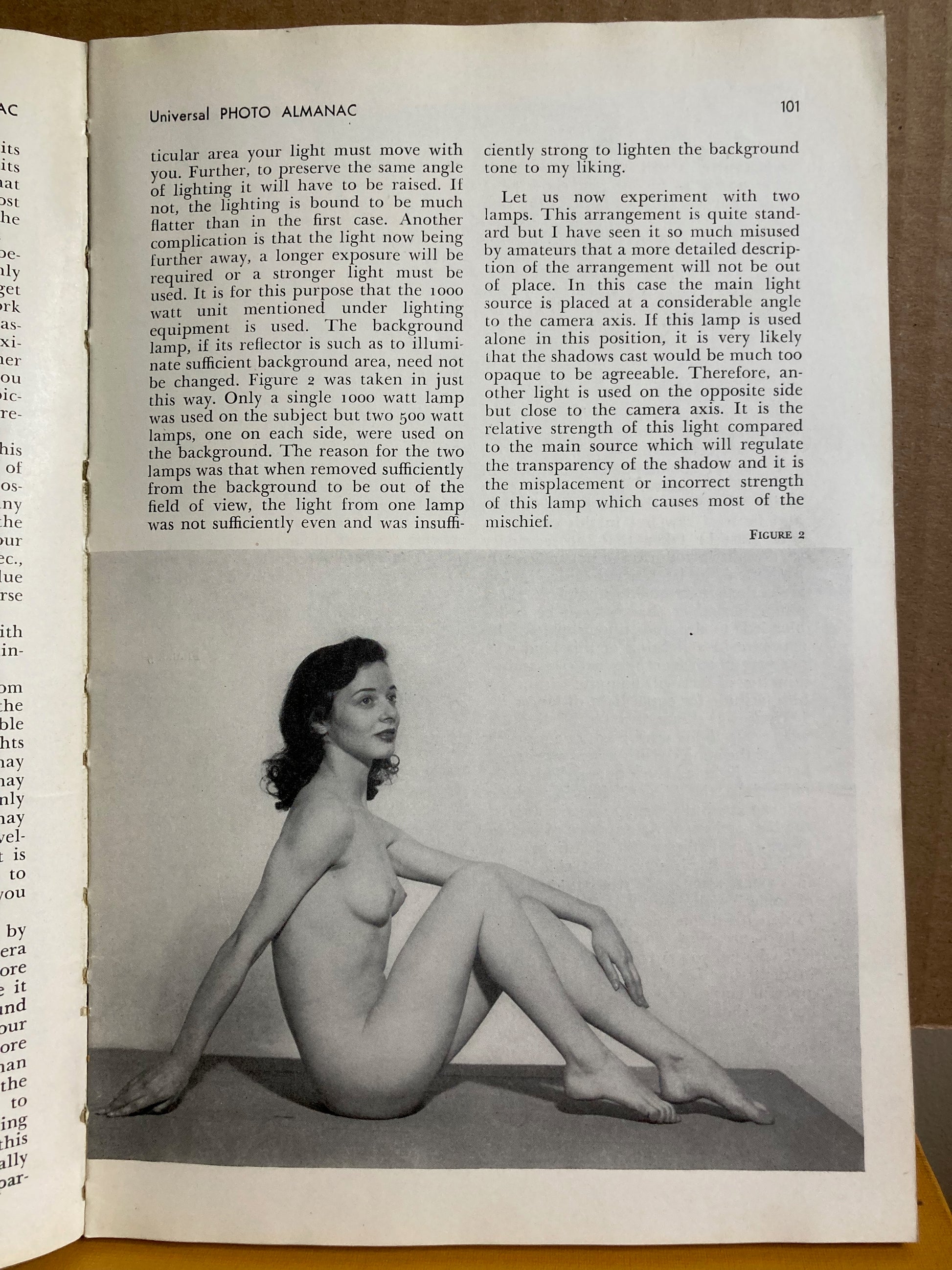
“The Fundamentals of Figure Photography” by H.P. Piperoux: This article serves as a practical counterpoint to Bernhard’s artistic philosophy. Piperoux focuses on the technical "how-to," covering posing, anatomy, and the use of studio lighting to achieve classic, professional results in figure studies.
The Photographer’s Reference & Market Guide
The Universal Photo Almanac was unique for its dual role as both an art book and a vital trade tool:
-
The Market Guide: A significant portion of the book is dedicated to helping photographers sell their work. It includes a comprehensive directory of magazines, newspapers, and syndicates, listing their specific photographic needs and payment rates.
-
The Technical "Blue Book": The back of the volume provides an exhaustive reference section. This includes:
-
Chemical Formulas: Recipes for developers (such as D-76 or Finex), fixers, and toners.
-
Exposure Tables: Data for different film speeds and lighting conditions.
-
Optical Charts: Depth-of-field scales and lens conversion tables.
-
Visual and Editorial Philosophy
The almanac is illustrated throughout with "Salon" style photography—high-quality prints that represent the peak of 1940s pictorialism and documentary work. The editors prioritize images that show high technical proficiency, serving as a benchmark for the amateur and professional readers who used the book as an annual "masterclass."
Significance
The 1949 edition is particularly valued today for its inclusion of Bernhard and Laughlin, two artists who pushed photography away from literal representation and toward a more psychological and abstract "Fine Art" status. It remains a definitive record of the post-war era's obsession with technical perfection and the burgeoning interest in the camera as a tool for surrealist expression.