Gary Saretzky Photo Books
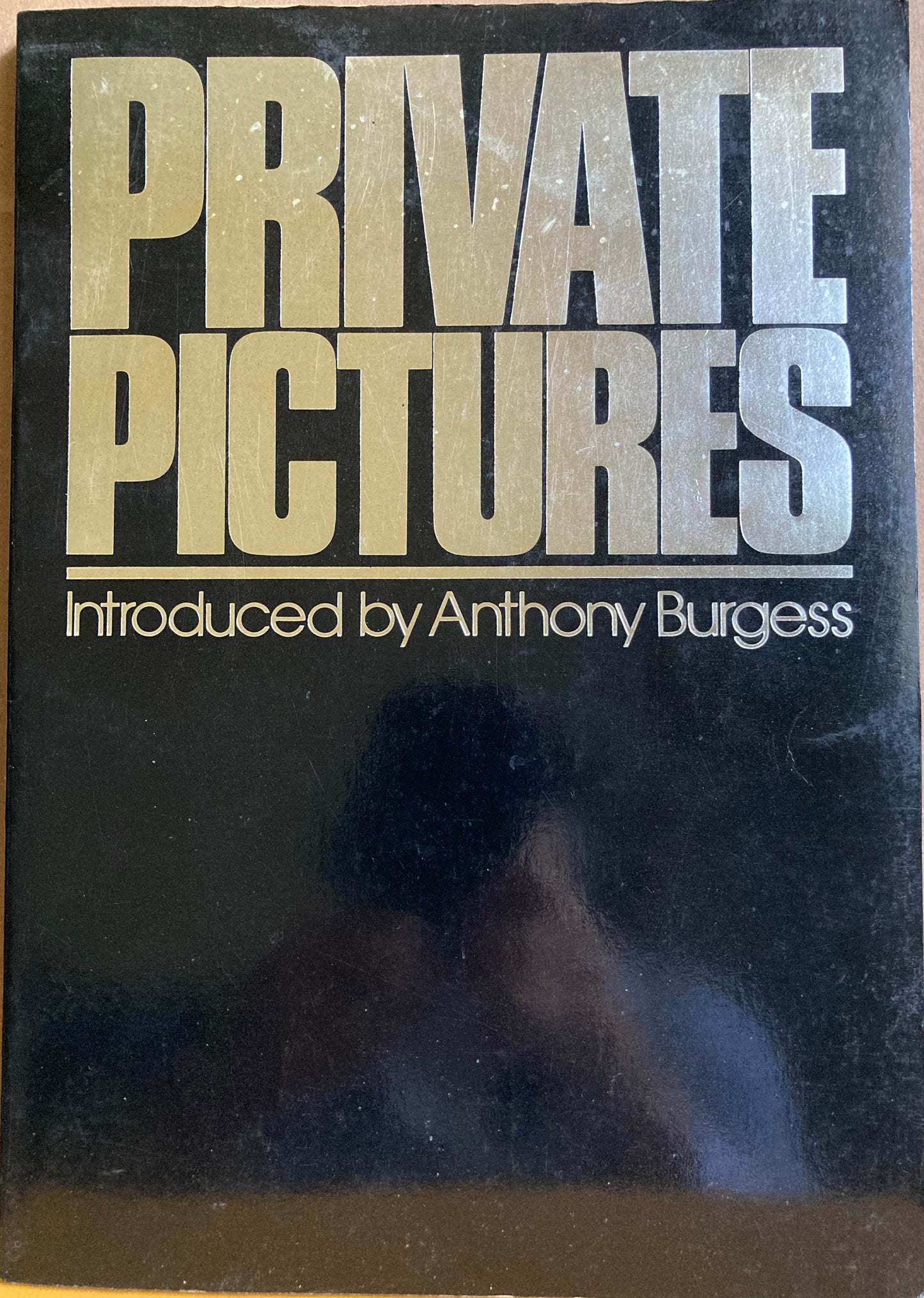
Angeli, Daniel. Private Pictures. Photographs by Daniel Angeli and Jean-Paul Dousset.
Angeli, Daniel. Private Pictures. Photographs by Daniel Angeli and Jean-Paul Dousset.
Impossible de charger la disponibilité du service de retrait
Introduction by Anthony Burgess. London: Jonathan Cape, 1980. [Paparazzi style sneaky pictures of celebrities, sometimes naked, including Bridgette Bardot, Elton John, Elizabeth Taylor, Richard Burton, Jack Nicholson, Gregory Peck, Dirk Bogarde, Peter Ustinov, the Queen Mother of England, Prince Charles, Queen Elizabeth, Omar Sharif, Yul Brynner, John Travolta, Giovanni Agnelli, Aristotle and Jacqueline Onassis, Edith Piaf, Maria Callas, Roman Polanski, Sharon Tate, Gloria Swanson, Marlene Dietrich, Salvador Dali, Woody Allen, et al.] Near fine in wraps, as issued, with crimps on cover. Note: introduction slightly different than in Viking edition published in U.S. Summary:
Private Pictures, published in 1980 by Viking Press (and Jonathan Cape in the UK), is a striking collection of candid, black-and-white photography by French "paparazzi" pioneers Daniel Angeli and Jean-Paul Dousset. The book is notable not only for its imagery but also for its introduction by celebrated novelist Anthony Burgess.
The Paparazzi Aesthetic
The book captures the jet-set lifestyle of the 1970s, presenting celebrities in unposed, often unguarded moments. Unlike traditional studio portraiture, these images are defined by:
-
The "Candid" Lens: A raw, journalistic style that captures the tension between public personas and private lives.
-
Celebrity Subjects: The volume features a "who's who" of the era, including Mick Jagger, Elizabeth Taylor, Richard Burton, Jackie Onassis, Aristotle Onassis, and members of the British Royal Family like Queen Elizabeth II.
-
Setting the Scene: Many of the photographs were taken in high-society playgrounds such as St. Tropez, Gstaad, and various film festival locales.
The Burgess Introduction
A key feature of the book is the analytical introduction by Anthony Burgess. He provides a philosophical defense of the "private" picture, musing on:
-
The Nature of Fame: Burgess examines the public's "right to know" versus the celebrity's right to privacy.
-
The Camera as Intruder: He discusses the ethics of the long-distance lens and how the paparazzi act as modern-day "myth-makers" by showing that even icons eat, argue, and age.
Cultural Significance
Private Pictures is a precursor to modern celebrity culture. It documents a specific transition in media history where the glossy, controlled image of the "Movie Star" was replaced by the gritty, high-contrast reality of the tabloid photograph. It remains a definitive time capsule of the golden age of the paparazzi.