Gary Saretzky Photo Books
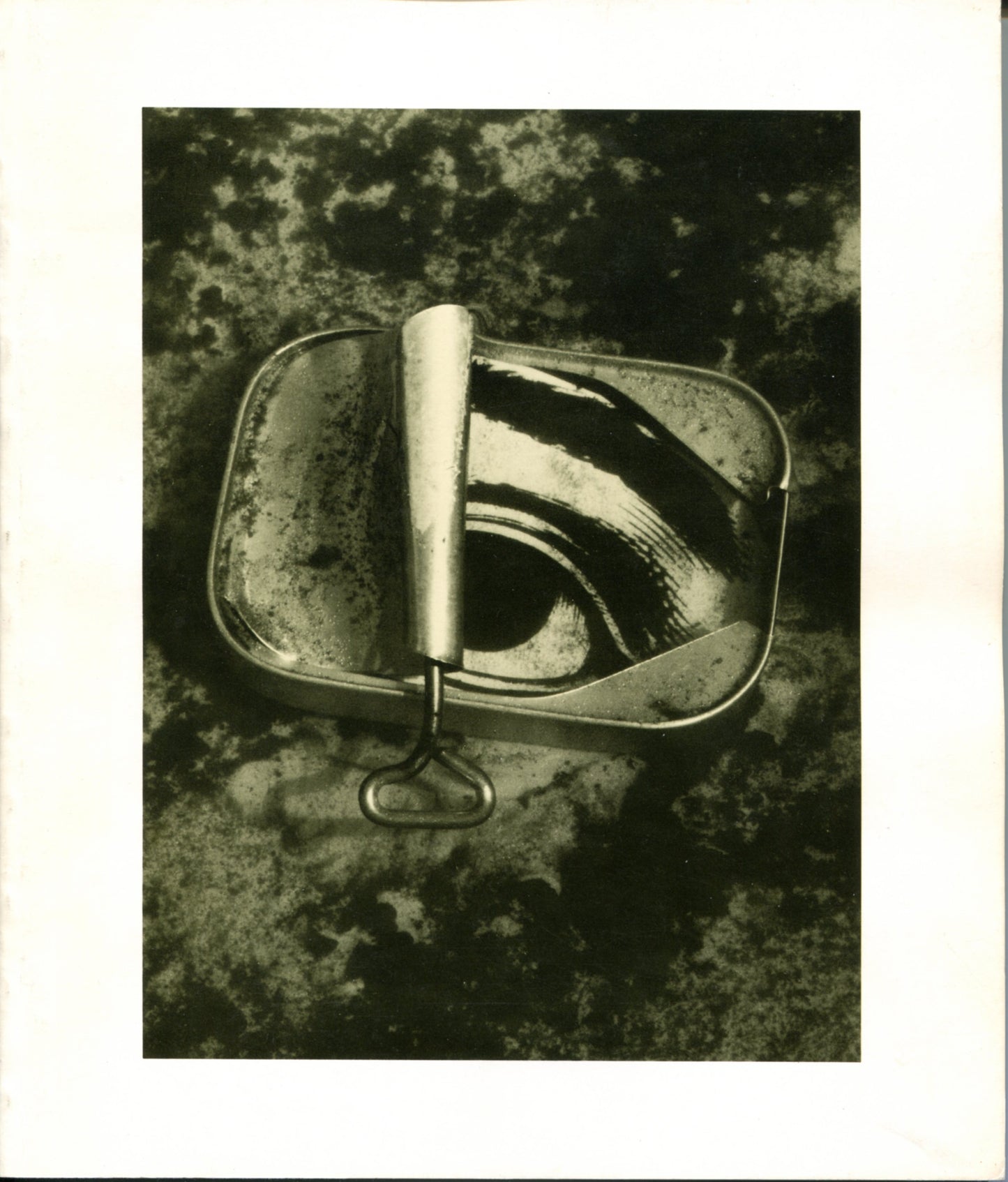
Kriz, Vilem. Vilem Kriz Photographs by David Featherstone.
Kriz, Vilem. Vilem Kriz Photographs by David Featherstone.
Impossible de charger la disponibilité du service de retrait
Friends of Photography, 1979. Issued as Untitled 19. 53 illustrations. 56 pages. Just a trace of shelf wear on covers of this beautifully printed monograph of Kriz' surrealistic photographs, printed on Flokote, 100 lb, by Herald Printers in Monterey, California. Issued in an edition of only 3,500 copies. Summary:
Vilem Kriz: Photographs (published in 1979 by The Friends of Photography) is a slim, beautifully produced 54-page retrospective monograph written by photo-historian and curator David Featherstone. Issued as Untitled 19 in the publisher's landmark series of specialized photography booklets, this publication serves as a comprehensive, early American evaluation of Czech-born surrealist photographer Vilém Kříž, charting his enigmatic career from the streets of Europe to his eventual exile in California.
Core Themes and Content
-
A Poetic Retrospective Across Three Cities: The monograph acts as a curated overview of Kriz's output spanning from 1921 through 1978. It visually charts his physical and artistic displacement, organizing his distinct portfolios chronologically across three major geographic and creative chapters: his early avant-garde training in Prague, his post-war experimentation in Paris, and his late-career academic life in Berkeley, California.
-
The Language of Surrealism and Exile: Featherstone's critical introductory text delves into Kriz’s highly unique, deeply lyrical visual style. Heavily influenced by his European roots and an enduring friendship with the celebrated French poet Jean Cocteau, Kriz rejected traditional, documentary-style photography in favor of a dreamlike, symbolic reality. His images are populated by haunting still lifes, discarded objects, and weathered statues given a seemingly animate "heart and soul."
-
A Masterclass in the Snapshot of the Forgotten: The publication includes over 30 full-page, high-quality black-and-white plates that illustrate Kriz's signature technique: creating studio arrangements out of found materials, broken dolls, and discarded ephemera. Featherstone highlights how Kriz utilized a single, shutterless 9×12 cm Linhof camera—manually exposing the film with a lens cap—to find a melancholic beauty in forgotten things.
-
Archival and Curatorial Baseline: Serving as an official record of a major retrospective exhibition, the catalog features an organized exhibition checklist, a biographical chronology, and a complete bibliography. These tools were instrumental in introducing Kriz's complex, European-trained sensibility to an American photographic community dominated by straight, modernist landscapes at the end of the 1970s.
By gathering these disparate portfolios into a unified volume, Featherstone's monograph successfully honors Vilém Kříž as a vital "poet in exile," cementing his place as a foundational figure who bridged European surrealism and American experimental photography.
Vilém Kříž (1921–1994) was an influential Czech-born surrealist photographer and academic whose dreamlike, poetic images bridged European avant-garde traditions and postwar American experimental photography. Born in Prague, Kříž began taking photographs as a child and spent most of his life working almost exclusively with a shutterless 9×12 cm Linhof camera given to him by his father, exposing his film manually with a lens cap. He refined his vision at the State Graphic School in Prague under Czech modern masters like Jaromír Funke and František Drtikol, immersing himself in a distinctly lyrical style of Czech surrealism. Following World War II, Kříž moved to Paris, where he photographed the city's weathered ruins and befriended the celebrated poet Jean Cocteau, who praised Kříž for breathing "a heart and a soul" into his camera. In 1952, he immigrated to the United States, enduring a grueling twelve-year artistic hiatus marked by poverty, depression, and odd jobs—including working as a janitor and a photo finisher for the Metropolitan Museum of Art—before settling in Berkeley, California. Reengaging with his medium in 1964, Kříž found long-term success as a revered professor of photography and surrealism at the California College of Arts and Crafts in Oakland, where he dedicated his remaining decades to staging intricate, melancholic still-life arrangements of discarded dolls and found objects in his backyard, chemically toning each print by hand to solidify his legacy as an alchemist of the photographic darkroom.