Gary Saretzky Photo Books
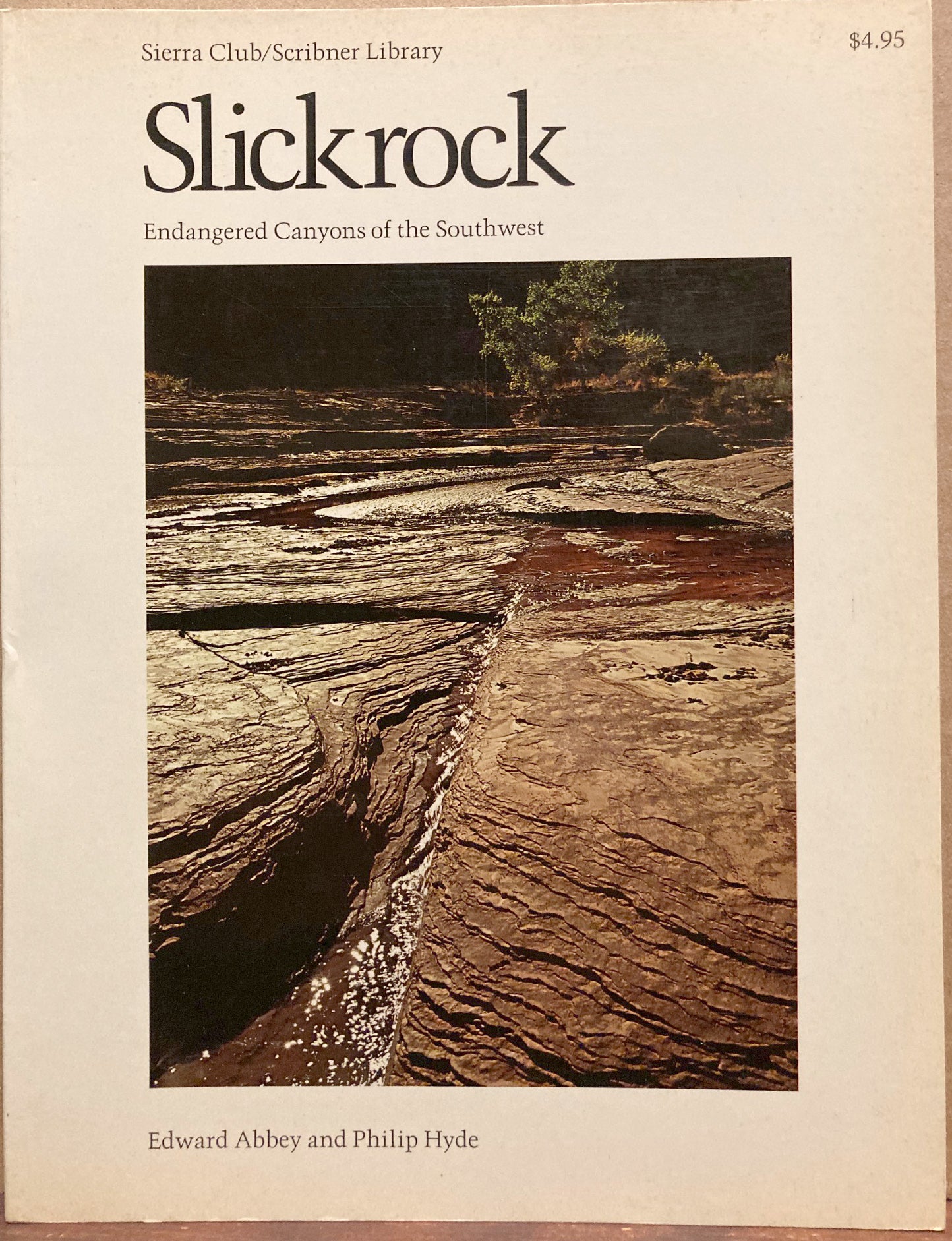
Hyde, Phillip. Slickrock: Endangered Canyons of the Southwest by Edward Abbey and Phillip Hyde.
Hyde, Phillip. Slickrock: Endangered Canyons of the Southwest by Edward Abbey and Phillip Hyde.
Impossible de charger la disponibilité du service de retrait
Sierra Club/Scribners, 1971. Very finely reproduced color photos by Phillip Hyde on heavyweight glossy paper. 145pp. Stiff wraps, fine except first page has small damaged area. Summary:
lickrock: Endangered Canyons of the Southwest (1971) is an influential conservation book published by the Sierra Club as part of its "Exhibit Format" series. It pairs powerful environmental prose by iconic desert writer Edward Abbey with breathtaking wilderness photography by Philip Hyde.
The book focuses heavily on the escalating ecological threats facing the remote, wild canyon country of southeastern Utah, particularly around Escalante Canyon and Glen Canyon.
Key themes and elements of the book include:
-
The Beauty of the Slickrock: Abbey’s lyrical and fiercely passionate essays celebrate the stark, arid geometry of the Colorado Plateau and argue for the intrinsic right of the desert to remain wild.
-
Visual Advocacy: Hyde’s vibrant color photography documents the delicate geology, hidden grottos, and expansive vistas of the region, putting a visual face to a wilderness few Americans had seen firsthand.
-
Industrial Threats: The work acts as a direct protest against the encroachment of industrial tourism, dam construction, coal-fired power plants, and mining roads that threatened to submerge or fracture the delicate desert ecosystem.
Ultimately, Slickrock served as both a celebration of the American Southwest's unique topography and an urgent, activist call to arms that helped galvinize the modern desert conservation movement.
Philip Hyde (1921–2006) was a pioneering American landscape photographer and dedicated conservationist whose imagery became central to the modern environmental movement. Born and raised in San Francisco, Hyde trained at the California School of Fine Arts under master photographers such as Ansel Adams and Minor White, later becoming one of the few students invited by Adams to teach alongside him. For over fifty years, Hyde focused his lens on the wilderness of the American West, becoming the primary conservation photographer for the Sierra Club and an essential contributor to their influential "Exhibit Format" book series, including the landmark Slickrock. His vivid, high-fidelity black-and-white and color photographs of threatened ecosystems—including the Grand Canyon, Dinosaur National Monument, and Redwood National Park—were instrumental in public campaigns that successfully established or expanded numerous national parks and wilderness areas. Widely recognized for his technical precision and philosophy of fostering empathy rather than mere awe, Hyde's work was exhibited at major institutions like the Museum of Modern Art and the Smithsonian, solidifying his legacy as one of the 20th century's most influential masters of landscape photography.