Gary Saretzky Photo Books
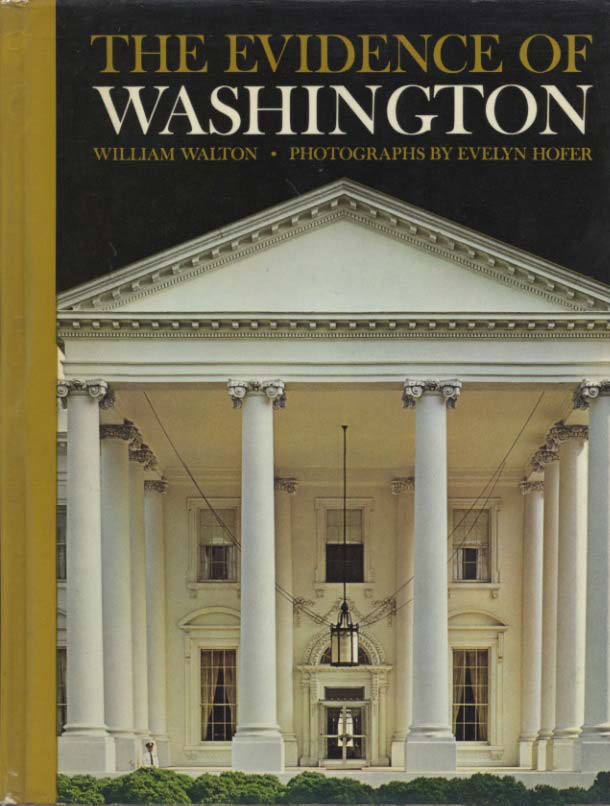
Hofer, Evelyn. Evidence of Washington by Evelyn Hofer and William Walton.
Hofer, Evelyn. Evidence of Washington by Evelyn Hofer and William Walton.
Impossible de charger la disponibilité du service de retrait
Harper & Row, 1966. Photos, excellent reproduction quality, of the capital's people and landmarks by Evelyn Hofer. 1st edition. Dust jacket with minor chipping and crease on inside front panel, very good. One of eight photo books published by Hofer. Summary:
The Evidence of Washington (1966), written by journalist and painter William Walton with photographs by Evelyn Hofer, is a celebrated urban photobook that chronicles the history, architecture, and social landscape of the United States capital during a period of intense mid-century transformation. Published by Harper & Row, the 132-page volume combines Walton’s insightful text with Hofer’s distinct visual documentation to probe beneath the surface of the city's monumental facade.
Rather than presenting standard, snapshot-style documentary images, Hofer utilized a cumbersome, large-format view camera on a tripod to capture meticulously composed, formal imagery in both crisp black-and-white and early dye-transfer color. The book juxtaposes Washington D.C.'s grand, classical architecture and political institutions with intimate portraits of its everyday citizens. Notably, The Evidence of Washington is recognized for its progressive, inclusive portraiture, capturing a diverse cross-section of the city's population—including middle-class Black Americans inside their homes, street crowds, and local workers—to reveal the complex human reality behind the nation's political center.
Evelyn Hofer (1922–2009) was a German-American photographer renowned for her highly disciplined, elegant city portraits and meticulously composed interior and portrait photography. Born in Germany, her family fled the Nazi regime, living in Switzerland, Spain, and Mexico before Hofer immigrated to New York City in 1946. Rejecting the fast-paced, spontaneous style popularized by many of her mid-century contemporaries, Hofer worked almost exclusively with a slow, heavy view camera, demanding intense patience and collaboration from her subjects. Her work is characterized by a timeless, stately clarity, a masterful utilization of early dye-transfer color processes, and a profound empathy for both ordinary citizens and grand architecture. Over her multi-decade career, she collaborated on several definitive urban portrait books documenting major metropolises like London, New York, Florence, and Dublin, earning a legacy as an uncompromising master of the photographic medium.
For an excellent article on Hofer, published on the occasion of a major exhibit of her work at the High Museum, Atlanta, see "Evelyn Hofer: Eyes on the City" by Gregory J. Harris and April Watson, American Art Review 35:1, 2023. Renowned among 20th century women photographers, Hofer was widely published, both in books like The Stones of Venice and in magazines such as Harper’s Bazaar and Vogue. Hilton Kramer called her the most famous unknown photographer; see his review in the New York Times, https://www.nytimes.com/1982/01/31/magazine/enduring-images.html
