Gary Saretzky Photo Books
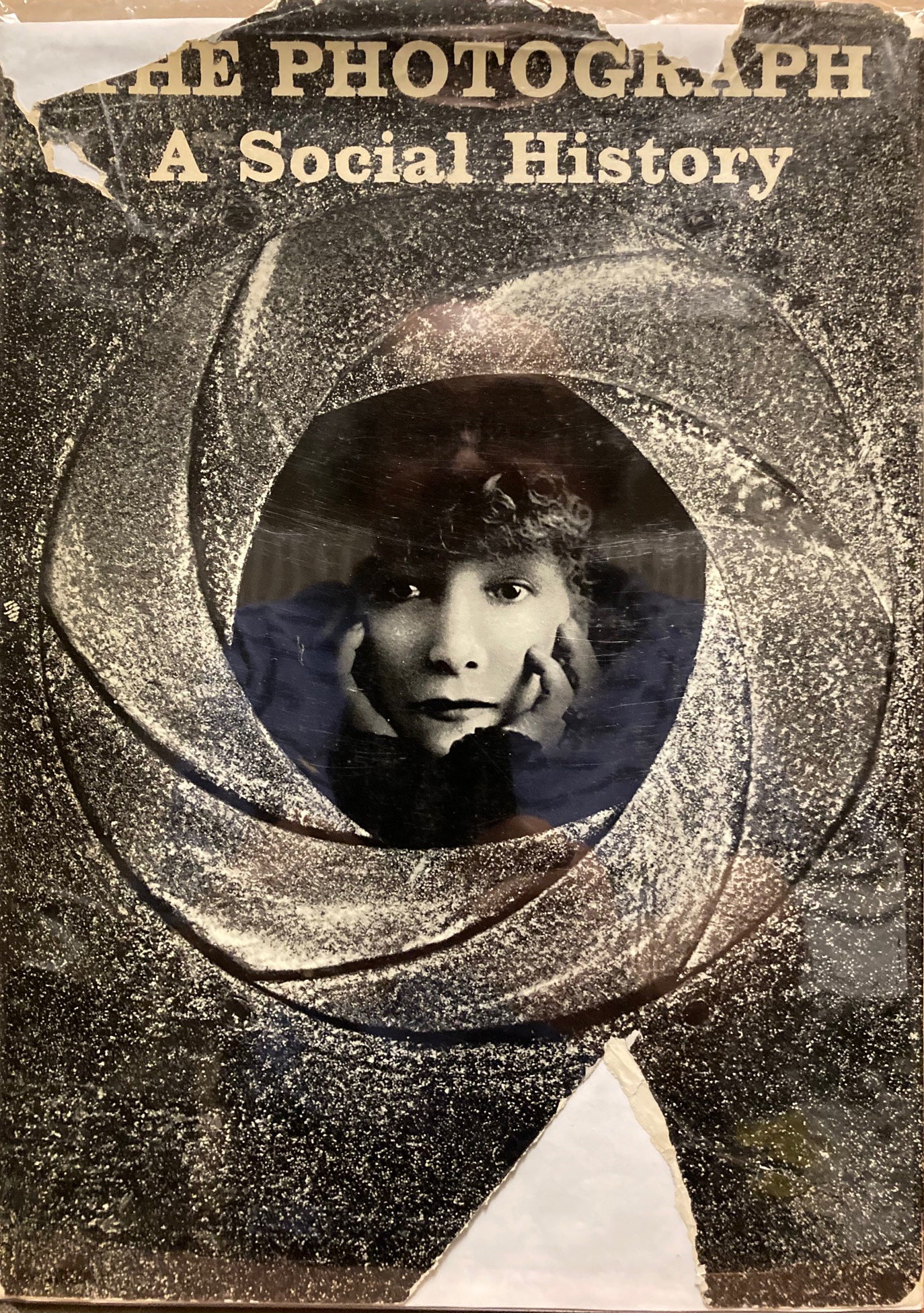
History of Photography. The Photograph: A Social History by Michel F. Braive.
History of Photography. The Photograph: A Social History by Michel F. Braive.
Impossible de charger la disponibilité du service de retrait
McGraw Hill, 1966. 1st U.S. edition, gray cloth with silver printing. Outstanding work, translated from the French, never superseded in part because vast majority of illustrations not reproduced in other histories. A very good copy of this large and impressive book with light soiling to cloth, with a fair but still presentable protected dust jacket that has three large edge chips on the front and one quite big triangular chip on the back. Inner panes of dust jacket and central image area of front cover of jacket are fine. Summary:
Originally published in French in 1965, Michel F. Braive’s work is a pioneering text. Written at a time when photographic histories focused almost exclusively on technological breakthroughs or fine-art biographies, Braive’s book shifted the paradigm by exploring how the camera actively transformed daily life, politics, and human communication. Braive examines the first 144 years of the medium, treating the camera not just as an artistic tool, but as a mirror and engine of modern industrial society.
1. The Democratization of the Human Likeness
Braive traces how the invention of the camera shattered the portrait monopoly held by wealthy elites who could afford painted miniatures. The book details the cultural explosion of the daguerreotype and the later carte-de-visite, illustrating how photography allowed ordinary working-class citizens to document their own families and establish a visual legacy for the first time.
2. The Conquest of Media and Public Imagination
A central focus of the text is how photography reconfigured the human relationship to information and reality:
-
The Press and Propaganda: Braive details how the camera moved from a curiosity into a vital political instrument, documenting wars, building national identities, and supplying imagery to an increasingly visual press.
-
The Travel Craze: The book illustrates how early field photography satisfied a voracious mid-19th-century public appetite for the exotic, bringing monuments, far-off landscapes, and distant cultures directly into the European living room.
3. Satire, Caricature, and Social Backlash
Unlike traditional histories, Braive dives into the social friction caused by the camera's sudden presence. He documents how traditional artists, cartoonists, and social commentators reacted to this terrifyingly realistic newcomer. The text covers the frequent satire and anxiety surrounding early photographic studios, detailing the public's equal parts fascination and fear regarding the camera's uncompromising, unromantic gaze.
4. The Photographer as a Social Agent
Braive profiles early photographers not as isolated creative geniuses, but as professionals responding to shifting market forces. He tracks the identity of the photographer shifting from a traveling bohemian scientist and a commercial studio tradesman to a daring frontline photojournalist.
The Photograph: A Social History is significant for being among the very first works to approach photography from a sociological viewpoint. Richly illustrated with hundreds of paintings, caricatures, and historical prints alongside actual photographs, Braive highlights that the real history of photography is found in how deeply it became woven into the fabric of everyday human life.
