Gary Saretzky Photo Books
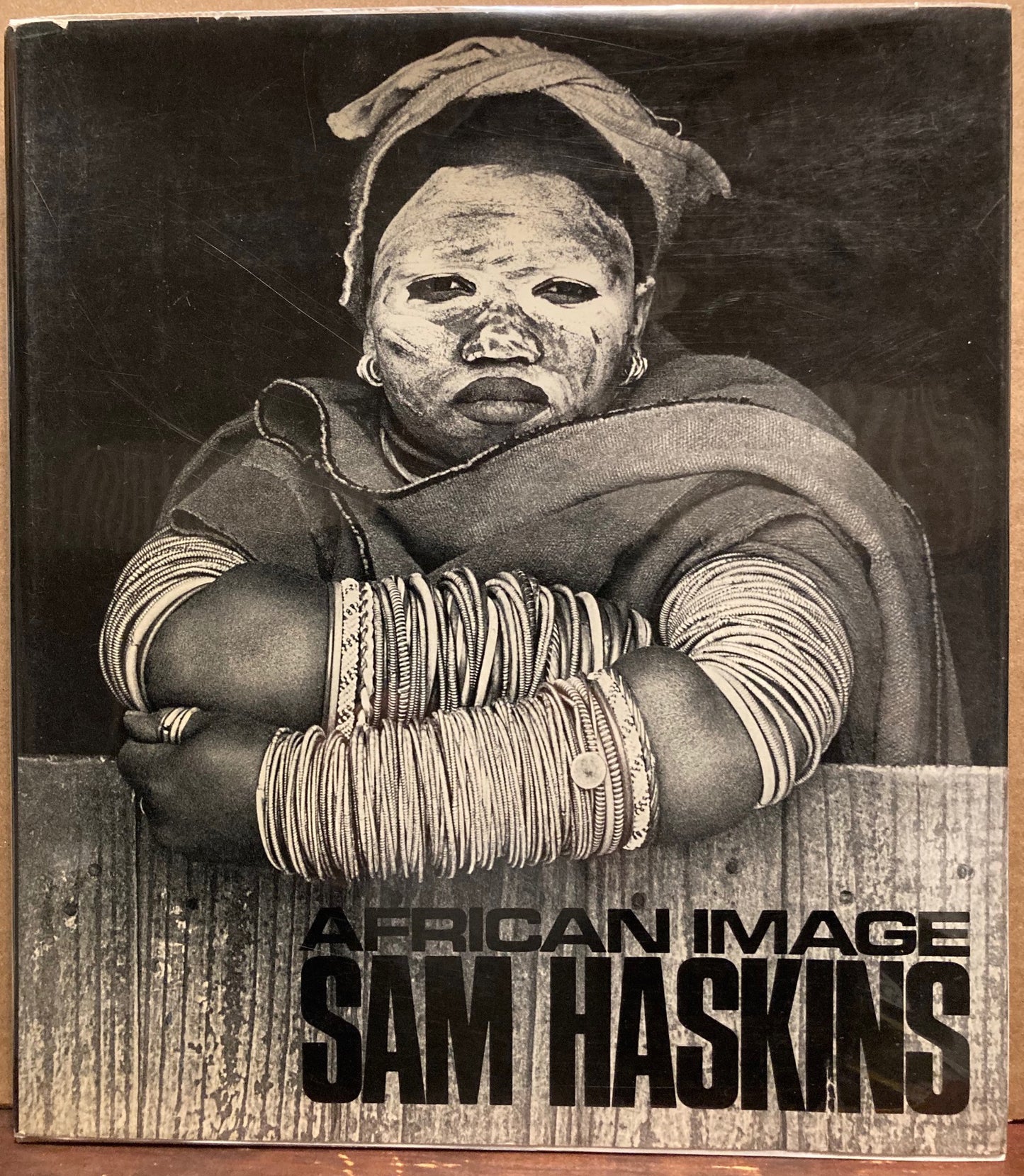
Haskins, Sam. African Image by Sam Haskins.
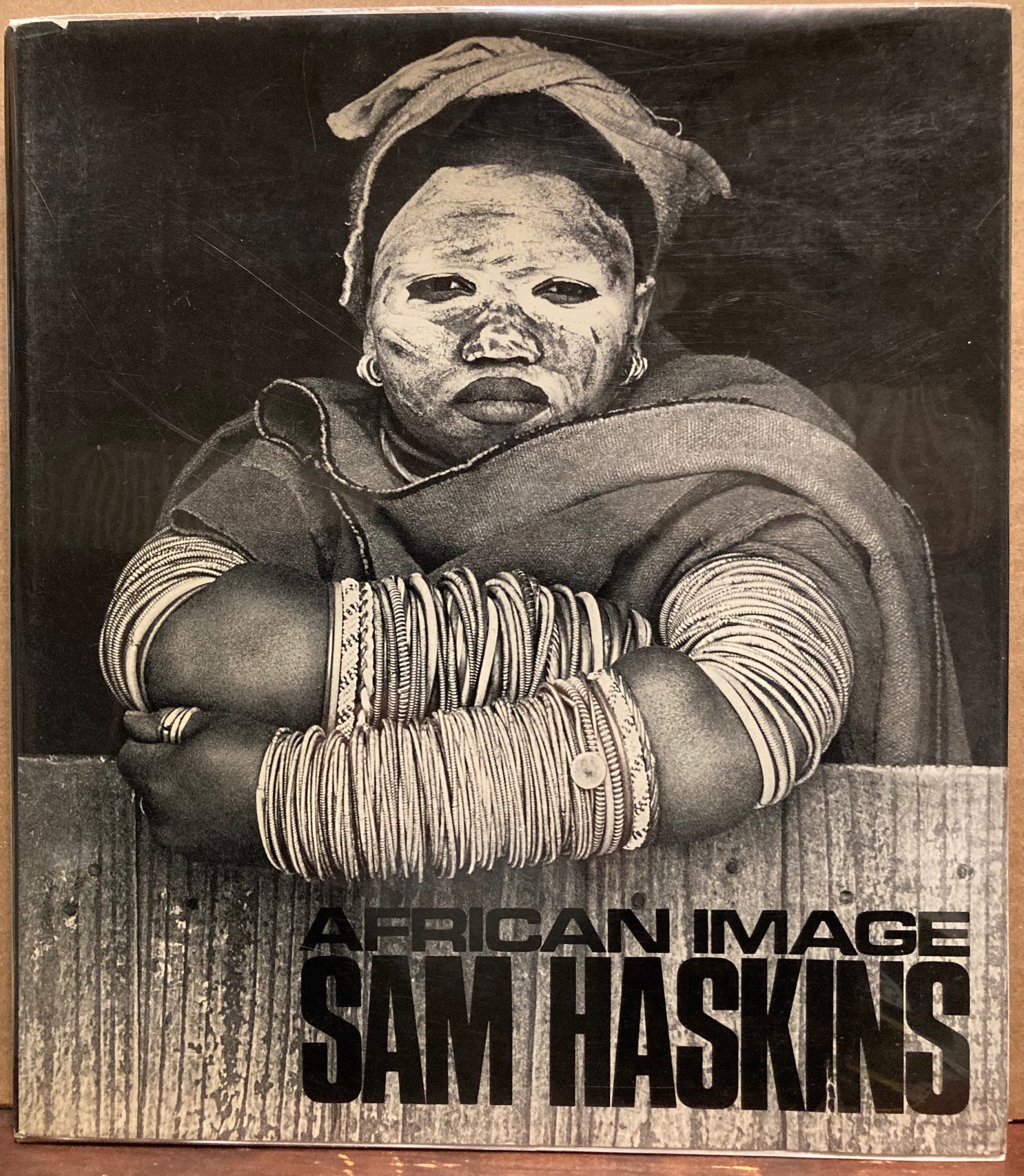
Haskins, Sam. African Image by Sam Haskins.
Impossible de charger la disponibilité du service de retrait
Madison Square Press, A Division of Grosset & Dunlap, 1967. Introduction by L. Fritz Gruber. 12.5 x 11 inches. A superbly designed and printed book with images of the people and arts of Africa by Sam Haskins, who is also known for his books of figure photography, such as Cowboy Kate. His expertise with the human form is also seen in this volume. VG+ with VG dust jacket that has a bit of wear on the edges. Small red remainder mark at bottom of text block next to spine.
Sam Haskins (1926–2009) was a South African-born British photographer and graphic artist celebrated for revolutionizing the photobook format and pioneering playful, graphic approaches to figure and fashion photography. Born in Kroonstad, South Africa, he studied art at Johannesburg Technical College before training at the London School of Printing and Graphic Arts, where discovering the work of Irving Penn in Graphis magazine sparked his lifelong passion for merging graphic design with the camera. Returning to Johannesburg in 1953 to establish one of Africa's first modern freelance advertising studios, Haskins gained international acclaim in the 1960s with his landmark, narrative-driven black-and-white monographs Five Girls (1962), Cowboy Kate & Other Stories (1964)—which won France's Prix Nadar and sold nearly a million copies—and November Girl (1967), alongside the documentary volume African Image (1967).After relocating to London in 1968, he became renowned for his bold color work and intricate analog, in-camera image montages—exemplified in Haskins Posters (1972) and Photo Graphics (1980)—as well as editorial shoots for Vogue and Harper's Bazaar and a decades-long series of calendars for Pentax. Haskins moved to Australia in 2002, where he lived until his death in Bowral shortly after launching his final career retrospective, Fashion Etcetera (2009).
African Image (1967) is an acclaimed, large-format photographic monograph by influential South African-born photographer Sam Haskins. Primarily known in the 1960s for his highly stylized, grainy black-and-white figure photography, Haskins used this project to showcase his versatility through a deeply personal, graphic-heavy travel and documentary essay.
-
A Living Tribute to Sub-Saharan Art: The book contains over 150 high-contrast photogravure plates celebrating the indigenous art, sculpture, and craft of sub-Saharan Africa. Haskins explicitly designed the project to rescue tribal art from what he called its "dusty museum image," presenting it instead as a vibrant, active element of daily life.
-
Geographic Scope: To capture the imagery, Haskins journeyed extensively across the East Coast of Africa and south of the Congo, documenting various communities and environments along the way.
-
A Fusion of Genres: While structured as a travelogue and documentary piece, the book heavily features Haskins' signature aesthetic. It blends landscapes, wildlife, and street portraiture with his distinct focus on the human form, showcasing local dance, costume, and expressive physical gestures.
-
Graphic Design and Layout: True to Haskins' background in graphic design, the book is celebrated for its dynamic visual pacing, clever use of juxtaposition, and bold negative space.