Gary Saretzky Photo Books
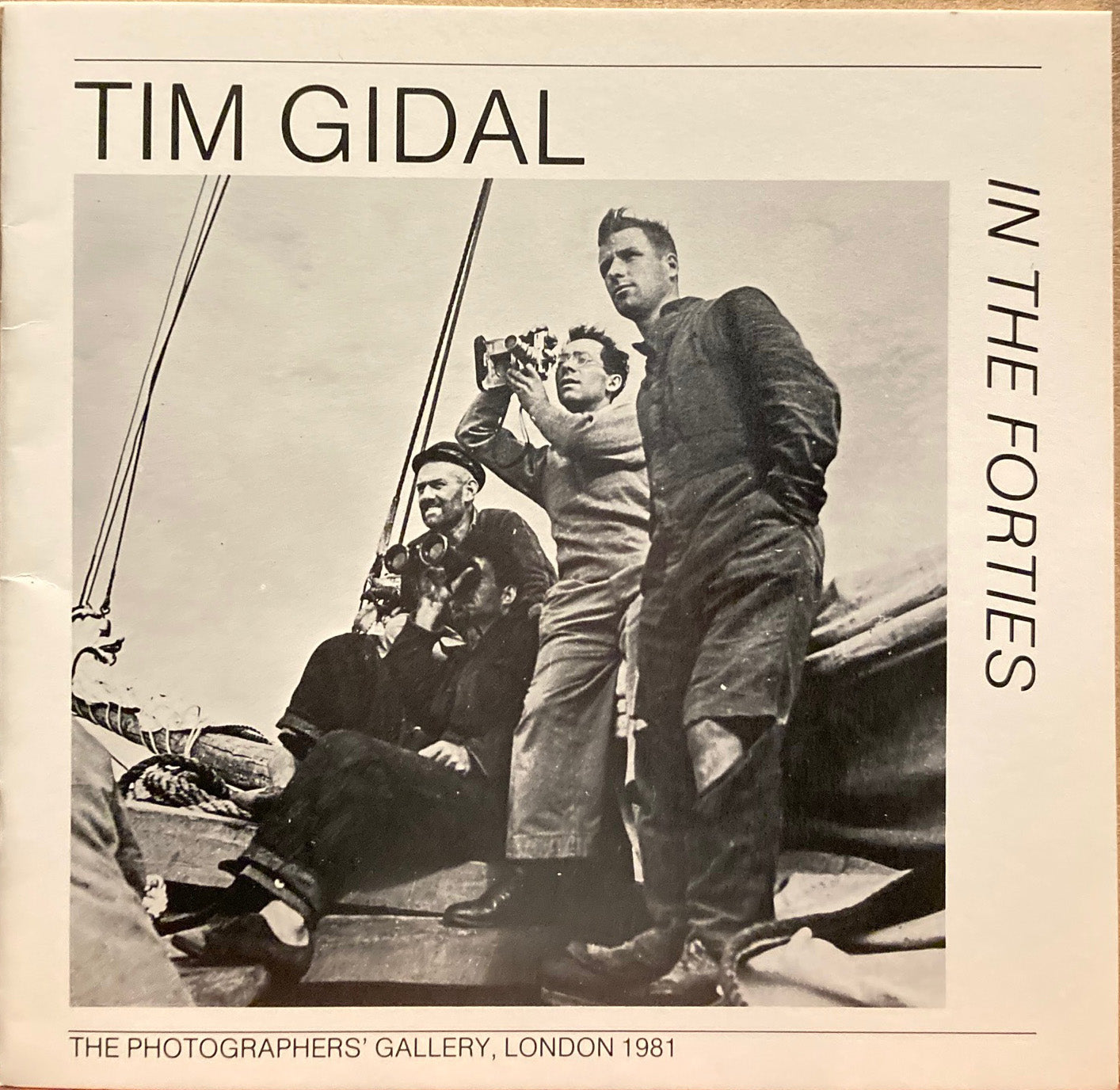
Gidal, Tim. Tim Gidal. In the Forties.
Gidal, Tim. Tim Gidal. In the Forties.
Impossible de charger la disponibilité du service de retrait
The Photographers' Gallery, London, 1981. Introduction by Nigel Trow. Catalog for exhibit, September-October 1981. Illustrated wraps, 36 pages, near fine with a few small imperfections on back cover. [Includes photos taken by Gidal in London; New York; India (including Gandhi); Burma; Basra; Ceylon; Switzerland; Palestine; Tunis; Kuwait; Alexandria, et al.] Summary:
im Gidal: In the Forties is a 1981 photographic exhibition catalogue published by The Photographers' Gallery in London. Featuring an introduction by Nigel Trow, the 36-page volume serves as a curated retrospective documenting the global work of pioneering German-Jewish photojournalist Tim Gidal during a tumultuous decade.
The catalogue and exhibition highlight several key dimensions of Gidal's 1940s output:
-
Global Photojournalistic Scope: The collection features photos taken across a vast international landscape, including London, New York, India, Burma, Basra, Ceylon, Palestine, Tunis, Kuwait, and Alexandria. It captures the height of Gidal's career when he was contributing to major picture magazines like Picture Post and serving as a chief photo-reporter for the British Eighth Army magazine, Parade.
-
The Human Aspect of Wartime: Rather than focusing on direct battlefield combat, Gidal’s images emphasize the daily lives, labor, and resilience of both military personnel and civilian populations caught between the conflicts.
-
Political and Cultural Milestones: The volume includes critical historical documentation of major political shifts and power struggles of the era, most notably featuring his documentation of Mahatma Gandhi and the All India Congress Committee, alongside the complex realities of the Middle East.
The publication concludes its historical timeline with the Silver Jubilee celebrations in London, framing Gidal's 1940s work as an essential, humanistic chronicle of mid-century social and political history.
Tim Gidal (1909–1996), born Ignatz Nachum Gidalewitsch in Munich, Germany, was a pioneering photojournalist, art historian, and educator who helped shape the evolution of modern visual reportage. Alongside his brother Georg, Gidal became a central figure in the late Weimar Republic's "golden age" of picture magazines, developing a humanistic, unposed style made possible by early compact cameras like the Ermanox and Leica. Facing the rise of the Nazi regime, he emigrated to Palestine in 1936, later serving during World War II as a chief photo-reporter for the British Army’s Parademagazine, where he documented global events across the Middle East and Asia. Following the war, Gidal expanded his career into academia and publishing; he authored the acclaimed 23-volume My Village children's book series with his wife Sonia, wrote the definitive history Modern Photojournalism: Origin and Evolution, and taught at the Hebrew University of Jerusalem. Recognized as a master of the "picture essay," Gidal left a lasting legacy as a compassionate chronicler of 20th-century history whose work balanced spontaneous storytelling with rigorous intellectual depth.
