Gary Saretzky Photo Books
Gardner, Alexander. Gardner's Photographic Sketch Book of the Civil War by Alexander Gardner.
Gardner, Alexander. Gardner's Photographic Sketch Book of the Civil War by Alexander Gardner.
Impossible de charger la disponibilité du service de retrait
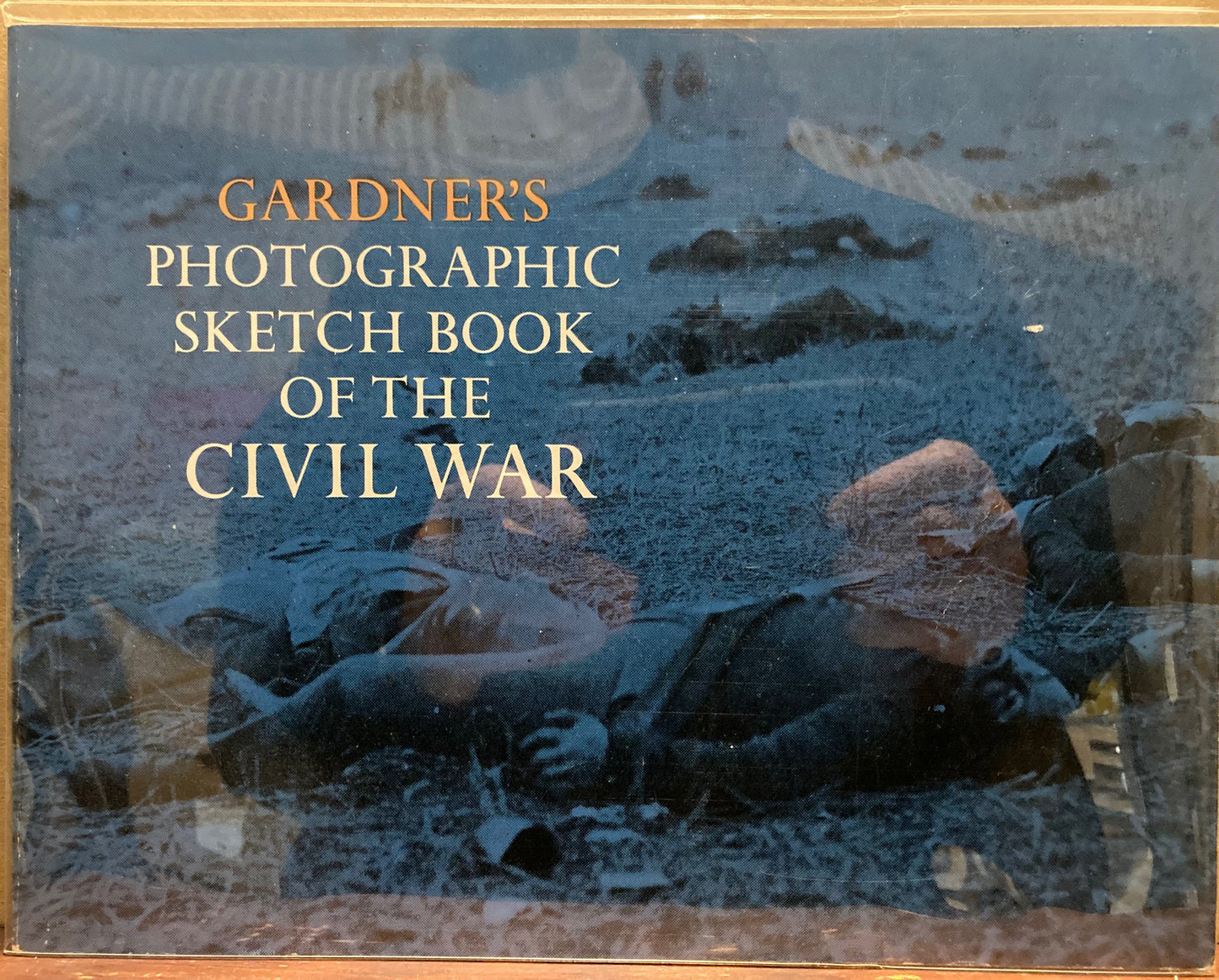
Dover, 1959. Wraps, very good with custom made polyester jacket. Unabridged and unaltered republication (except in size) of the first two-volume edition published in 1866, with the original font used in the text. Reproductions are in black-and-white. This copy is a 1980s reprint of the 1959 Dover edition, with E.F. Bleiler's Introduction dated 1958. Note: reflections in image of cover from polyester jacket. Summary:
Gardner's Photographic Sketch Book of the Civil War (originally published in 1866; reprinted by Dover Publications in 1959) is a monumental two-volume collection of American Civil War photography compiled by Scottish-born photographer Alexander Gardner.
Key Details & Summary
-
Scope & Structure: The work features 100 historic photographs documenting major Eastern Theater battlefields, fortifications, military bridges, ruins, and camp life between 1861 and 1865. The plates are arranged chronologically, opening with Centerville, Virginia, and concluding with scenes from Appomattox and Washington, D.C.
-
Collaboration & Credit: While Gardner published the set, he explicitly credited individual photographers for their work—a rare practice at the time. The album contains iconic images by Gardner himself, Timothy O'Sullivan, John Reekie, James F. Gibson, and David Knox, among others.
-
Text & Image Integration: Each photograph is accompanied by a page of descriptive text written by Gardner. His commentary provides historical context, operational details, and personal observations on the human cost and destruction of the conflict.
-
The Dover Edition (1959): Dover's unabridged reprint brought this rare 19th-century luxury album—originally sold with actual albumen prints mounted on cardstock—to a modern audience. It reproduces all 100 plates with their accompanying text pages, serving as a seminal source for 19th-century photojournalism and military history.