Gary Saretzky Photo Books
Alinder, James. The Contact Print, 1946-1982.
Alinder, James. The Contact Print, 1946-1982.
Impossible de charger la disponibilité du service de retrait
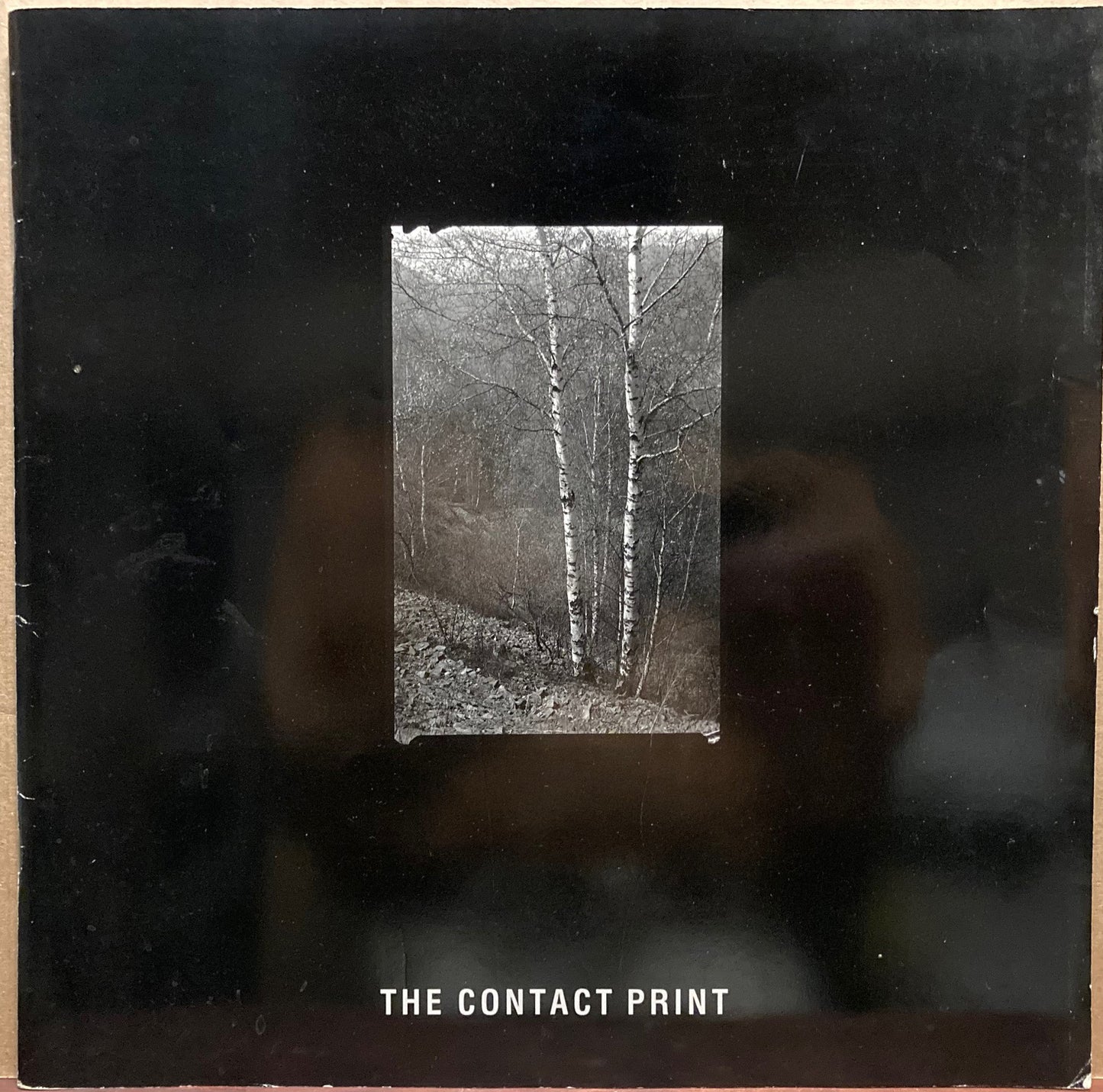
Issued as Untitled 30. Friends of Photography, 1982. [Harry Callahan, Linda Connor, Emmet Gowin, Nicholas Nixon, Olivia Parker, Michael A. Smith, Frederick Sommer, Josef Sudek, Brett Weston, and Minor White.] App. 11.5 x 11.5 inches, wraps, as issued. Good with some scratches and dings, mostly on back cover. Summary:
The Contact Print, 1946–1982, published as Untitled 30 by The Friends of Photography in 1982, is a scholarly and visual examination of a specific photographic tradition: the un-enlarged print. Edited by James "Jim" Alinder, the book was released during a period when photography was asserting itself as a high art form, and it sought to celebrate the technical purity and intimacy of the contact printing process.
Core Concept: The Aesthetics of 1:1
A contact print is made by placing a negative in direct contact with photographic paper and exposing it to light. The resulting image is exactly the same size as the negative. This book explores the philosophy that this 1:1 ratio represents the "ultimate" photograph, offering a level of detail, tonal subtlety, and physical presence that an enlargement cannot match.
-
Technical Fidelity: The book argues that because there is no lens between the negative and the paper during the printing process, the contact print preserves the maximum amount of information and "truth" captured by the camera.
-
The Large-Format Heritage: The collection focuses on artists who used 4x5, 5x7, and 8x10 view cameras, where the negative was large enough to stand alone as a finished work of art.
Featured Artists and Styles
The monograph highlights a "Who's Who" of 20th-century masters who remained dedicated to the contact print despite the convenience of smaller cameras and enlargers:
-
The West Coast Tradition: Features works by Ansel Adams, Edward Weston, and Brett Weston. Their images of the American West are presented as the pinnacle of the "straight" photographic aesthetic.
-
The New Generation: Includes photographers like Emmet Gowin, Nicholas Nixon, and Linda Connor, who used the contact print to achieve an almost clinical yet deeply emotional intimacy in portraiture and landscape.
-
Minor White: Showcases how the contact print was used to explore "Equivalents" and spiritual metaphors, where the extreme clarity of the print forced a deeper meditation on the subject.
Critical Essays and Tonal Range
The book includes a significant essay by James Alinder that traces the history of the medium.
-
The "Glow" of the Print: The text discusses the unique "inner light" of a contact print, particularly those made on gold-toned or platinum/palladium papers, which provide a tonal range and archival permanence far superior to standard commercial silver prints.
-
The Physicality of the Object: The catalog emphasizes that a contact print is a "precious object." Because they are often small (like the 4x5 prints of Edward Weston), they require the viewer to step closer, creating a private, one-on-one experience between the observer and the image.
Significance
The Contact Print, 1946–1982 remains a foundational text for photography collectors and darkroom purists. It was published at a time when the "f/64" philosophy was being challenged by more conceptual and color-driven movements.
"The contact print is the most concise and the most beautiful statement of the photographic medium." — James Alinder
Jim Alinder (1941–2023) was an influential American photographer, educator, author, and arts administrator who played a key role in shaping post-war photographic culture. After earning a Master of Fine Arts degree in photography from the University of New Mexico and spending a decade teaching art at the University of Nebraska, Alinder moved to Carmel, California, in 1977 at the invitation of Ansel Adams to serve as the executive director of The Friends of Photography, expanding it into a premier national nonprofit institution. As an artist, Alinder was celebrated for his versatile, innovative visual style—ranging from creative experimentation with plastic Diana and Kodak Instamatic cameras to intimate, observation-driven 150-degree panoramic imagery using a swinging-lens Widelux camera. Over the course of his career, he wrote or edited dozens of books, curated over 150 exhibitions, operated the Alinder Gallery in Gualala alongside his wife, Mary, and earned recognition with multiple National Endowment for the Arts fellowships, leaving an enduring legacy as both a creative practitioner and a champion of the medium.