Gary Saretzky Photo Books
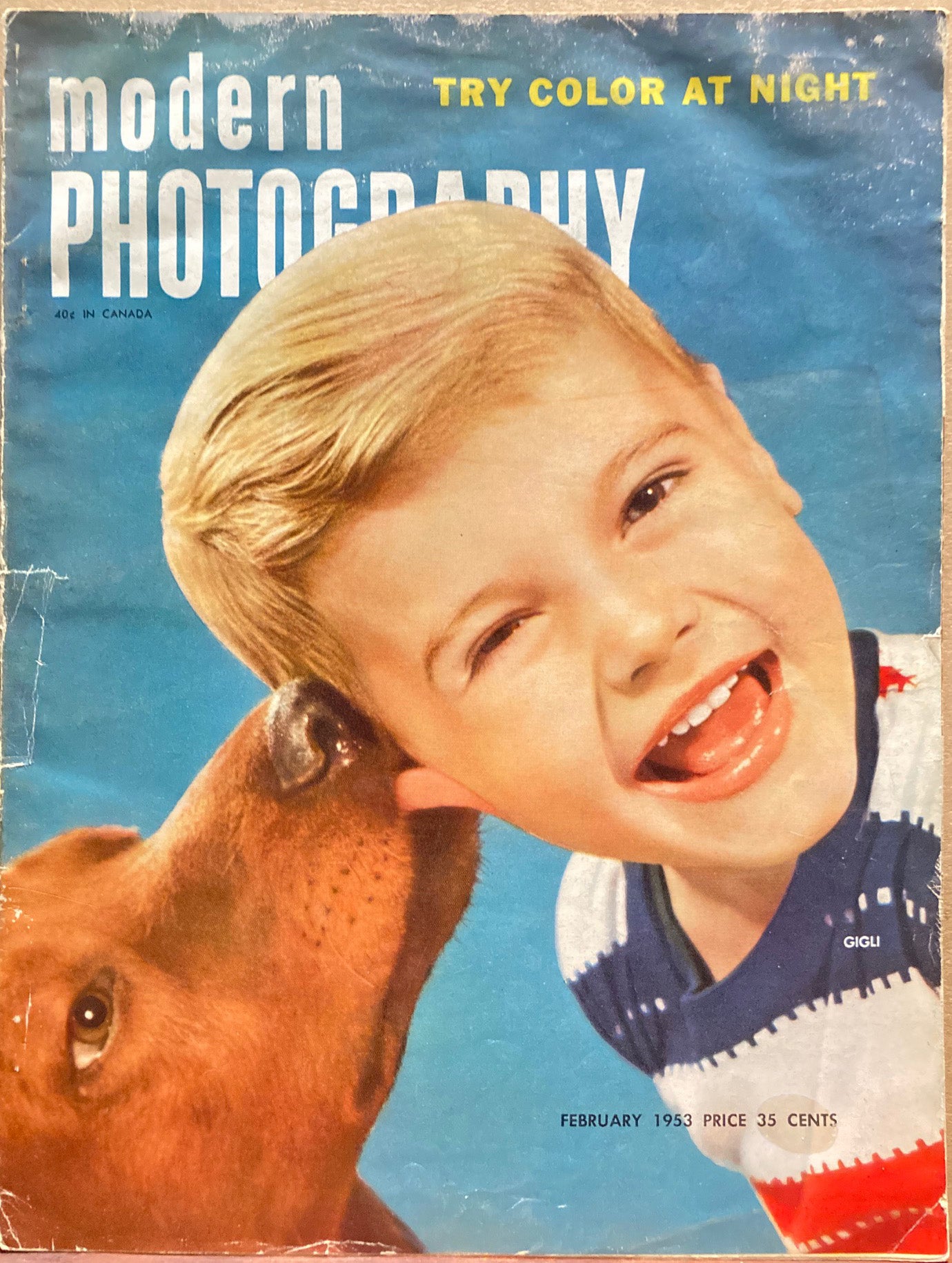
Brandt, Bill. Modern Photography, February 1953. Includes Bill Brandt feature article.
Brandt, Bill. Modern Photography, February 1953. Includes Bill Brandt feature article.
Impossible de charger la disponibilité du service de retrait
Includes feature illustrated article,"Bill Brandt: Photographer of Atmosphere," on pages 36-45, 120-121 by John Stewart. Also picture story, "City Boy - Country Boy," by Jacque Lowe. Entire issue with many other articles, including one on how to photograph murder for detective magazines, and ads. Water damaged along top edge, no mold, good. Summary:
The February 1953 issue of Modern Photography (Volume 17, No. 2) is a mid-century American photographic periodical featuring technical tutorials, gear reviews, and major profiles on influential 20th-century photographers.
Issue Overview & Highlights
-
Bill Brandt Feature Article: Includes the 12-page illustrated feature "Bill Brandt: Photographer of Atmosphere"by John Stewart, examining Brandt's distinctive use of shadow, mood, and dramatic contrast across his portraiture and British social documentation.
-
Picture Stories: Features additional visual essays, such as "City Boy – Country Boy" by photojournalist Jacques Lowe.
-
Instructional & Commercial Content: Covers diverse mid-century photographic topics—including behind-the-scenes techniques on photographing crime setups for detective magazines—alongside period equipment advertisements and camera reviews.
Bill Brandt (1904–1983) was a British photographer celebrated as one of the most influential figures in 20th-century photography. Born in Hamburg, Germany, to an Anglo-German family, he studied photography in Vienna and briefly worked in Man Ray's Paris studio during the late 1920s, absorbing Surrealist influences before settling in England in the 1930s. Brandt established his career by documenting the English social spectrum, publishing landmark books such as The English at Home (1936) and A Night in London (1938), alongside photojournalism for major magazines like Lilliput and Picture Post. During World War II, he captured iconic images of blacked-out London streets and underground air-raid shelters. In the post-war period, Brandt pivoted toward expressionistic landscape studies, literary portraits, and a famous series of starkly distorted female nudes taken with extreme wide-angle lenses, solidifying a legacy defined by atmospheric depth, high contrast, and surrealist vision.
