Gary Saretzky Photo Books
Bourke-White, Margaret. Shooting the Russian War by Margaret Bourke-White.
Bourke-White, Margaret. Shooting the Russian War by Margaret Bourke-White.
Impossible de charger la disponibilité du service de retrait
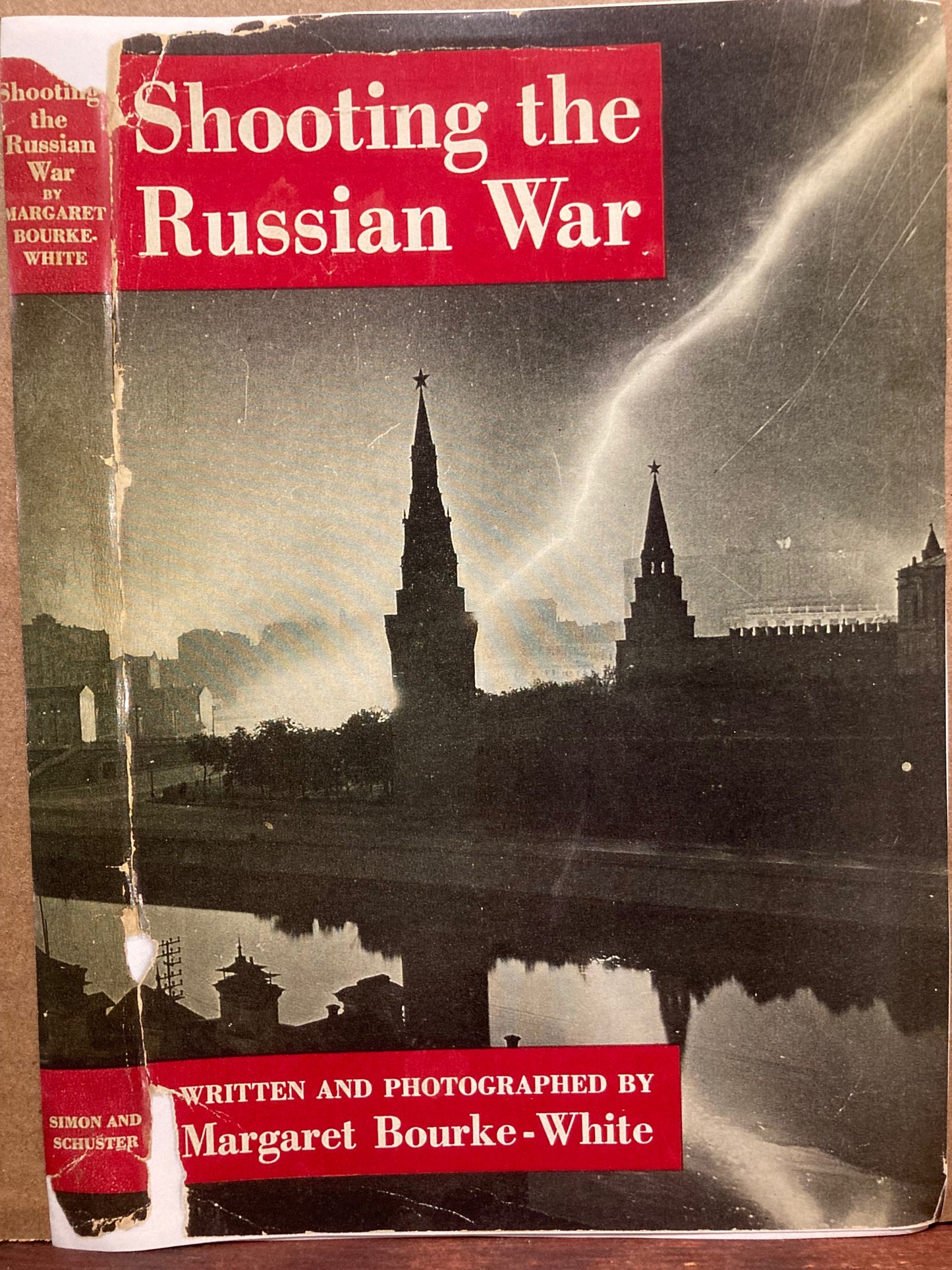
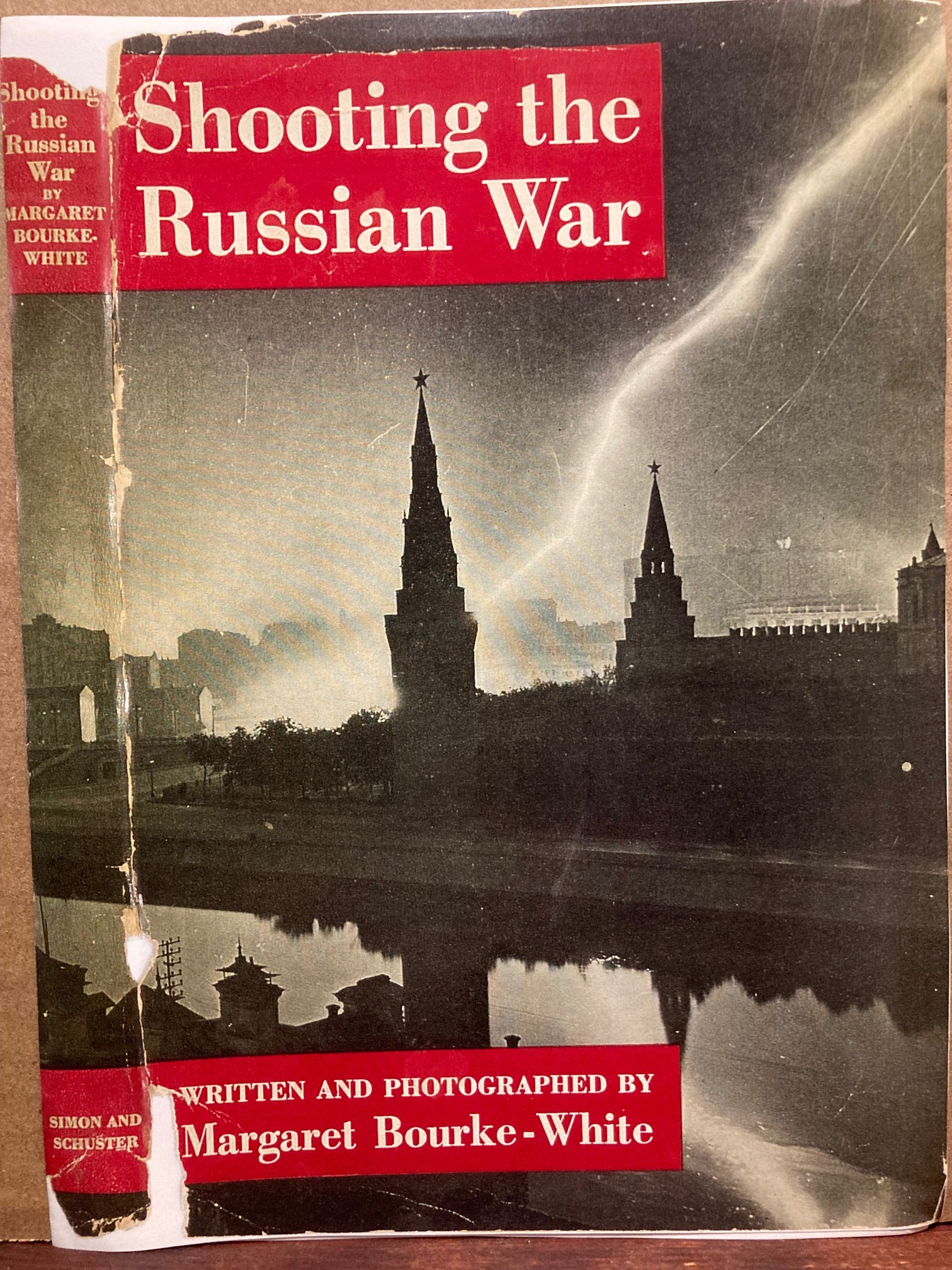
Simon and Schuster, 1942. [Includes the famous chapter, "I Photograph Stalin."] First edition, very good, minor wear to extremities, no dust jacket but with color facsimile laid in (lacking inner panes), front flyleaf expertly replaced with matching paper, a very nice copy, hard to find in the first edition. (Photo is an image of the facsimile dust jacket.) Summary:
Shooting the Russian War (1942) is a first-hand photo-journalistic account by Margaret Bourke-White detailing her experiences in the Soviet Union during the German invasion of 1941.
Overview & Highlights
-
Access & Credentials: Arriving in Moscow shortly before the Nazi invasion, Bourke-White secured rare official credentials as the only non-Russian photographer permitted to cover the siege and wartime conditions.
-
Visual Scope: Features black-and-white photograph plates documenting dramatic night air raids over Moscow, Soviet citizens in bomb shelters, military operations, and portraits of political figures, including Joseph Stalin.
-
Textual Narrative: Combines her photographs with detailed personal essays, technical notes on low-light night exposure techniques, and candid observations on life under total war in the USSR.
Margaret Bourke-White (1904–1971) was an American photographer and photojournalist who broke numerous barriers as a woman in 20th-century media. Beginning her career in the late 1920s as an industrial photographer in Cleveland, her dynamic compositions of steel mills and modern architecture quickly earned her acclaim. She became the first staff photographer hired for Fortune magazine in 1929 and, in 1936, shot the cover photo for the inaugural issue of LIFE magazine. Over her trailblazing career, Bourke-White served as the first foreign photographer permitted to photograph Soviet industry, the first female war correspondent accredited by the U.S. armed forces during World War II, and a chronicler of major global events, including the liberation of the Buchenwald concentration camp and the partition of India. Known for her fearless determination and empathetic eye, her visual reporting helped establish photojournalism as a major cultural force until Parkinson's disease forced her retirement in the late 1950s.