Gary Saretzky Photo Books
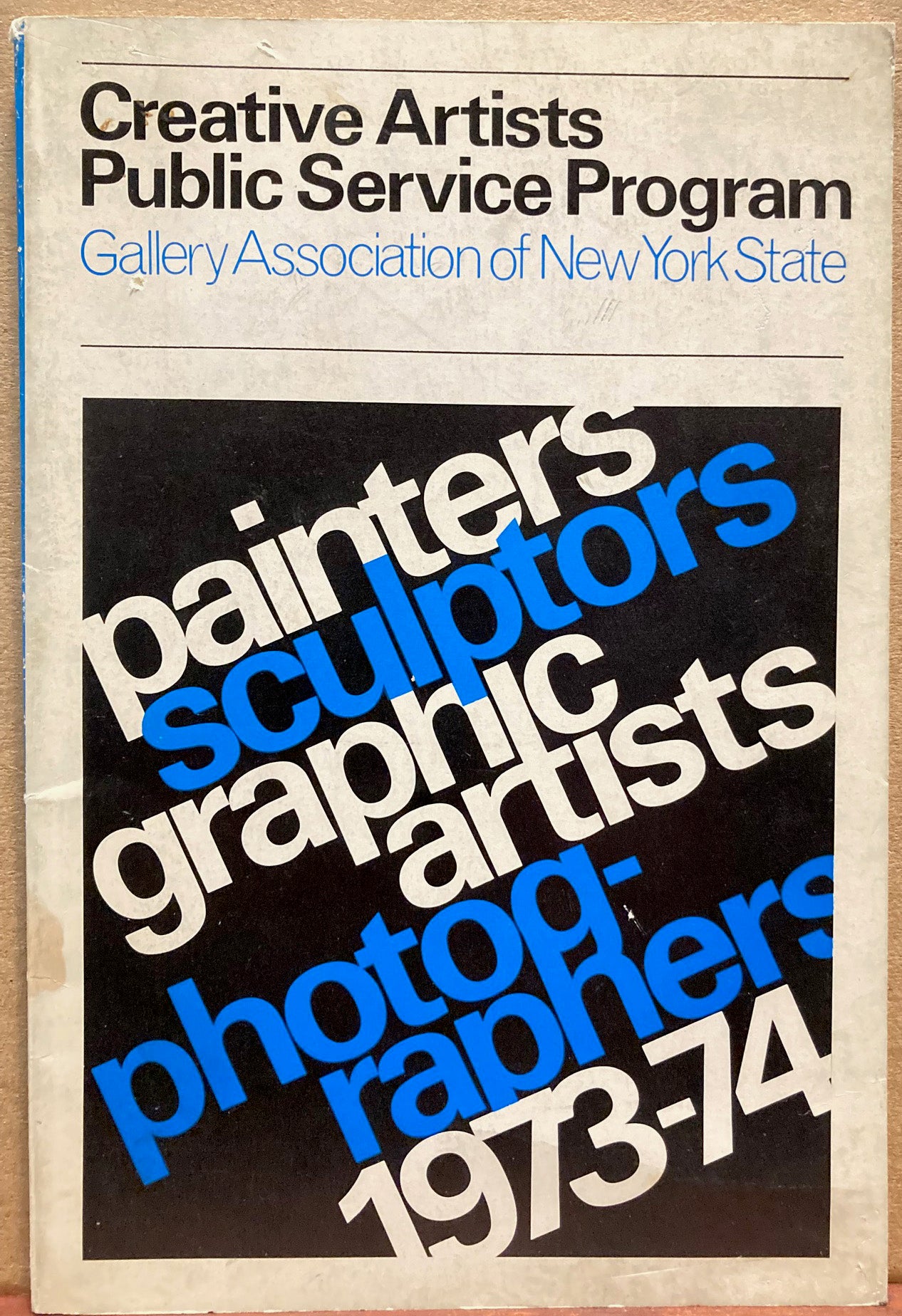
Barboza, Anthony, et al. Creative Artists Public Service Program. Painters, Sculptors, Graphic Artists, Photographers, 1973-74.
Barboza, Anthony, et al. Creative Artists Public Service Program. Painters, Sculptors, Graphic Artists, Photographers, 1973-74.
Impossible de charger la disponibilité du service de retrait
Creative Artists Program Service and Gallery Association of New York State, 1974. Recipients of CAPS grants in 1973 and 1974 with one image and brief bio for each. Photographers include Anthony Barboza, Naomi Bushman; Jill Freedman; Lee Friedlander; Charles Gatewood; Thomas Germano; Dorothy Gloster; Mark Godfrey; Charles Harbutt; James H. Karales; Harry Lapow; Helen Levitt; George Malave; Roger Mertin; Barbara Jo Revelle; Douglas Sandhage; Ming Smith; and Louis Stettner. Several of these have been members of the Kamoinge group of African American photographers (Barboza, Gloster, Smith). Stiff illustrated wraps, very good with a few small spots on front cover. 73 pages. Summary:
This publication serves as a formal catalog and record of the Creative Artists Public Service (CAPS) Program for the 1973–74 grant cycle. Funded primarily by the New York State Council on the Arts (NYSCA), the CAPS program was a landmark initiative designed to support individual artists through direct fellowships rather than institutional funding.
Core Purpose
The book functions as both a directory and a showcase of the fellows selected across four major visual arts categories: Painting, Sculpture, Graphic Arts, and Photography. The program’s unique mandate required that in exchange for financial support, artists participated in "public service" activities—such as workshops, lectures, or community projects—to bring contemporary art directly to the citizens of New York.
Key Features
Artist Profiles: It provides a comprehensive list of the awardees, featuring biographical information and representative reproductions of their work from that specific period.
Snapshots of the Era: Because the 1973–74 cycle caught many artists at pivotal moments in their careers, the book acts as a primary source for the state of the New York art scene during a decade of intense experimentation.
Institutional Transparency: It outlines the selection process, the jurors involved (often prominent artists themselves), and the program's philosophy of treating the artist as a vital community resource.
Cross-Disciplinary Breadth: By grouping photographers and graphic artists alongside traditional painters and sculptors, the catalog reflects the narrowing gap between "high art" and technical media during the 1970s.
Historical Significance
For researchers and collectors, this volume is a critical "time capsule." It documents the early professional support system for figures who would later become icons, while also highlighting the mid-70s shift toward publicly funded art that prioritized community engagement over gallery elitism.