Gary Saretzky Photo Books
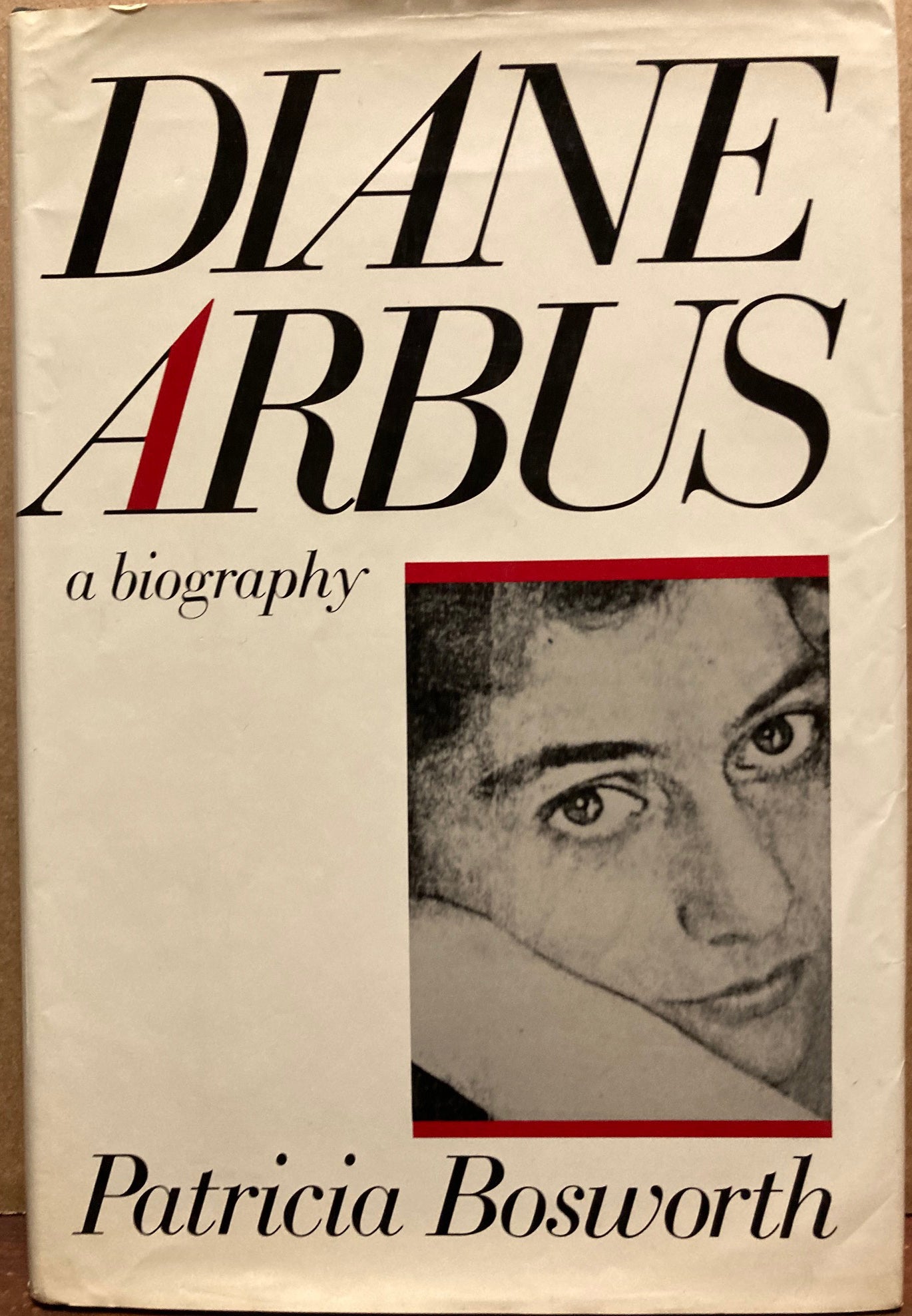
Arbus, Diane. Diane Arbus, A Biography by Patricia Bosworth.
Arbus, Diane. Diane Arbus, A Biography by Patricia Bosworth.
Impossible de charger la disponibilité du service de retrait
Knopf, 1984. By Patricia Bosworth. First edition, hardcover. The first biography of the photographer known for her revealing portraits of people, including those with unusual physical characteristics. Fine with near fine dust jacket. Summary:
Originally published in 1984, Patricia Bosworth’s "Diane Arbus: A Biography" is the first major account of the life of one of the most provocative and influential photographers of the 20th century. Because the Arbus estate declined to cooperate with the project, Bosworth relied on more than 200 interviews with friends, family, and peers to reconstruct Arbus's enigmatic world.
The Trajectory of a Life
The biography traces Arbus’s journey from her affluent, sheltered upbringing as a member of the Nemerov family (owners of the Russeks department store) to her immersion in the gritty underworld of New York City.
-
The Fashion Years: It details her early career working alongside her husband, Allan Arbus, in fashion photography—a world she ultimately found hollow and suffocating.
-
Finding Her Voice: The book explores her transition in the late 1950s toward her signature style, seeking out "prohibited" subject matter under the mentorship of Lisette Model.
-
The Pursuit of the "Freak": Bosworth examines Arbus's obsession with marginalized figures—giants, twins, nudists, and circus performers—whom she viewed not as objects of pity, but as "aristocrats" who had already passed their life's "check-point."
Key Themes
-
Psychological Complexity: A significant portion of the book focuses on Arbus’s long struggle with debilitating depression and her complex, often co-dependent relationships.
-
The Artist's Ethics: Bosworth delves into the controversial nature of Arbus's methods, including the intimate, sometimes intrusive relationships she formed with her subjects to capture their "flaw."
-
The Final Act: The biography culminates in a detailed account of the events leading up to Arbus's suicide in 1971 at the age of 48, an event that cemented her status as a tragic cult figure in the art world.
Significance
Bosworth’s work is credited with humanizing a woman who had become a myth. While some critics argue the lack of estate access limits the book's ability to analyze the photographs themselves, it remains the definitive "unauthorized" narrative of the woman behind the camera, providing essential context for the haunting intensity of her imagery.
Diane Arbus (1923–1971) was a groundbreaking American photographer whose intimate, striking portraits revolutionized documentary street photography by challenging traditional notions of beauty and social convention. Born into a wealthy New York family, she began her career in commercial and fashion photography alongside her husband, Allan Arbus, before shifting her focus in the mid-1950s toward independent, personal work under the mentorship of Lisette Model. Using a medium-format Rolleiflex camera to capture sharp, square black-and-white images, Arbus sought out subjects on the margins of society—including circus performers, transgender individuals, nudists, and carnival workers—alongside everyday people in moments of psychological exposure. Her raw, direct approach gained critical acclaim through the Museum of Modern Art's landmark New Documents exhibition in 1967, though her work sparked intense debate over ethics and empathy. Tragically dying by suicide at age 48, Arbus became the first American photographer featured at the Venice Biennale the following year, leaving behind an indelible legacy that fundamentally transformed documentary photography into a tool of intimate psychological revelation.