Gary Saretzky Photo Books
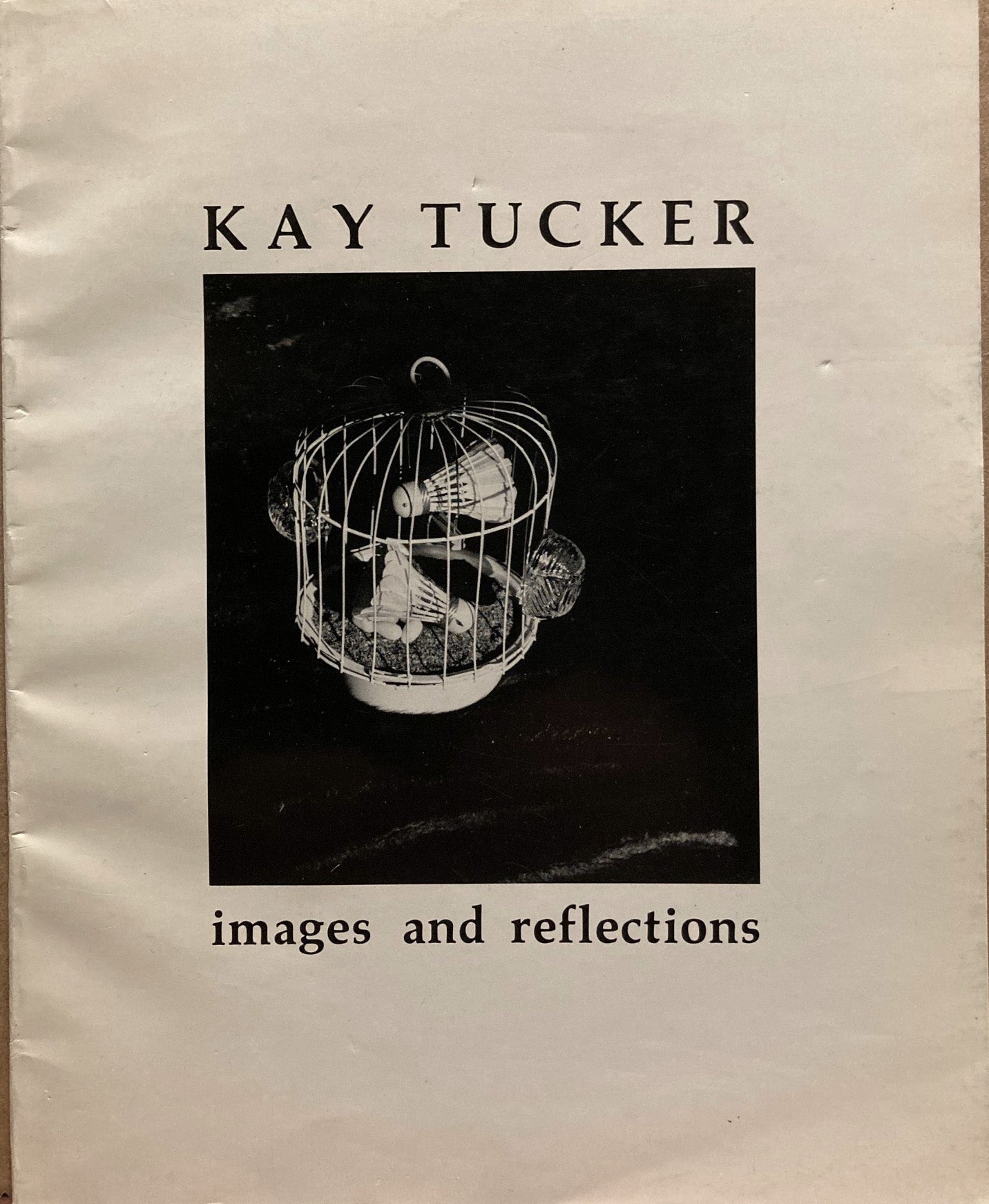
Tucker, Kay. Kay Tucker: Images and Reflections. A Selection by P.J. Hansen, friend and fellow-photographer.
Tucker, Kay. Kay Tucker: Images and Reflections. A Selection by P.J. Hansen, friend and fellow-photographer.
Impossible de charger la disponibilité du service de retrait
Photographics 1977. Black-and-white photographs by Kay Tucker with quotations from her statements about photography. [Kay Tucker was the author of The Educated Innocent Eye; Some Criteria for the Criticism of Photography.] Includes portrait of Tucker by Hansen. #67 in an edition of 200 copies in glossy wraps, very good with a few small dings on covers. 32 pages. Scarce. Summary:
Kay Tucker: Images and Reflections (1977) is a rare, limited-edition artist monograph published by Photographics. Spanning just 32 pages, the book was printed in a highly collectible run of only 200 copies and bound in glossy softcover wraps.
The volume functions as an intimate, retrospective curation of the work of Kay Tucker—a mid-century photographer and notable photographic theorist who authored The Educated Innocent Eye: Some Criteria for the Criticism of Photography(1972).
Key Content and Themes
-
The Artistic Curation: The book was compiled, selected, and edited by P.J. Hansen, a close friend and fellow photographer of Tucker. Hansen’s selection provides an insider’s look into Tucker's artistic eye and creative progression.
-
Visual Work: It features a curated collection of Tucker’s black-and-white photographs. The imagery is contextualized by an included portrait of Tucker captured by Hansen himself.
-
Philosophical Reflections: Rather than presenting the images in a vacuum, the monograph pairs Tucker’s black-and-white photography with her own textual reflections, statements, and philosophical quotes about the medium of photography. This layout bridges her practical work behind the lens with her academic background in photo criticism.
Significance
Because of its exceptionally small print run, the book acts as a scarce historical artifact documenting a dialogue between two contemporary photographers. It offers a distilled, poetic synthesis of Kay Tucker's legacy, highlighting both her creative visual portfolio and her intellectual philosophy on how photography should be viewed and criticized.
