Gary Saretzky Photo Books
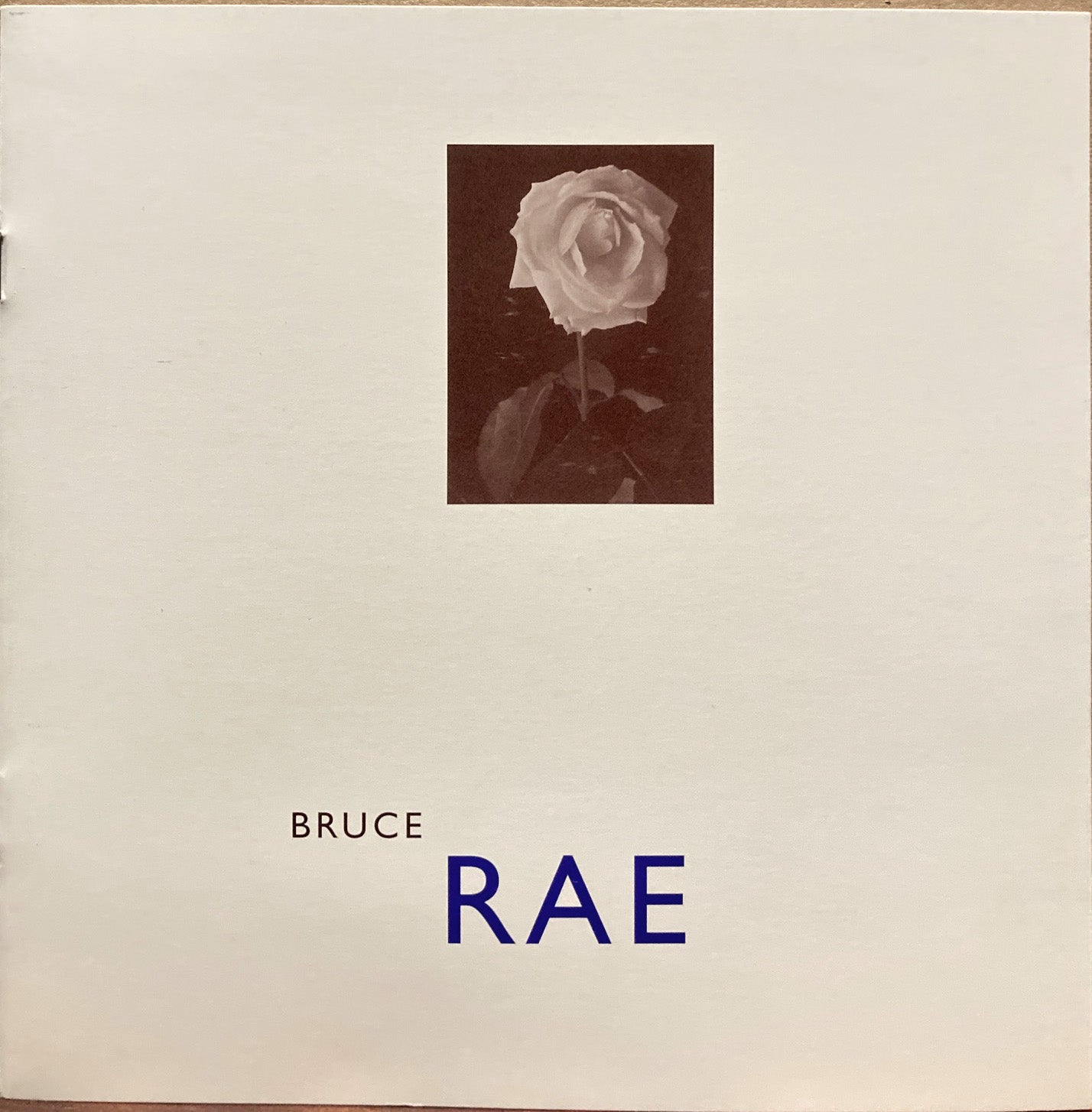
Rae, Bruce. Bruce Rae: New Work. 20 May - 18 July 1998.
Rae, Bruce. Bruce Rae: New Work. 20 May - 18 July 1998.
Impossible de charger la disponibilité du service de retrait
Michael Hoppen Photography gallery, London, 1998. Exhibition catalog. Introduction by Robin Muir. [Rae's work here consists of salt prints of flowers.] Stiff wraps, 20 pages, like new.
Bruce Rae (b. 1946) is a British photographer known for his mastery of traditional darkroom techniques, historical printing processes, and contemplative monochromatic imagery. Born in Aberdeen, Scotland, Rae trained in photography at the Birmingham College of Art before attending the Royal College of Art in London during the early 1970s. Utilizing medium- and large-format wooden field cameras, he developed a distinctive aesthetic characterized by his use of salt printing, platinum-palladium toning, and silver gelatin prints to create luminous, highly textured studies. His work spans intimate, sculptural botanical still lifes and root vegetables alongside major social documentary projects, such as his landmark series documenting the decline of industrial shipbuilding along the River Tyne for Newcastle's Side Gallery.Celebrated for combining formal elegance with a reverent preservation of early photographic craft, Rae has exhibited internationally at institutions such as the Michael Hoppen Gallery and Peter Fetterman Gallery, establishing a lasting influence within contemporary British fine art photography.
Bruce Rae: New Work is an exhibition catalog published to accompany a solo exhibition of the acclaimed British photographer Bruce Rae, held at the Michael Hoppen Gallery in London from 20 May to 18 July 1998.
The publication captures a pivotal moment in Rae’s career, showcasing his mastery of traditional darkroom printing techniques and his unique, brooding approach to fine art photography.
Core Themes & Artistic Framework
1. The Mastery of the Hand-Printed Image
At the heart of the catalog is Rae’s fierce commitment to the physical craft of salt prints, the medium introduced by William Henry Fox Talbot in 1840. Working during an era when digital imaging was beginning its rapid ascent, Rae utilized large-format cameras and complex, hand-mixed darkroom chemistry. The catalog emphasizes the tactile, rich tonality of his prints which could only be achieved through meticulous manual processing.
2. Still Lifes and Botanical Studies
The exhibition was dedicated to Rae’s distinctive botanical photography. Rather than capturing flowers and plants in pristine, vibrant states, Rae photographed decaying, dried, or wilted specimens. The catalog showcases how his stark, studio-lit compositions transform botanical subjects into sculptural mementos mori, prompting reflections on time, mortality, and fragile beauty.
This exhibition helped solidify the Michael Hoppen Gallery’s reputation as a premier London venue for rare, masterfully printed 20th-century photography. It framed Bruce Rae not merely as a photographer documenting subjects, but as a visual alchemist whose true medium was the delicate interplay of light, silver, and paper.
