Gary Saretzky Photo Books
Porter, Eliot. Birds of North America by Eliot Porter.
Porter, Eliot. Birds of North America by Eliot Porter.
Impossible de charger la disponibilité du service de retrait
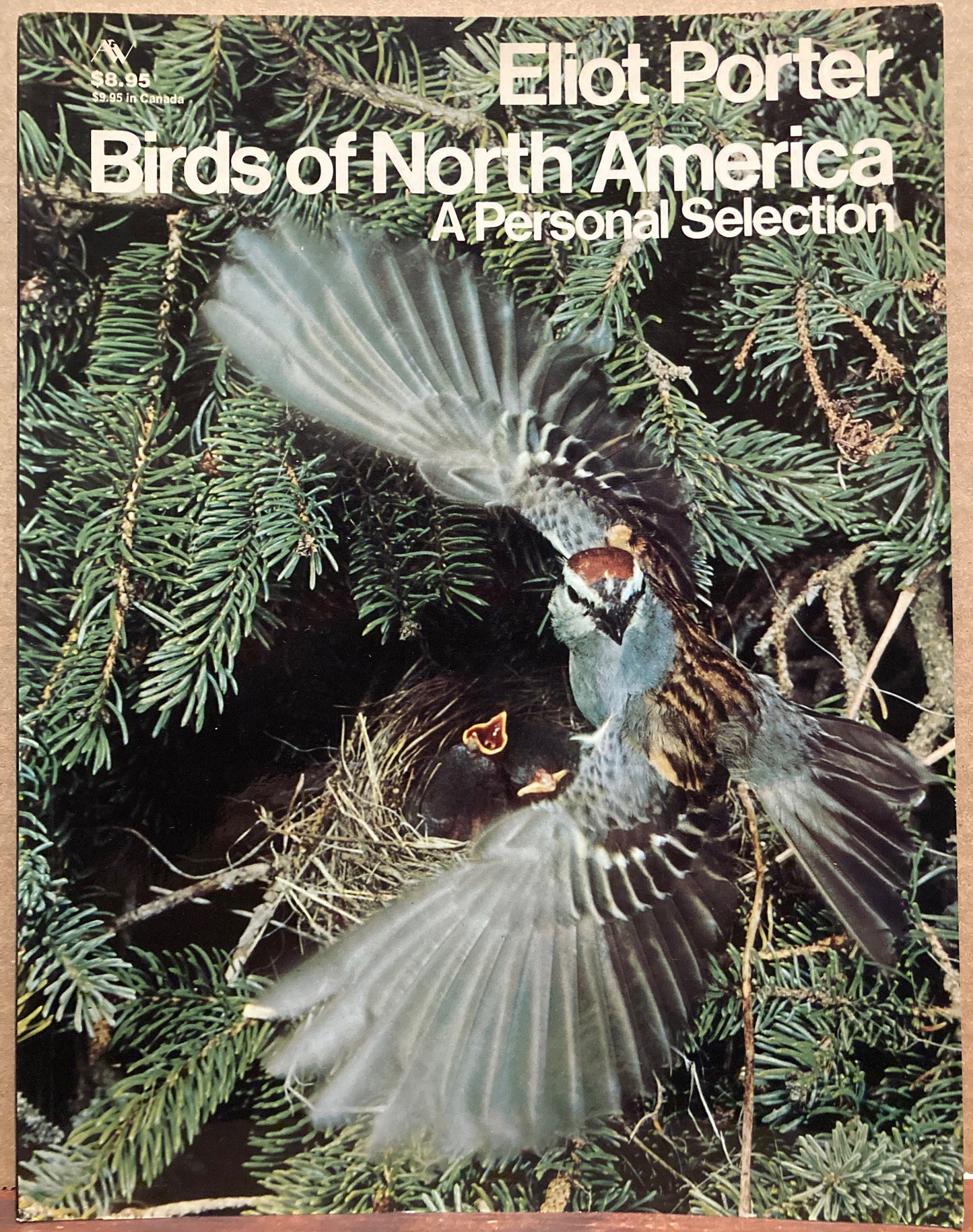
A&W Visual Library, [1975]. Large format, 140pp. Wraps, near mint with a touch of wear at extremities, with many photos in black-and-white and color. [Includes the classic account of how Porter, in order to photograph the Cape May Warbler in its nest, gradually cut three-foot sections out of the tree trunk until it was six feet off the ground.] Summary:
Birds of North America: A Personal Selection (first published by E.P. Dutton & Co. in 1972) is a seminal 144-page monograph by the legendary master of color nature photography, Eliot Porter. While universally celebrated for his sweeping landscapes and close-up plant textures, Porter actually began his photographic journey capturing avian subjects in the 1930s. This volume serves as a curated retrospective of his lifelong passion, presenting dozens of vivid color and selective black-and-white images capturing North American bird species in their natural habitats alongside Porter’s personal text.
Core Themes & Technical Mastery
1. The Impetus for Color Innovation
The book's textual narrative outlines an essential chapter in the history of wildlife photography. In 1939, a publisher rejected a bird book proposal from Porter because they believed color photography was mandatory for proper species identification. This rejection acted as the primary catalyst that drove Porter to conquer the immense challenges of early color film. The book documents his pioneering work using large-format 4x5 cameras and slow, notoriously difficult early Kodachrome film to capture wild, fast-moving birds with absolute clarity.
2. Candid Behavior in Natural Habitats
Departing from the heavily staged, taxidermy-based, or tightly caged visual formats common in early twentieth-century wildlife documentation, Porter’s plates depict living birds entirely in the wild. His selection highlights birds in moments of flight, hunting, courtship, and repose, or tending to nests nestled in intricate networks of foliage. The publication prioritizes biological and behavioral authenticity, capturing species ranging from delicate wood warblers to majestic raptors without disrupting their natural life cycles.
3. The Aesthetics of Wildlife and Landscape
The volume seamlessly merges scientific ornithology with high art. Rather than isolating the birds against flat, clinical backgrounds, Porter applies the same meticulous eye for color saturation, structural geometry, and ambient lighting that made his landscape work famous. The branches, leaves, and seasonal environments surrounding the birds are treated with equal importance, establishing a harmonious visual relationship between the creatures and their broader ecosystems.
Birds of North America stands as a monumental achievement that helped elevate wildlife photography from a purely scientific or hobbyist pursuit into the realm of fine art. By showcasing a highly cohesive, deeply personal selection of imagery, the book demonstrates that technically precise bird documentation could simultaneously possess the sublime emotional weight and compositional mastery of fine-art museum prints.