Gary Saretzky Photo Books
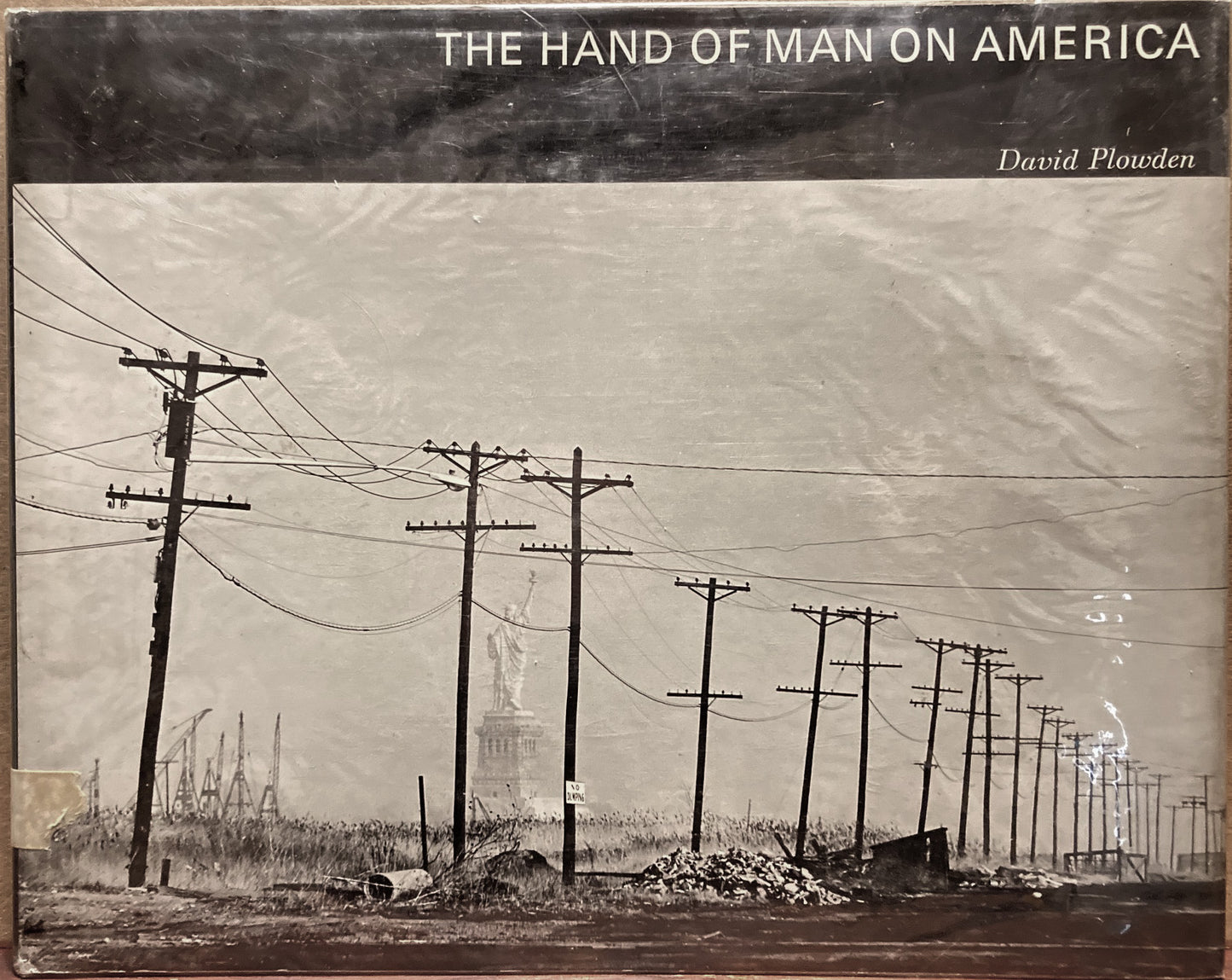
Plowden, David. The Hand of Man on America by David Plowden.
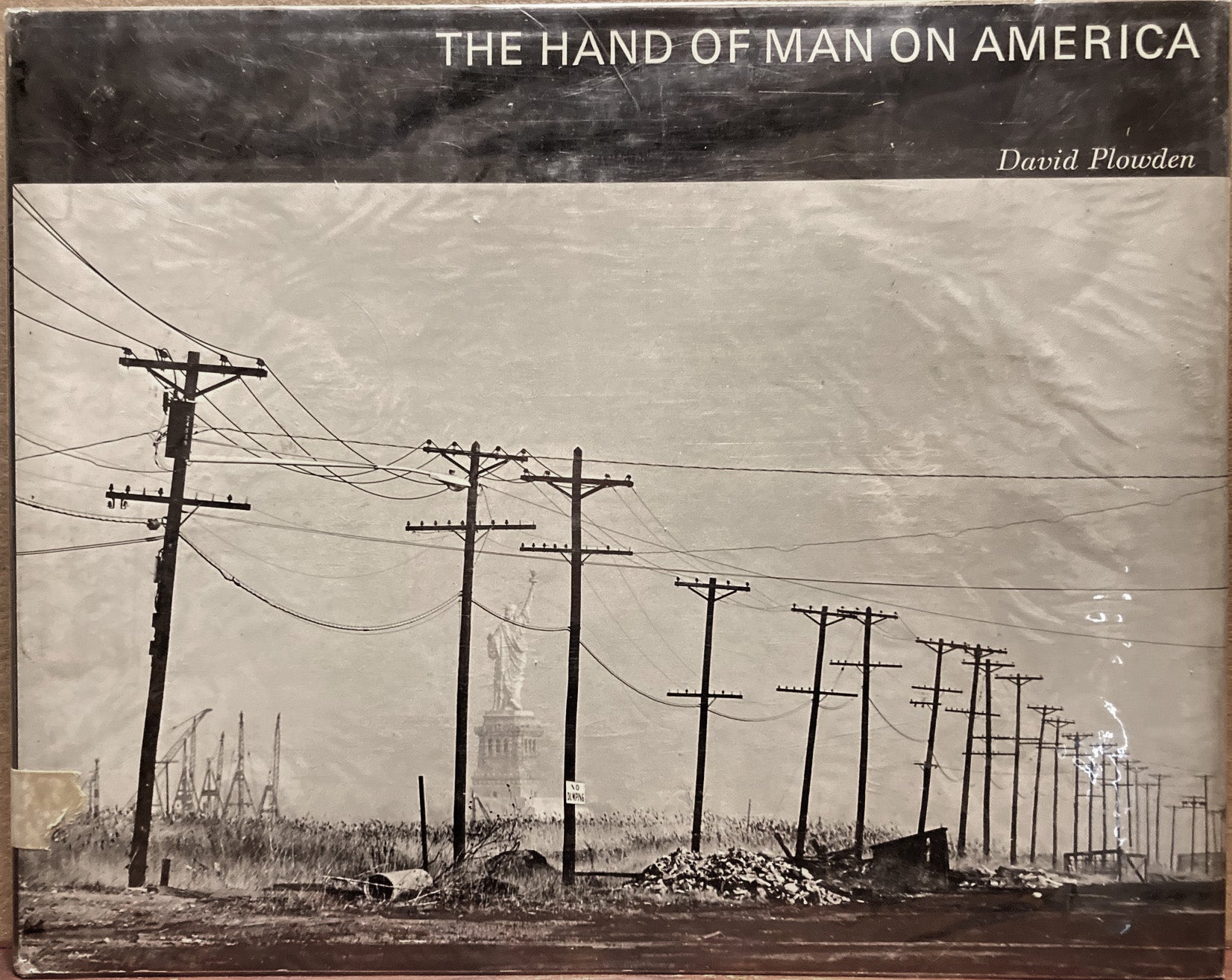
Plowden, David. The Hand of Man on America by David Plowden.
Impossible de charger la disponibilité du service de retrait
Smithsonian Institution Press, 1971. Cloth, oblong hardcover with protected dust jacket. Black-and-white photographs and text by David Plowden. These photographs were made over ten years of travel and were exhibited at the Smithsonian and subsequently through the Smithsonian's Traveling Exhibition Service. Chapters: Space; The Land Possessed; Habitat; A Rage Upon the Land; and Neglect and Solitude. Ex-library with usual markings, otherwise VG+ with protected dust jacket. Presumed 1st edition, no later printings indicated. Not to be confused with later reprints.
David Plowden (1932–2026) was an American photographer, author, and educator celebrated as a visual chronicler of America's vanishing industrial landscape, steam locomotives, small towns, and agrarian infrastructure. Born in Boston, Massachusetts, and educated at Yale University—where he studied economics and took a course under Minor White—Plowden worked briefly for the Great Northern Railway before studying photography under Minor White and Nathan Lyons and assisting O. Winston Link in New York. Over a career spanning more than six decades, he crisscrossed the United States with large-format and medium-format cameras, producing meticulous, starkly beautiful black-and-white studies of steam trains, steel mills, grain elevators, iron bridges, and main street communities before they succumbed to modernization and decay. Author of over twenty monographs—including Farewell to Steam (1966), Bridges: The Spans of North America (1974), and Vanishing Point (2007)—Plowden complemented his field work with decades of teaching, serving as a professor at the Institute of Design at Illinois Institute of Technology and Grand Valley State University.Recognized with a Guggenheim Fellowship and major exhibitions at the Art Institute of Chicago, the Library of Congress, and the Grohmann Museum, Plowden established an indispensable archive of mid-century American material culture, preserved today in his extensive archive at the Beinecke Rare Book and Manuscript Library at Yale.
The Hand of Man on America (published in 1971 by the Smithsonian Institution Press in cooperation with The Chatham Press) is a powerful, 136-page photographic monograph by acclaimed documentary photographer David Plowden. Working in the tradition of Walker Evans, Plowden presents a stark, visual essay that critiques environmental degradation and examines the profound, often destructive mark that human development has left on the North American landscape.
Core Content & Visual Framework
1. A Five-Part Environmental Anatomy
The book organizes its collection of high-contrast, black-and-white images into five distinct thematic sections, mapping out a narrative of spatial conquest and decay:
-
Space: Focuses on the vastness of the original, open American landscape before major development.
-
The Land Possessed: Chronicles the initial modification of the land, tracking early agriculture, fencing, and rural settlements.
-
Habitat: Explores the design and arrangement of residential spaces, communities, and small-town main streets.
-
A Rage Upon the Land: Serves as a heavy critique of industrial encroachment, heavy manufacturing, and sprawling transportation networks.
-
Neglect and Solitude: Captures the lonely, quiet spaces left behind by economic shifts, focusing on abandoned architecture and vanishing towns.
2. Stark Geometry and the Banishment of Color
The visual style of the volume relies on strict, geometric black-and-white compositions, avoiding color to prevent any distraction from form, texture, and line. The photographs are famously devoid of people—the plates contain only two visible individuals—which isolates the man-made environment and forces the viewer to focus entirely on the physical structures themselves. The framing treats weathered barns, highway expressways, industrial steel mills, and grain elevators as modern monuments that dominate the natural horizon.
3. Philosophical and Architectural Commentary
Alongside the photographs, the monograph features thoughtful text and analytical commentary. The narrative integrates quotes from foundational architectural and social thinkers—such as John Ruskin, Walter Gropius, and Le Corbusier—to contextualize the imagery. The combined text and graphics explore how a lack of planning and a rush toward commercial progress have led to a uniform, often neglected built environment across the continent.
The Hand of Man on America stands as an early masterpiece of modern industrial archaeology and environmental visual advocacy. Published during the birth of the contemporary American ecological movement, the book moves past traditional nature photography to confront the realities of urban sprawl and industrial decline, preserving a permanent record of the nation’s changing relationship with its own geography.