Gary Saretzky Photo Books
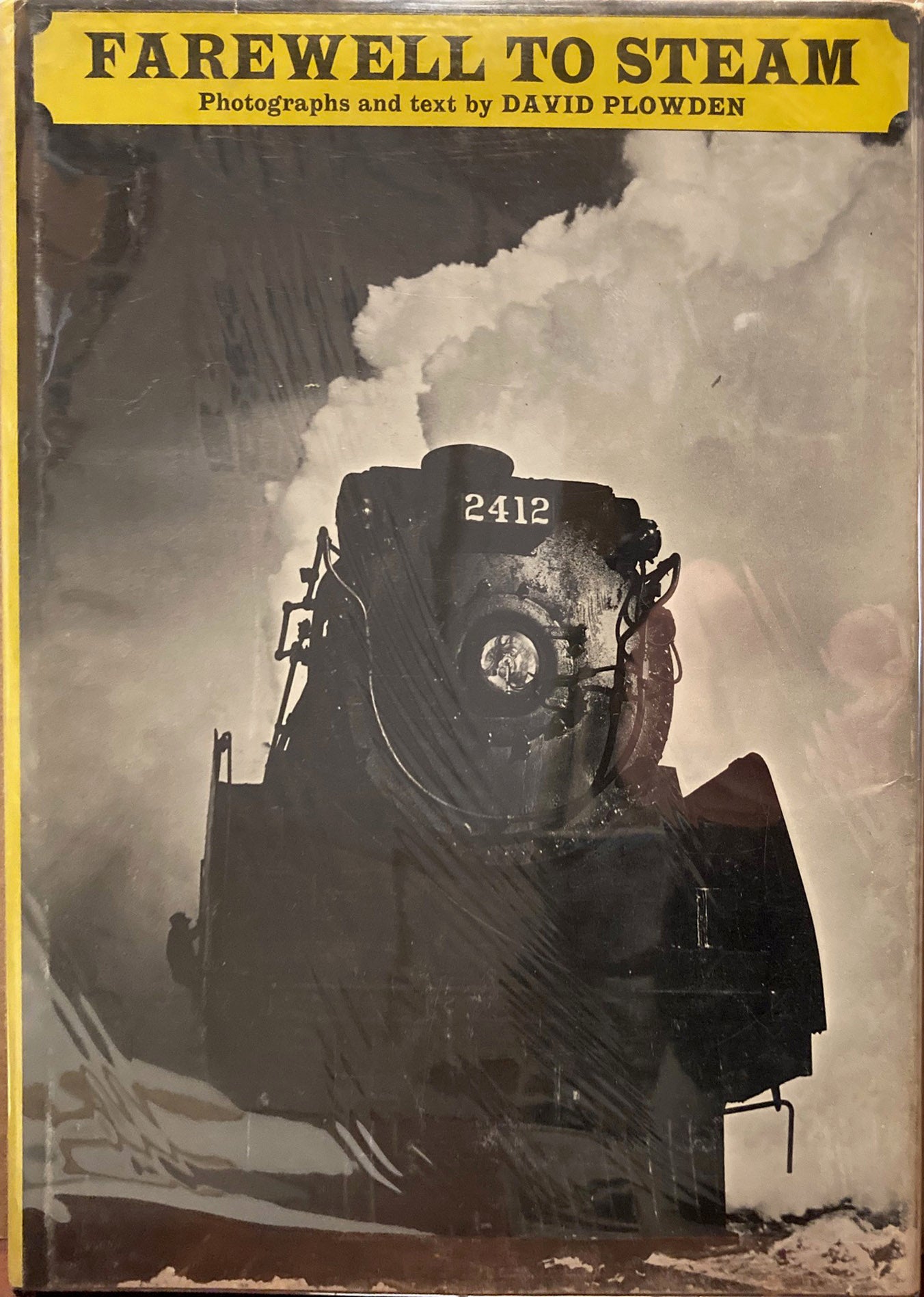
Plowden, David. Farewell to Steam by David Plowden.
Plowden, David. Farewell to Steam by David Plowden.
Impossible de charger la disponibilité du service de retrait
Hardcover, fine with very good protected dust jacket with edge chips. Third printing. Reprinted by Bonanza. Originally published by Stephen Greene Press, 1966. Photographs of passenger steamers: overnight luxury steamer, day excursion steamer, ferry steamer; Great Lakes: cargo boat, railroad-car ferry, river railroad-car ferry; work boats: tug, lighter, towboat, dredger and snag boat; passenger ferries: Hudson River, New York City harbor, St. Lawrence River, Mississippi River; and locomotives.
Farewell to Steam (published by The Stephen Greene Press in 1966) is the landmark 154-page debut monograph by acclaimed documentary photographer and author David Plowden. Composed of striking black-and-white images and targeted commentary, the volume serves as a powerful visual elegy capturing the absolute final days of reciprocating steam power in North American transportation before it was entirely replaced by diesel and modern internal combustion engines.
Core Content & Visual Framework
1. The Marine Sector: Inland and Coastal Waterways
Unlike Plowden's later, strictly rail-focused books, the first two-thirds of this monograph is dedicated to a comprehensive survey of steam-powered maritime vessels. The imagery captures a vanishing network of water transportation across North America's rivers, lakes, and harbors:
-
Great Lakes and Steamboats: Focuses on the massive ore carriers, passenger steamers, and classic coal-fired vessels navigating the Great Lakes network.
-
Harbor and River Craft: Documents traditional paddle-wheelers, workaday riverboats, and steam-powered tugboats navigating industrial harbors and inland rivers.
2. The Final Stand of the Steam Locomotive
The final third of the book shifts its focus to the rails, chronicling the twilight of the North American steam engine. The documentation sought out the most remote, operational holdouts of the technology during the late 1950s and early 1960s. A significant portion of this section highlights the final operations of standard-gauge steam lines, capturing the raw mechanical energy, towering smoke plumes, and kinetic power of locomotives in daily freight and passenger service.
3. A Straightforward Industrial Archeology
The stylistic framework of the monograph sets the tone for a career dedicated to industrial archaeology. While the introduction offers a deeply personal, elegiac tribute to the majesty of the steam era, the accompanying captions, notes, and technical indices remain deliberately objective. The text provides a clear, unsentimental record of names, precise dates, and geographic locations, treating the heavy machinery not as mere nostalgia, but as significant cultural artifacts of a foundational technological era.
As an inaugural publication, Farewell to Steam established a reputation for documenting the "vanishing point" of the American built environment. Produced at a time when these historic ships and trains were being actively scrapped, the book stands as a primary visual record that permanently preserved the textures, atmosphere, and scale of a transient chapter in transportation history.
