Gary Saretzky Photo Books
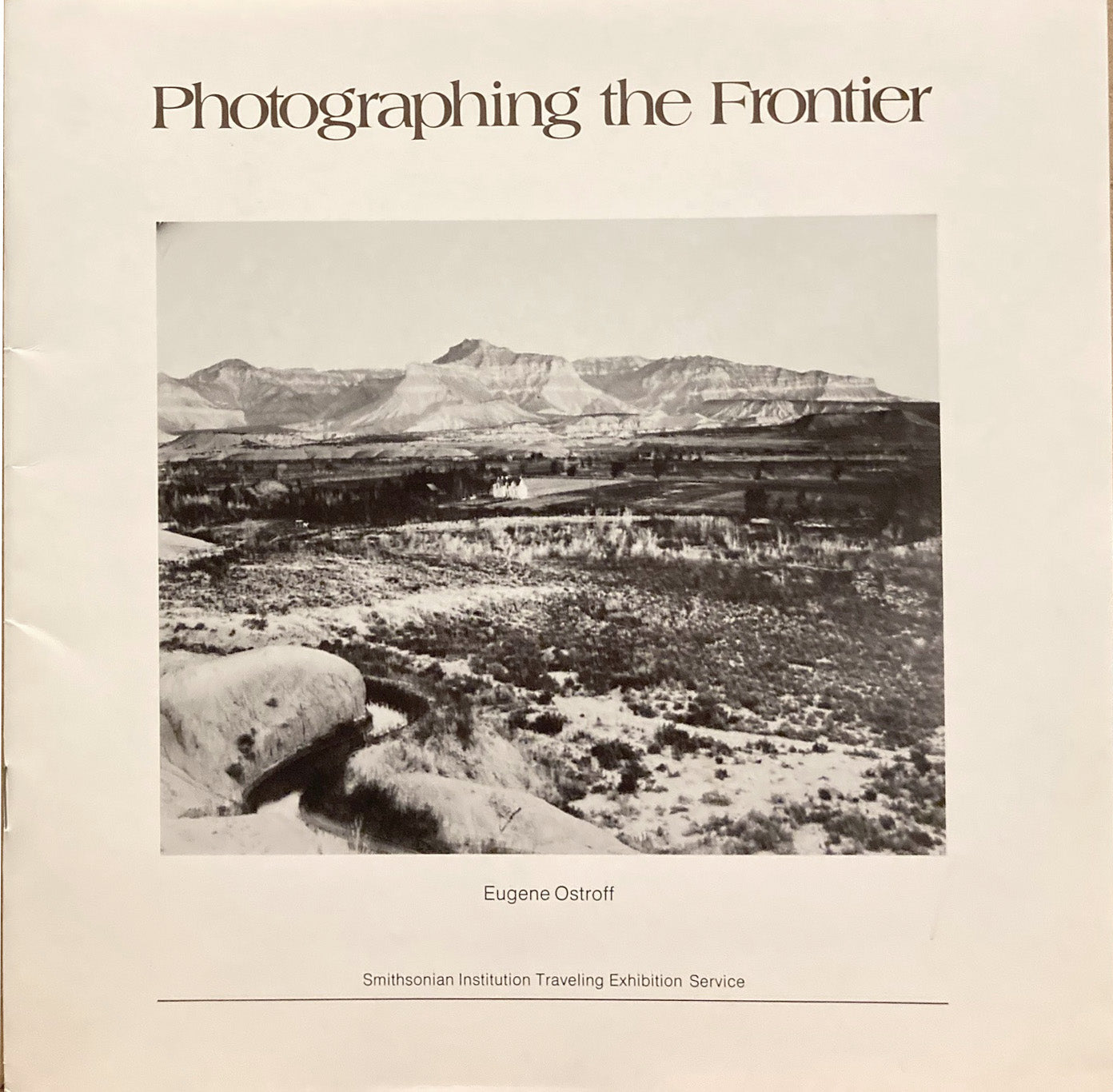
Photographing the Frontier by Eugene Ostroff.
Photographing the Frontier by Eugene Ostroff.
Impossible de charger la disponibilité du service de retrait
Smithsonian Institution, 1976. Exhibition catalog or traveling exhibit, 1975-1978. Wraps, 32 pages, black-and-white photos. Center-stapled booklet 8 1/2 x 8 1/2 inches. Includes photos taken in Utah, Arizona, and Oregon by G.E. Anderson, W.S. Bowman, O.G. Allen, Emil Britt, Peter Britt, et al., including views of early photography studios. Near fine. Summary:
Photographing the Frontier (published by the Smithsonian Institution Traveling Exhibition Service in 1976) is a specialized 32-page exhibition catalog authored by Eugene Ostroff, the long-time curator of photography at the Smithsonian's National Museum of American History. Published during the American Bicentennial, the booklet documents a traveling exhibition that tracked how early photographic technologies recorded the settlement, geography, and daily realities of the American West from the mid-19th century through the early 20th century.
Core Content & Historical Framework
1. Documenting the Unseen West
The publication examines the critical transition from subjective artist sketches to objective photographic records in defining the American frontier. The historical overview outlines how early Americans relied solely on written letters or idealized paintings to imagine the western territories. The narrative demonstrates how the camera brought undisputed visual proof of the West’s true geography and natural beauty to eastern audiences, acting as a powerful catalyst for westward migration and federal conservation efforts.
2. The Realities of Frontier Studio Practice
A central theme of the monograph is the physical and technical resourcefulness required by early territorial photographers. Rather than working in controlled urban studios, these pioneering image-makers operated under extreme environmental conditions. The text highlights a diverse group of regional frontier photographers and includes views of their early improvised studios. The historical commentary details how these operators transported fragile glass plates, volatile chemical mixtures, and heavy wooden cameras across rugged terrain by wagon or pack mule to secure their exposures.
3. A Pluralistic Record of Frontier Life
The catalog features 29 black-and-white illustrations that showcase a wide spectrum of western experiences. The curated plates move beyond empty wilderness landscapes to document the actual infrastructure and human diversity of the frontier. The volume records early mining towns, emerging railroad lines, indigenous populations, and the daily lives of homesteaders.
Photographing the Frontier serves as a concise yet vital institutional record of the Smithsonian’s efforts to map the sociology of early American image-making. By rescuing obscure regional photographers from obscurity, Eugene Ostroff's scholarship validates these transient darkroom records as primary historical documents that shaped the visual identity of the American nation.
