Gary Saretzky Photo Books
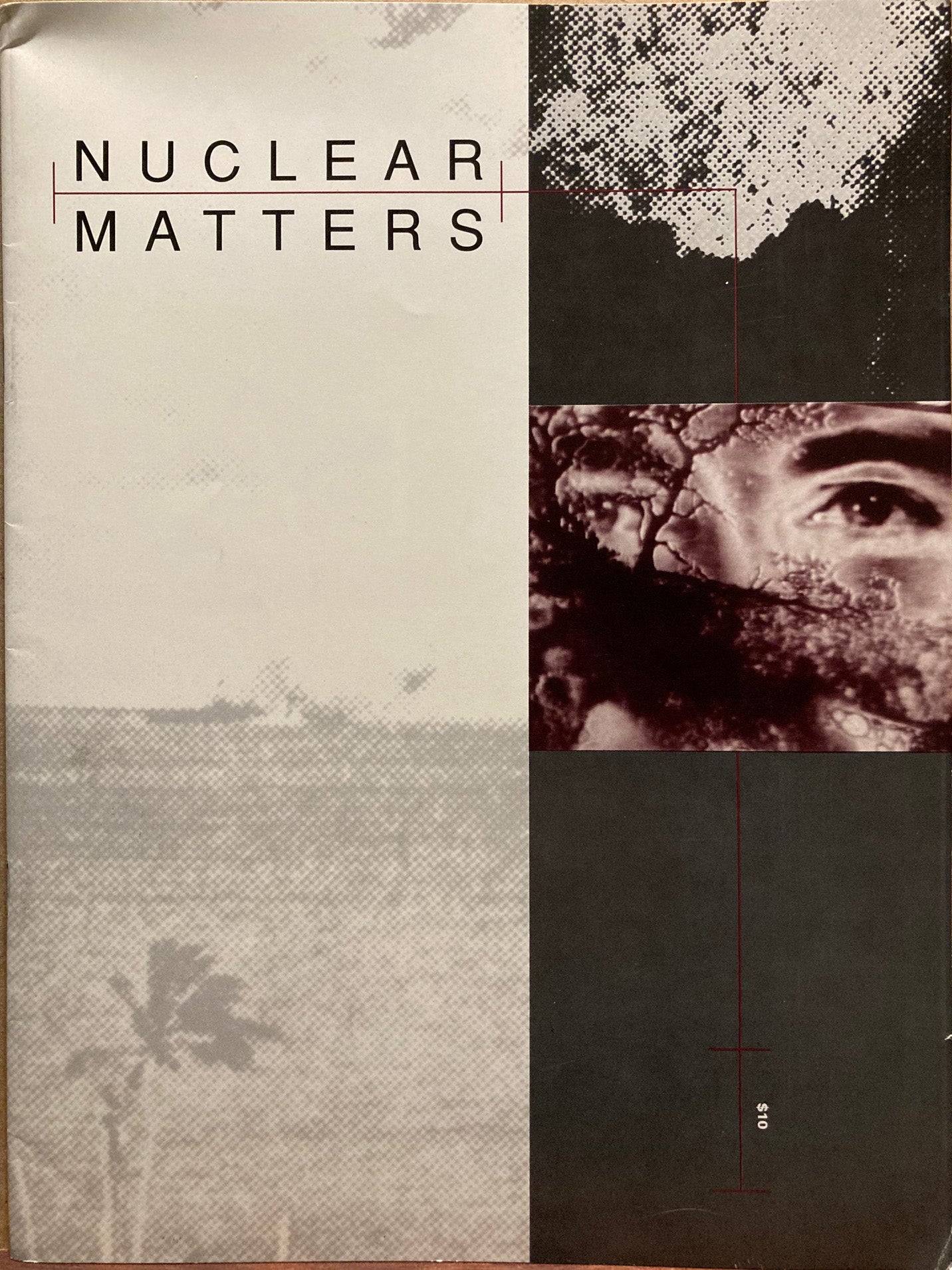
Nuclear Matters. SF Camerwork, 1991.
Nuclear Matters. SF Camerwork, 1991.
Impossible de charger la disponibilité du service de retrait
Wraps, 40 pages, exhibit catalog superseding SF Camerawork Quarterly, 17:4 (Winter 1990). With folded SF Camerawork exhibit poster for Nuclear Matters laid in. Exhibit ran January 31-March 9, 1991. Curated by Timothy Druckrey and Marnie Gillett with essays by them, Rebecca Solnit, and Margaret Stratton. Among other topics, the exhibit addressed the nuclear power industry and premature deaths and congenital abnormalities caused by above ground nuclear tests. Artists: David Graham; Robert Del Tredici; Richard Misrach; Meridel Rubinstein; Steina & Woody Vasulka; Yoshito Matsushig; James Lerager; Peter Goin; Carole Gallagher; Carole Conde & Karl Beveridge; and Berlyn Brixner. Very good with bent top corner and minor signs of use. Summary:
Nuclear Matters (published in 1991 by SF Camerawork) is a landmark exhibition catalog that served as a expanded, permanent record of a critically acclaimed traveling group installation. Curated by SF Camerawork directors Marnie Gillett and Mark Alice Durant, the publication superseded the SF Camerawork Quarterly, Volume 17, Number 4 (Winter 1990) to deliver a comprehensive, multidisciplinary examination of the political, ecological, and psychological fallout of the atomic age.
Core Content & Conceptual Framework
1. Visualizing the Invisible Threat
The central thesis of the exhibition and its catalog revolves around the profound challenge of documenting radiation and nuclear trauma—forces that are inherently invisible, odorless, and slow-acting. The narrative analyzes how contemporary artists move past standard government propaganda and sensationalized media imagery to uncover the hidden physical realities of the nuclear military-industrial complex. By utilizing conceptual, documentary, and staged photography, the project forces a confrontation with the toxic legacy of weapon testing and power production.
2. Portfolios of Devastation and Memory
The publication compiles portfolios, installation documentation, and text-based artworks from an international roster of activist-artists. The visual content addresses several distinct geographic and historical dimensions of the atomic era:
-
The Post-Atomic Landscape: Sharp, devastating documentary surveys of uranium mining sites, radioactive waste dumps, and contaminated test zones across the American West.
-
The Human Toll: Intimate, haunting portraiture and oral histories tracking the generational health crises faced by atomic veterans, downwinders, and survivors of the Hiroshima, Nagasaki, and Chernobyl disasters.
-
The Culture of Cold War Fear: Conceptual collages and archival re-appropriations that dissect mid-century civil defense drills, military signage, and the pervasive psychological anxiety of global annihilation.
3. Critical Essays and Activist Discourse
The catalog functions as a crucial theoretical text through its inclusion of scholarly essays, artist statements, and historical timelines. The editorial framework links fine-art photography directly with political activism, analyzing how corporate and governmental secrecy obscured environmental destruction for decades. The accompanying texts question the ethics of representation, examining how image-makers can responsibly depict systemic corporate violence without romanticizing the suffering of the affected communities.
Published shortly after the collapse of the Soviet Union and the official end of the Cold War, Nuclear Matters stands as a vital touchstone in the history of eco-critical and activist art curation. By bridging the gap between rigorous investigative journalism and contemporary art, this SF Camerawork document established an influential paradigm for how cultural institutions could address urgent global environmental crises through the photographic medium.
